

 My HVAC Tech
HVAC Predictive Maintenance: A Practical Guide for Commercial Buildings
Quick Answers for Property & Facility Managers
What is HVAC predictive maintenance for commercial buildings?
HVAC predictive maintenance is a data-driven strategy that uses IoT sensors, building automation data, and analytics to monitor equipment condition and detect faults before failure. For commercial rooftop units, chillers, and VRF systems, it lets property and facility managers schedule maintenance when the data indicates risk, cutting downtime and energy waste.[4][7][10]
How does HVAC predictive maintenance reduce costs for property and facility managers?
HVAC predictive maintenance reduces emergency repairs and downtime by catching problems early, and improves energy efficiency by keeping chillers, rooftop units, and air handlers operating at design performance.[4][14][15] Case studies report large reductions in unplanned downtime, maintenance cost, and HVAC energy use when predictive programs are implemented.[11][14][10]
What equipment should commercial property managers include in an HVAC predictive maintenance program?
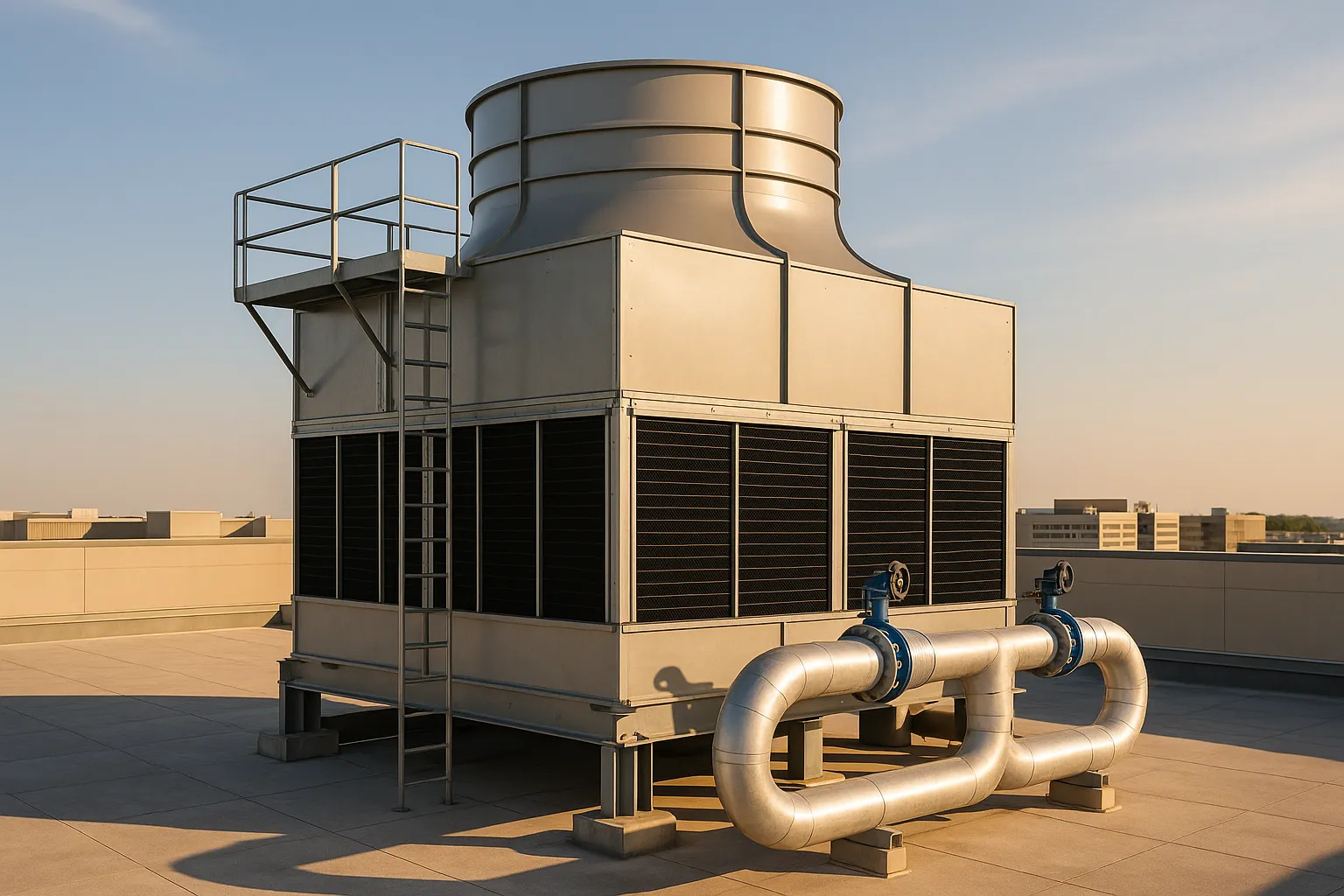
Commercial predictive maintenance programs typically start with high-impact equipment: central chillers in the 50–500+ ton range, primary air handlers, cooling towers, major rooftop units, and VRF/VRV systems.[4][7][9][6] These assets create the greatest tenant impact and emergency cost if they fail, making them ideal candidates for continuous monitoring and analytics.
HVAC predictive maintenance: what it means for commercial portfolios
For property managers, facility managers, and building owners, hvac predictive maintenance is a way to move beyond reactive repairs and rigid calendar-based PM toward condition-based decisions informed by real data.[4][7][10] Instead of waiting for a rooftop unit to fail on a summer weekend or over-servicing chillers on a fixed schedule, predictive maintenance uses continuous monitoring and analytics to intervene only when equipment condition warrants attention.
In commercial buildings, predictive maintenance typically combines three layers:[1][4][7]
- Sensor-based condition monitoring across chillers, rooftop units, air handlers, boilers, cooling towers, and VRF systems.[2][6][9]
- AI or rules-based analytics that detect patterns in vibration, temperature differentials, pressures, current draw, and airflow to predict failures weeks in advance.[1][2][12][13]
- Integration with maintenance management platforms so alerts become work orders, inspections, and parts orders instead of isolated alarms.[1][3][10][13]
For portfolios with central plants in the 50–500+ ton range and dozens of rooftop units, this approach can materially reduce unplanned downtime, improve energy performance, and help defer capital replacement.[11][14][15]
Core technologies behind HVAC predictive maintenance
Effective hvac predictive maintenance programs rely on a mix of IoT sensors, existing building automation systems, and analytics platforms tuned to HVAC assets.[2][4][6][12]
Sensor and data infrastructure
For commercial HVAC, common monitored signals include:[1][2][6][15]
- Chillers (50–500+ tons): evaporator and condenser temperatures, chilled and condenser water pressures, compressor vibration, motor current draw, kW/ton efficiency, valve positions.
- Rooftop units (10–50+ tons): supply/return air temperature, coil differential temperature, fan vibration, static pressure, compressor current, refrigerant circuit pressures.[6]
- VRF/VRV systems: branch temperatures, refrigerant pressures, inverter current, fan speeds, and alarm histories.[2][12]
- Air handlers: filter differential pressure, fan vibration, coil temperatures, and airflow.[2][7][6]
Many modern BAS/BMS platforms already collect parts of this data. Predictive programs start with a sensor audit to catalog what is available and where additional wireless sensors are needed on high-value equipment.[9][13]
Analytics and fault detection
Predictive maintenance platforms use rule sets and machine learning to recognize abnormal patterns across thousands of data points per minute.[2][4][12][13] Examples include:
- Chiller efficiency trending from 0.64 kW/ton toward 0.82 kW/ton over several weeks, indicating fouling or refrigerant issues.[14]
- Rooftop unit fan vibration slowly rising, suggesting bearing wear that will produce a failure if ignored.[1][6]
- VRF system compressor current and discharge temperature drifting outside normal envelopes, signaling a potential compressor or refrigerant fault.[12][15]
These platforms then estimate the likely failure window (for example, 30–90 days before breakdown)[2][5] and push prioritized alerts to the facility team or CMMS.[1][3][13]
Step-by-step: building an HVAC predictive maintenance program
For commercial property and facility managers, a disciplined rollout is critical. Sources recommend structured phases that align technology with business outcomes.[4][9][10][13]
Phase 1: Asset and data inventory
Start by cataloging all HVAC assets across the portfolio and their criticality:[9][10]
- List major equipment: chillers (50–500+ tons), cooling towers, boilers, primary air handlers, rooftop units, VRF/VRV systems.
- Capture replacement cost, tenant impact if the asset fails, and historical failure/repair data.[9][10]
- Document existing sensors and BAS points (temperatures, pressures, run hours, alarms) and identify monitoring gaps.[13]
This gives a clear picture of where predictive maintenance can deliver the most value.
Phase 2: Baseline performance and cost
Next, quantify the current state to create an ROI baseline:[4][8][10]
- Collect 12–24 months of emergency repair spend, overtime labor, and downtime incidents tied to HVAC.[4][8][10]
- Review energy consumption and demand charges associated with central plants and large rooftop units.[8][14][15]
- Gather runtime, alarm frequency, and inspection outcomes from CMMS/BAS for critical assets.[3][13]
These metrics become the benchmark against which predictive maintenance results can be measured and communicated to ownership.[10][11]
Phase 3: Pilot deployment on critical equipment
Experts recommend beginning with a pilot focusing on high-impact assets where failure cost exceeds a defined threshold, such as $10,000 per event.[4][10]
- Prioritize chillers (50–500+ tons), primary AHUs, cooling towers, and compressor banks serving key tenants.[4][7][9]
- Install or enable continuous monitoring via BAS and wireless sensors for vibration, temperature, pressure, and current.[1][2][6][9]
- Connect data streams to an analytics platform capable of HVAC-specific fault detection.[1][6][12][15]
Collect at least 60–90 days of data to establish normal operating baselines before relying fully on model outputs.[13]
Phase 4: Integrate with CMMS and workflows
To be useful for facility managers, predictive insights must tie directly into existing work management processes.[1][3][10][13]
- Integrate the analytics platform with the CMMS or maintenance management software so alerts auto-generate work orders and tasks.[1][3][10]
- Define severity tiers (critical, high, medium) and response SLAs, aligned with tenant and operational risk.[1][7]
- Train maintenance staff on how to interpret alerts, run targeted inspections, and document findings back into the system.[3][7][13]
This closes the loop and ensures data leads to action, not simply more alarms.
Phase 5: Portfolio scale-up
Once the pilot demonstrates value, the strategy can be extended across the portfolio.[9][10][11]
- Compare pilot buildings against baseline metrics: reductions in unplanned downtime, emergency calls, and HVAC energy use.[10][11][14]
- Use these results to build a business case for broader sensor deployment and analytics licenses.[11][15]
- Roll out predictive monitoring to additional rooftop units, VRF systems, and smaller packaged equipment, prioritizing by criticality and failure history.[9][10]
Over time, aggregated data across buildings improves long-term capital planning, replacement timing, and contract negotiations.[3][10][11]
Checklists: practical action items for commercial teams
Predictive maintenance readiness checklist
Before investing in hvac predictive maintenance, property and facility managers can use this checklist to assess readiness:[7][9][10]
- Do you have an up-to-date HVAC asset registry (chillers, RTUs, AHUs, VRF, boilers) with tonnage and age?
- Is your BAS/BMS reliably logging trends for key points (temperatures, pressures, runtime, alarms)?[2][13]
- Is your CMMS capturing work orders, failure codes, and costs consistently?[3][10]
- Can you extract 12–24 months of HVAC-related energy and maintenance spend data for ROI analysis?[4][8][10]
- Are key stakeholders (owners, operations, finance) aligned on a pilot building or campus?
Ongoing operational checklist
Once predictive maintenance is in place, managers should implement recurring practices:[1][3][7]
- Review weekly or monthly alert summaries for chillers, rooftop units, and VRF systems, focusing on critical severity items.[1][3]
- Verify that every predictive alert results in either a documented inspection or corrective action.[7][10]
- Track changes in equipment health metrics (efficiency, vibration, temperature deltas) after interventions.[3][14][15]
- Update preventive maintenance tasks and intervals based on predictive insights to avoid over-servicing.[4][7]
- Report quarterly to ownership on avoided failures, energy trends, and budget impacts using CMMS and BAS data.[10][11]
Cost and ROI context for commercial HVAC predictive maintenance
Cost structures and ROI vary by portfolio size, equipment mix, and existing controls, but available sources provide useful directional guidance.
For service visits, predictive programs often maintain similar planned maintenance visit costs (for example, hundreds of dollars per visit) but reduce the number of unnecessary visits by triggering service only when data indicates change.[8][4] The bigger impact comes from avoided emergency calls, extended equipment life, and improved energy efficiency.
Case studies show that predictive maintenance in commercial and hospitality environments can dramatically cut unplanned HVAC downtime and maintenance cost, while reducing energy use by double-digit percentages when chillers and air handlers are kept at design performance.[11][14][15] Vendors report typical payback periods between roughly one year and just over a year for full predictive deployments in commercial buildings, although actual results depend on starting conditions and execution.[11][10]
For building owners, the most compelling financial outcomes include:[11][14][15]
- Reduced unplanned downtime, improving tenant satisfaction and revenue stability.
- Lower emergency repair and overtime costs, smoothing OPEX budgets across the year.
- Energy savings, particularly in central plants with 50–500+ ton chillers and large air handlers.[14][15]
- Better timing of major replacements driven by condition trends instead of age alone, helping defer capital spend intelligently.[10][11]
How predictive maintenance changes daily work for property and facility managers
For managers of offices, retail centers, healthcare facilities, and warehouses, hvac predictive maintenance changes day-to-day operations in several ways.[3][7][10]
- Fewer surprise outages: Developing faults in rooftop units, chillers, and VRF systems are detected days to weeks before comfort complaints begin.[3][5][13]
- More targeted inspections: Technicians focus on assets flagged by data instead of inspecting every unit on the same calendar frequency.[1][4][7]
- Better budgeting: Trend data on alarms, degradation, and efficiency supports more accurate OPEX forecasts and capital planning.[3][10][11]
- Stronger vendor oversight: Documented predictive findings provide evidence when negotiating repair-versus-replace decisions or service contract terms.[7][10]
Ultimately, predictive maintenance aligns HVAC operations with the strategic goals of commercial property management: reliable comfort, risk control, and financially efficient building performance.
Frequently Asked Questions
Is HVAC predictive maintenance worth the investment for multi-site commercial portfolios?
For portfolios with large chillers and numerous rooftop units, HVAC predictive maintenance can be financially compelling when it is well implemented.[10][11][14][15] Documented reductions in unplanned downtime, emergency repairs, and HVAC energy use drive payback typically within about a year, while also improving tenant satisfaction and capital planning confidence.[11][14][10]
How should facility managers evaluate vendors for HVAC predictive maintenance platforms?
Facility managers should seek vendors that support key HVAC assets (chillers, rooftop units, VRF), integrate with existing BAS and CMMS, and offer proven fault detection tuned to commercial buildings.[1][6][10][13] Ask for case studies, reference sites, and clear ROI methodologies, and prioritize platforms that translate analytics directly into actionable work orders.[1][3][10]
What are the risks of implementing HVAC predictive maintenance poorly?
Poorly executed programs can create alert fatigue, misaligned expectations, and wasted sensor investment if data does not connect to maintenance workflows.[3][7][13] To avoid these risks, define clear asset priorities, integrate alerts with CMMS, tune models to minimize false positives, and measure performance against baseline metrics over time.[1][3][10][13]
How does HVAC predictive maintenance support regulatory and corporate compliance?
Predictive maintenance improves documentation of inspections, corrective actions, and equipment performance, which can support internal policies and external standards related to thermal comfort, indoor air quality, and energy management.[3][7][10][15] Consistent digital records strengthen audit trails and help demonstrate due diligence in maintaining critical HVAC assets across commercial sites.
Can HVAC predictive maintenance replace traditional preventive maintenance programs?
Predictive maintenance is typically used to complement, not fully replace, preventive maintenance.[4][7][10] Recurring PM tasks remain important for safety and basic upkeep, but their timing and scope are refined by predictive insights, reducing unnecessary work while ensuring critical interventions occur before failures or major inefficiencies emerge.[1][4][7]
What building types benefit most from HVAC predictive maintenance?
Commercial offices, retail centers, healthcare facilities, and warehouses with significant HVAC loads benefit most because comfort and uptime are directly tied to revenue and operations.[4][7][9][14] Buildings with central plants and large tonnage equipment see particularly strong ROI from reduced downtime and improved energy performance.[10][11][14][15]
Related Reading on My HVAC Tech
- Canada Counter-Tariffs on U.S. HVACR Equipment: What Facility Managers Need to Know
- HFC Phase-Down Deadline: What US Retailers’ Pushback Means for Commercial HVAC
Find a Qualified Commercial HVAC Contractor
Need help acting on this? Browse vetted commercial HVAC contractors in your area, or explore commercial HVAC services like preventive maintenance, retrofits, and emergency repair. Are you a contractor? List your business on My HVAC Tech to reach property and facility managers actively searching for help.


