

 My HVAC Tech
Sustainable Building HVAC Technologies: A Commercial Guide to Efficient Systems
Quick Answers for Property & Facility Managers
What are the best sustainable building HVAC technologies for commercial buildings?
The best sustainable building HVAC technologies depend on building size, load profile, climate, and operating schedule. Common options include high-efficiency rooftop units, variable-speed chillers, heat pumps, VRF systems, dedicated outdoor-air systems, energy-recovery ventilators, and advanced building controls. Benchmark existing performance before selecting equipment.
How can property managers calculate the ROI of sustainable HVAC upgrades?
Calculate ROI by comparing the installed project cost with annual energy, maintenance, demand, water, and avoided replacement costs. Use utility bills and measured operating data rather than estimates alone. Include rebates, financing, tax incentives, equipment life, maintenance needs, and the value of improved reliability or comfort.
Should a commercial building replace its HVAC equipment or improve controls first?
Begin with a building assessment and controls review. Low-cost measures such as scheduling, sensor calibration, economizer repair, setpoint optimization, and functional testing may reduce waste before replacement. If equipment is obsolete, unreliable, or poorly matched to the load, combine controls improvements with a phased replacement plan.
Sustainable Building HVAC Technologies Start With a Measured Baseline
For property managers, facility managers, and building owners, sustainable HVAC planning starts with reliable information. Before selecting equipment, document utility consumption, peak demand, comfort complaints, maintenance history, refrigerant records, operating schedules, space use, and equipment condition. Benchmark the property in ENERGY STAR Portfolio Manager, which compares energy use with historical performance and similar buildings. ENERGY STAR identifies benchmarking as a first step in finding underperforming buildings and verifying savings.
Commission an energy audit or HVAC assessment that separates heating, cooling, ventilation, controls, and domestic hot-water loads. Review at least 12 months of bills and trend data from the building automation system when available. Record each system’s manufacturer, model, age, rated capacity, refrigerant, efficiency, controls, and service history. For offices and retail properties, also examine tenant schedules and after-hours overrides. For healthcare buildings, verify ventilation, pressure relationships, filtration, and redundancy requirements. Warehouses require special attention to infiltration, destratification, loading doors, and intermittent occupancy.
- Establish an energy and demand baseline.
- Identify comfort, indoor-air-quality, reliability, and compliance constraints.
- Measure actual operating hours and simultaneous heating and cooling.
- Prioritize systems nearing end of useful life or requiring frequent repairs.
Efficient Rooftop Units and Heat Pumps for Commercial Properties
Packaged rooftop units remain common in offices, retail stores, schools, warehouses, and low-rise healthcare facilities. Sustainable upgrades may include high-efficiency compressors, electronically commutated fan motors, variable-frequency drives, demand-controlled ventilation, improved economizers, heat-pump heating, and energy-recovery ventilation. A high-efficiency unit provides limited benefit if outdoor-air dampers are stuck, filters are loaded, sensors are inaccurate, or schedules force operation during unoccupied periods.
For a 50- to 150-ton rooftop replacement program, compare unitary heat pumps, dual-fuel configurations, and efficient gas-electric equipment against the local climate and utility rates. Heat-pump RTUs can reduce onsite combustion, but the business case depends on winter design temperatures, defrost operation, electric demand charges, backup heat, and the emissions profile of purchased electricity. Request manufacturer data at the actual entering-air and outdoor-air conditions rather than relying only on nominal ratings.
For larger properties with several hundred tons of packaged capacity, standardize controls, sensors, filters, economizers, and sequences across units where practical. Require startup documentation, air-balance verification, economizer testing, and trend logs. Confirm that replacement units fit structural, curb, electrical, and service-access requirements before procurement.
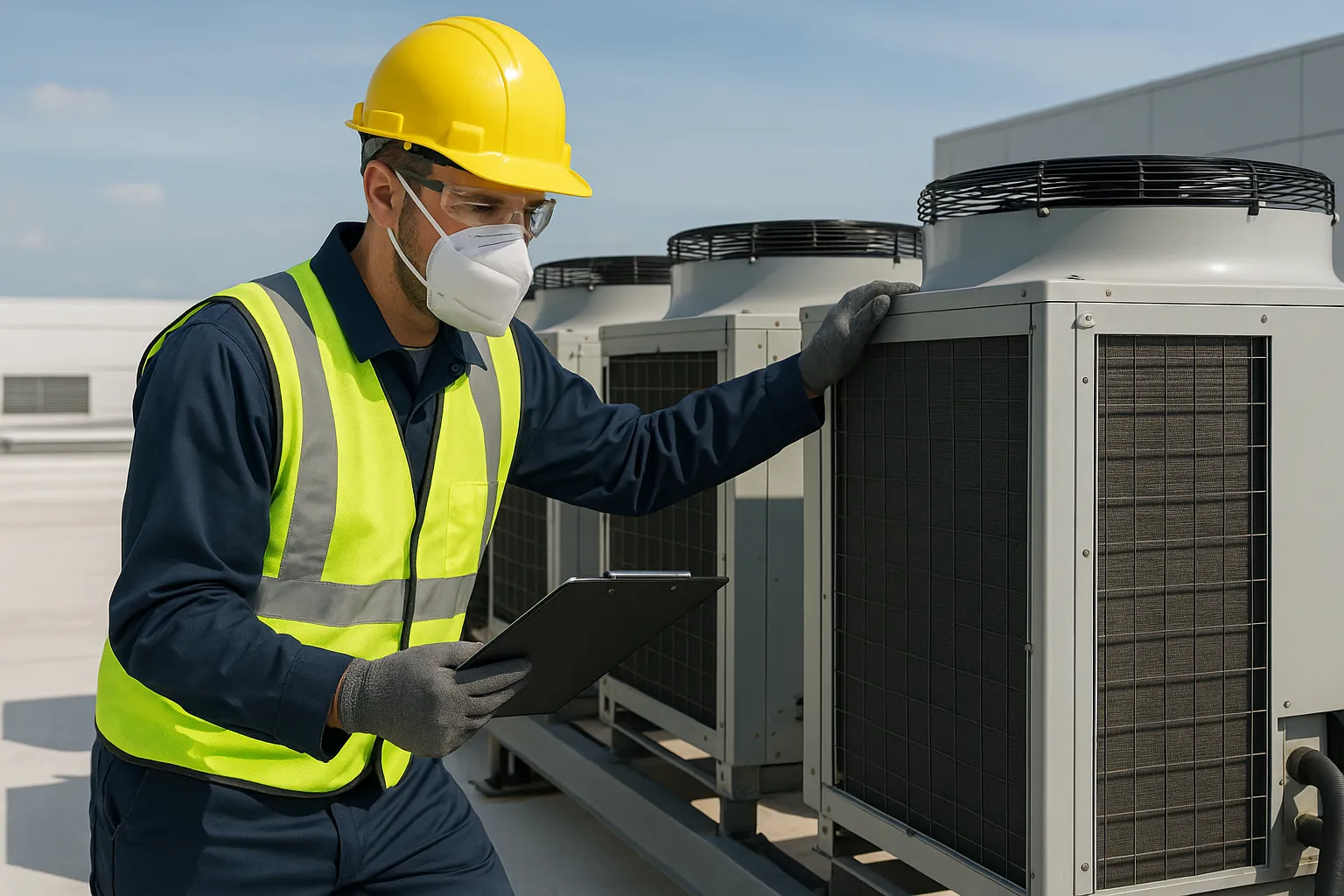
Chillers, Heat Recovery, and Central Plant Efficiency From 50 to 500+ Tons
Central plants serving large offices, hospitals, campuses, laboratories, hotels, and mixed-use properties often provide the greatest opportunity for engineered savings. Projects may involve variable-speed centrifugal or screw chillers, magnetic-bearing technology, waterside economizers, variable-primary-flow pumping, cooling-tower optimization, condenser-water reset, heat recovery, and plant-level sequencing.
When evaluating a 50- to 500-plus-ton plant, assess the load profile rather than selecting capacity from the existing nameplate. Oversized chillers may cycle inefficiently at low load, while undersized plants can create reliability and comfort risks. Model peak and part-load operation, chilled-water temperature reset, tower approach temperatures, pump energy, and redundancy. For healthcare and mission-critical buildings, maintain required standby capacity and documented failure modes.
Heat-recovery chillers can transfer heat from cooling loads to domestic hot water, reheat, perimeter heating, or process loads. They are most attractive where heating and cooling occur simultaneously for substantial hours. Require a controls sequence that prevents unnecessary heat recovery when the recovered heat has no useful destination. Water-cooled systems also require water-treatment planning, tower maintenance, legionella risk management, and evaluation of local water costs.
- Trend chilled-water supply and return temperatures, flow, compressor speed, and plant kW.
- Verify flow meters and temperature sensors before calculating savings.
- Compare full-load and part-load efficiency using manufacturer-certified data.
- Sequence chillers, pumps, and towers according to real-time load.
- Include water, chemical treatment, maintenance, and replacement costs in lifecycle analysis.
VRF, Dedicated Outdoor Air, and Energy-Recovery Systems
Variable refrigerant flow systems can provide zoning, heat recovery, and part-load modulation for offices, retail, hotels, and smaller healthcare areas. VRF is especially useful where rooms have different schedules or simultaneous heating and cooling. It is not automatically the best choice for every building: refrigerant piping limits, ventilation requirements, service access, controls integration, electrical capacity, and refrigerant safety must be evaluated.
Pair VRF or other zoned systems with a dedicated outdoor-air system when ventilation loads are significant. The ventilation system can condition outdoor air independently, while terminal equipment handles space loads. Energy-recovery ventilators may transfer sensible and latent energy between exhaust and intake air, reducing heating and cooling loads. Specify recovery performance for the expected climate and verify that the wheel, core, filters, fans, and controls are accessible for maintenance.
Refrigerant regulations are an important procurement issue. The EPA’s technology-transition rules under the American Innovation and Manufacturing Act restrict higher-global-warming-potential HFCs by sector and equipment category. Requirements and dates differ for rooftop units, heat pumps, VRF, chillers, and refrigeration. Ask suppliers to identify the refrigerant, global-warming-potential classification, installation eligibility, component dates, leak-management obligations, and required safety procedures in the proposal.
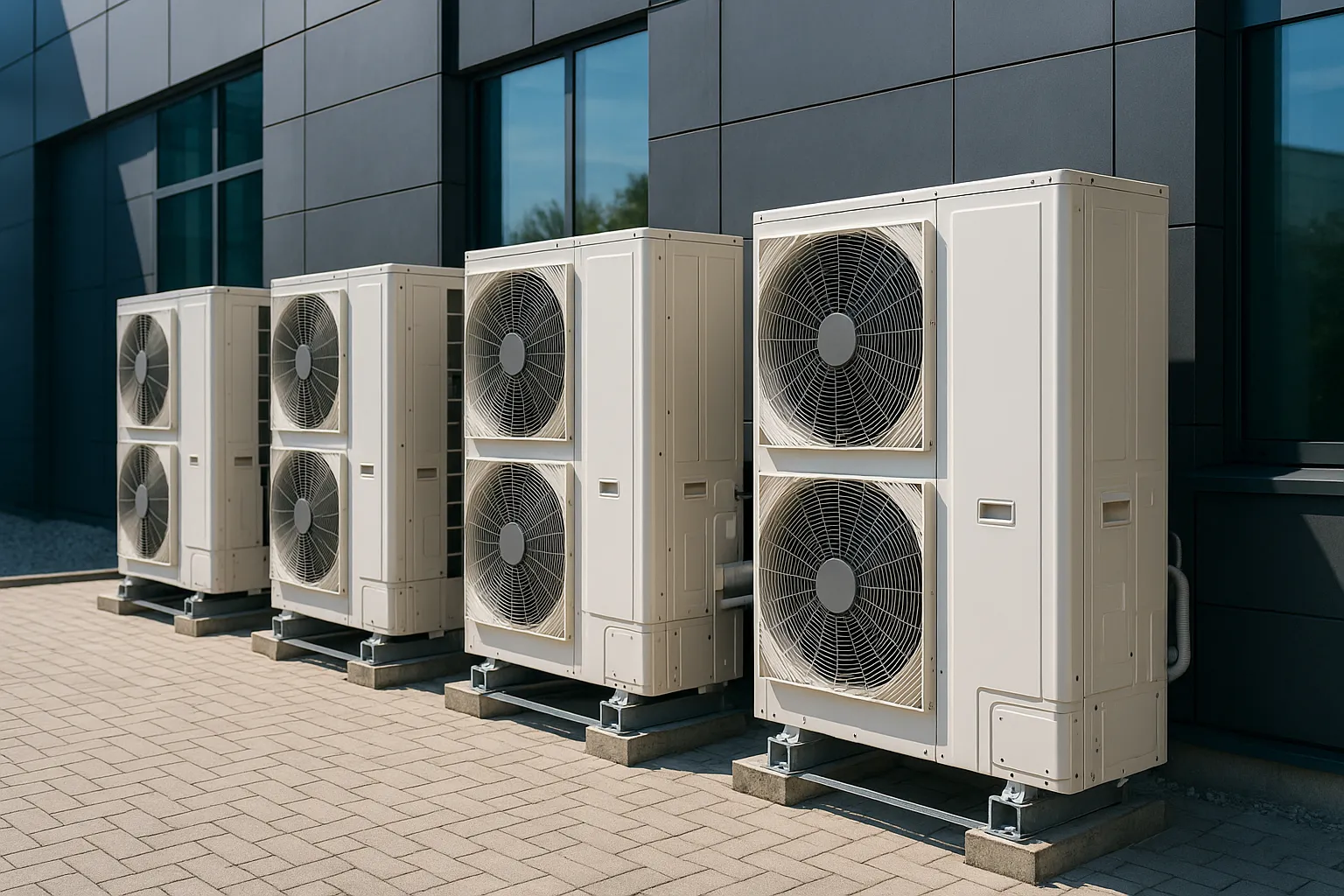
Controls, Sensors, and Commissioning Deliver Measurable Savings
Advanced equipment underperforms when the control sequence is incomplete. Sustainable building HVAC technologies should be connected to a properly configured building automation system with reliable occupancy schedules, supply-air-temperature reset, static-pressure reset, demand-controlled ventilation where appropriate, optimal start and stop, alarm management, and trend logging.
Use this implementation process:
- Inventory controllers, sensors, actuators, meters, network points, and equipment sequences.
- Correct failed sensors, stuck dampers, simultaneous heating and cooling, and excessive overrides.
- Write operating sequences in plain language before programming changes.
- Test occupied, unoccupied, warm-up, cool-down, alarm, failure, and manual-override modes.
- Trend representative zones and major equipment for several weeks across different conditions.
- Train operators and provide current control drawings, setpoints, passwords, and maintenance procedures.
Retro-commissioning can be appropriate when equipment is functional but performance is poor. For new construction or major renovation, include commissioning requirements in the design and construction documents. Acceptance should be based on demonstrated operation, not only equipment startup.
Commercial HVAC Cost, ROI, and Procurement Decisions
There is no universal installed cost for sustainable HVAC upgrades. Pricing varies with capacity, climate, electrical service, structural work, controls integration, asbestos or hazardous-material abatement, permitting, labor, crane access, phasing, and whether the project is replacement-in-kind or a system redesign. A 50-ton rooftop replacement and a 500-plus-ton central-plant modernization should not be compared using a simple dollars-per-ton assumption.
Build a lifecycle model with at least these categories: design and engineering, equipment, demolition, installation, controls, commissioning, electrical and structural work, temporary conditioning, maintenance, refrigerants, water, energy, demand charges, incentives, financing, and residual value. Calculate simple payback, net present value, and internal rate of return when project scale warrants it. Use conservative savings assumptions and test utility-rate, occupancy, weather, and maintenance scenarios.
Request comparable bids that state capacity, efficiency at specified conditions, sound levels, refrigerant, warranty, lead time, controls scope, commissioning scope, exclusions, and annual maintenance requirements. Consider energy-service agreements or utility incentives only after confirming measurement and verification terms. The lowest first cost may not offer the lowest lifecycle cost, particularly where equipment access, downtime, or critical-load redundancy is important.
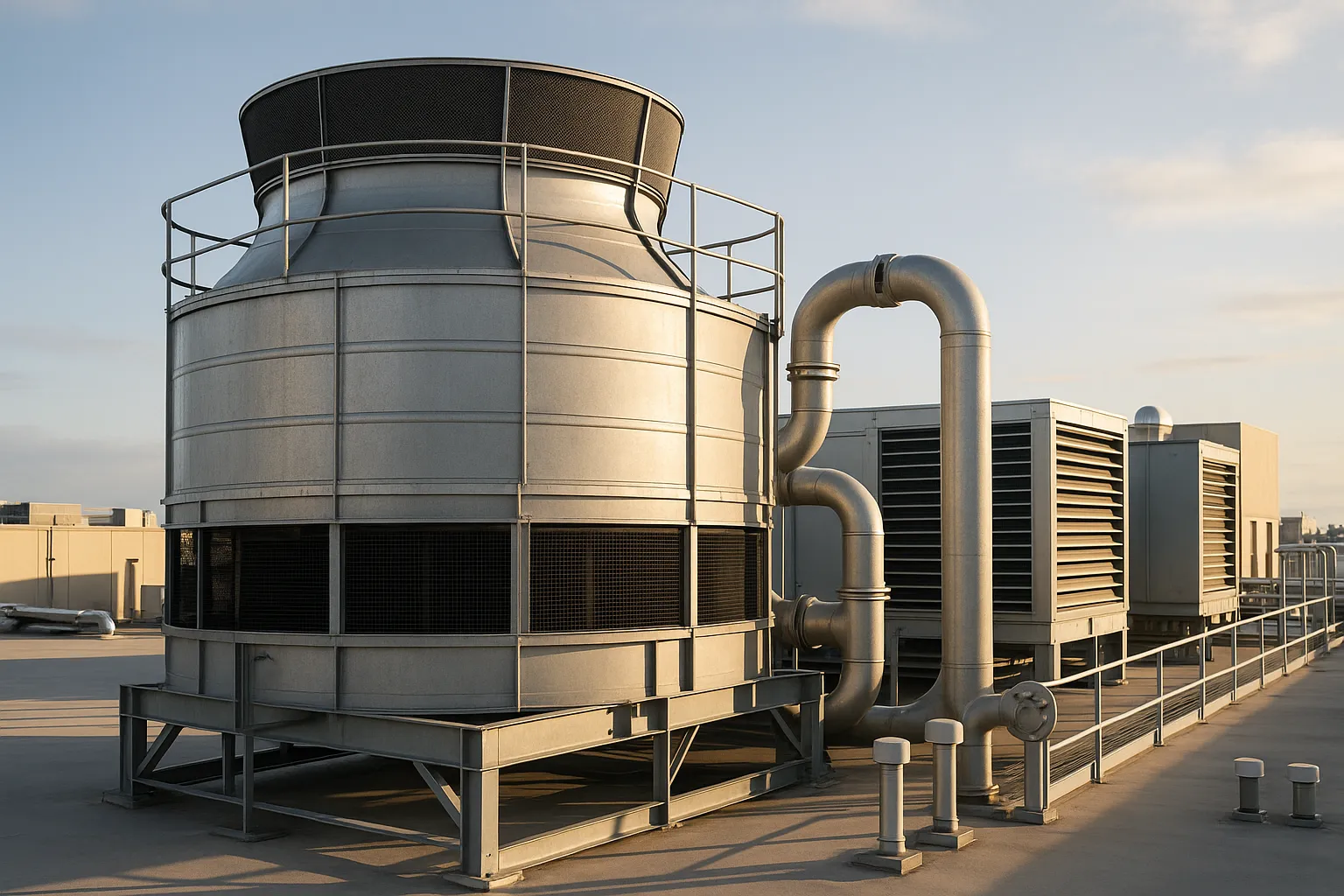
Commercial Sustainable HVAC Project Checklist
- Benchmark the building and establish a documented baseline.
- Complete an equipment, controls, ventilation, and refrigerant inventory.
- Identify regulatory requirements, utility incentives, and permitting constraints.
- Compare RTUs, heat pumps, chillers, VRF, DOAS, and energy recovery against the actual load profile.
- Model 50- to 500-plus-ton options using part-load and peak conditions.
- Specify low-GWP refrigerant eligibility and refrigerant-management responsibilities.
- Require controls sequences, point lists, trend logs, functional testing, and operator training.
- Plan tenant communication, temporary conditioning, phasing, and critical-load protection.
- Track post-installation energy, demand, comfort, maintenance, and alarm performance.
- Recommission the system when occupancy, schedules, or major equipment changes.
Frequently Asked Questions
What sustainable HVAC technology is best for a 100-ton commercial building?
There is no universal best system for a 100-ton building. Compare high-efficiency rooftop heat pumps, packaged RTUs, VRF with dedicated outdoor air, and a small central plant using the building’s load profile, climate, zoning, ventilation, electrical service, and operating schedule. Require lifecycle-cost modeling, refrigerant compliance review, controls integration, commissioning, and service-support documentation before selecting equipment.
Are sustainable commercial HVAC upgrades worth the cost?
They can be, but the return depends on operating hours, utility rates, equipment condition, climate, incentives, and the quality of implementation. Controls corrections may offer a lower-cost first step, while replacement projects can combine energy savings with avoided repairs and improved reliability. Calculate payback and lifecycle value using measured baseline data, conservative savings assumptions, and commissioning costs.
How do new refrigerant rules affect commercial HVAC equipment purchases?
EPA technology-transition requirements under the AIM Act restrict higher-GWP HFCs by equipment category and application, with different requirements for systems such as VRF, heat pumps, rooftop equipment, chillers, and refrigeration. Before purchase, confirm the permitted refrigerant, equipment manufacturing and installation dates, safety requirements, and supplier documentation with the design team and applicable authorities.
What should a property manager include in a sustainable HVAC bid specification?
Specify capacity, efficiency at design and part-load conditions, refrigerant and compliance documentation, acoustics, electrical requirements, controls points, sequences, economizer or ventilation performance, warranty, startup, commissioning, training, maintenance access, spare parts, lead time, and exclusions. Require bidders to identify structural, electrical, crane, phasing, and temporary-conditioning costs rather than leaving them as allowances.
How can facility managers verify that an HVAC retrofit achieved its promised savings?
Record baseline utility and operating data, correct meter and sensor errors, and define measurement and verification methods before construction. After startup, trend equipment and zone performance through representative weather and occupancy conditions. Compare normalized energy and demand with the baseline, while separately tracking comfort, indoor air quality, alarms, maintenance, and failed equipment. Commissioning documentation should explain variances.
Related Reading on My HVAC Tech
- AI-Enabled BMS Can Cut Commercial HVAC Energy Use by Up to 27%
- Commercial HVAC Inspection Frequency: A Practical Guide for Building Owners
Find a Qualified Commercial HVAC Contractor
Need help acting on this? Browse vetted commercial HVAC contractors in your area, or explore commercial HVAC services like preventive maintenance, retrofits, and emergency repair. Are you a contractor? List your business on My HVAC Tech to reach property and facility managers actively searching for help.


