

 My HVAC Tech
Indoor Air Quality Workplace Productivity: A Commercial HVAC Guide
Quick Answers for Property & Facility Managers
How does indoor air quality affect workplace productivity?
Indoor air quality can influence comfort, concentration, perceived fatigue, and work performance. Property managers should address pollutant sources, verify outdoor-air delivery, maintain filters, and control temperature and humidity. Use HVAC trend data and occupant feedback to identify issues, then prioritize corrective work that improves conditions without creating excessive energy or maintenance costs.
What is the best HVAC strategy for improving commercial indoor air quality?
The best strategy combines source control, code-compliant outdoor-air ventilation, effective filtration, and continuous maintenance. Confirm outside-air dampers and controls, select filters the equipment can handle, inspect coils and drain pans, and use calibrated sensors. ASHRAE Standard 62.1 provides a widely used framework for acceptable commercial ventilation and IAQ.
Should a commercial building install air-quality monitors?
Air-quality monitors can help facility teams detect trends in carbon dioxide, particulate matter, temperature, and humidity, but they do not replace commissioning or professional testing. Use them to identify occupied-space patterns, ventilation problems, and maintenance priorities. Select calibrated devices, establish alert thresholds, and connect meaningful alarms to a documented response plan.
Why Indoor Air Quality Workplace Productivity Matters to Commercial Property Leaders
Indoor air quality workplace productivity is a facilities issue, not merely a comfort issue. In offices, retail properties, healthcare buildings, and warehouses, occupants depend on HVAC systems to dilute pollutants, control temperature and humidity, and move filtered air through occupied areas. Poor conditions can contribute to complaints, distraction, perceived stuffiness, odors, and avoidable disruption.
The U.S. Environmental Protection Agency identifies three core IAQ strategies: manage pollutant sources, dilute contaminants with ventilation, and remove particles through filtration.[2] ASHRAE Standard 62.1 establishes minimum ventilation rates and related design, operation, and maintenance practices for most commercial occupied spaces.[1] These frameworks help property managers turn general IAQ concerns into measurable facility actions.
Productivity should not be treated as a guaranteed financial outcome from one equipment upgrade. Instead, evaluate IAQ projects through a balanced scorecard: fewer complaints, improved comfort, more stable HVAC operation, reduced emergency calls, documented compliance, and better visibility into building performance.
Step 1: Establish an Indoor Air Quality Baseline
Begin with a building-wide assessment before purchasing equipment. Review tenant complaints, work orders, preventive-maintenance records, utility data, occupancy schedules, and recent HVAC commissioning reports. Map recurring issues by floor, zone, tenant type, and time of day.
- Measure carbon dioxide as an occupancy and ventilation indicator, not as a complete IAQ score.
- Trend temperature and relative humidity in representative occupied zones.
- Check particulate matter where outdoor pollution, construction, loading docks, or healthcare activity may be significant.
- Inspect for odors, water intrusion, microbial growth, blocked returns, damaged insulation, and poorly located outdoor-air intakes.
- Verify that sensors are calibrated and installed away from supply-air discharge, doors, windows, and direct sunlight.
- Document outdoor-air damper position, supply-air volume, filter pressure drop, and equipment alarms.
For larger properties, use a zone-by-zone risk register. A 50-ton office rooftop unit serving a conference area may require different attention from a 500-plus-ton central plant serving a hospital or multi-tenant tower. Warehouses may need special review of dock-door infiltration, combustion products, forklift activity, and ventilation in occupied work areas.
Step 2: Verify Ventilation Across Rooftop Units, Chillers, and VRF Systems
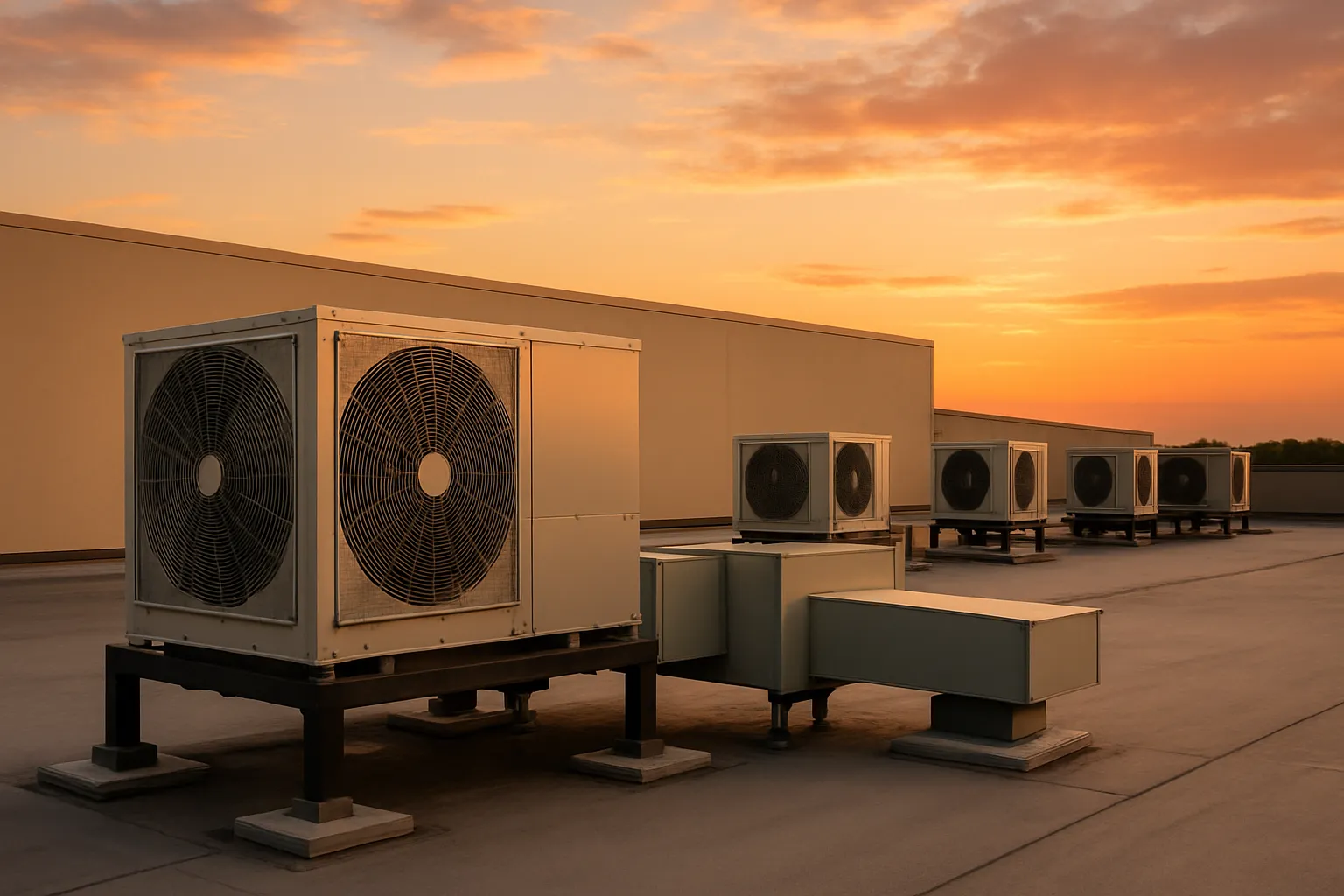
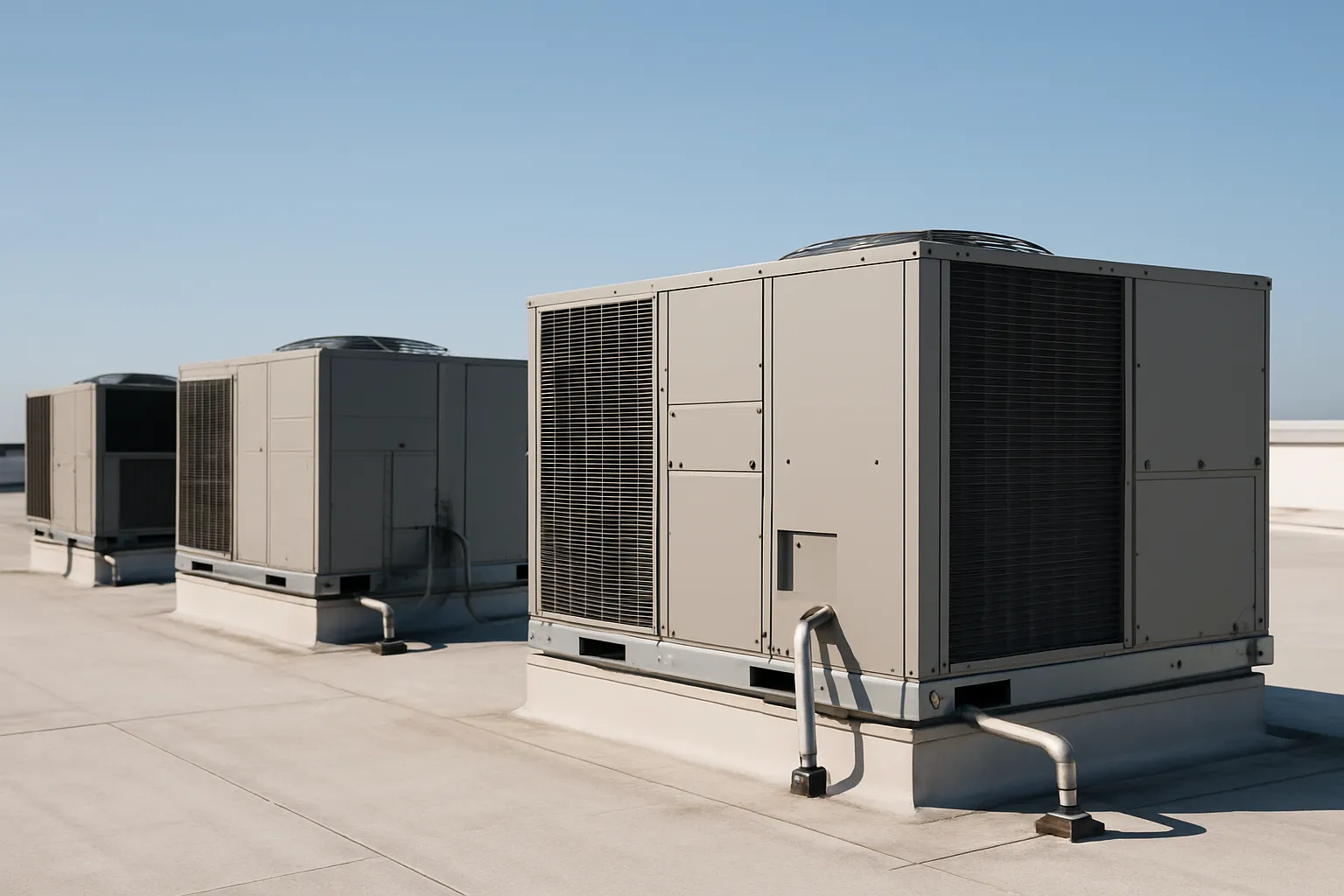
Ventilation performance depends on system type, controls, building use, and operating schedule. Rooftop units commonly combine heating, cooling, filtration, supply fans, economizers, and outdoor-air dampers. Verify that dampers move correctly, minimum positions are programmed properly, actuators respond, and economizer sequences do not introduce unconditioned air that creates moisture or comfort problems.
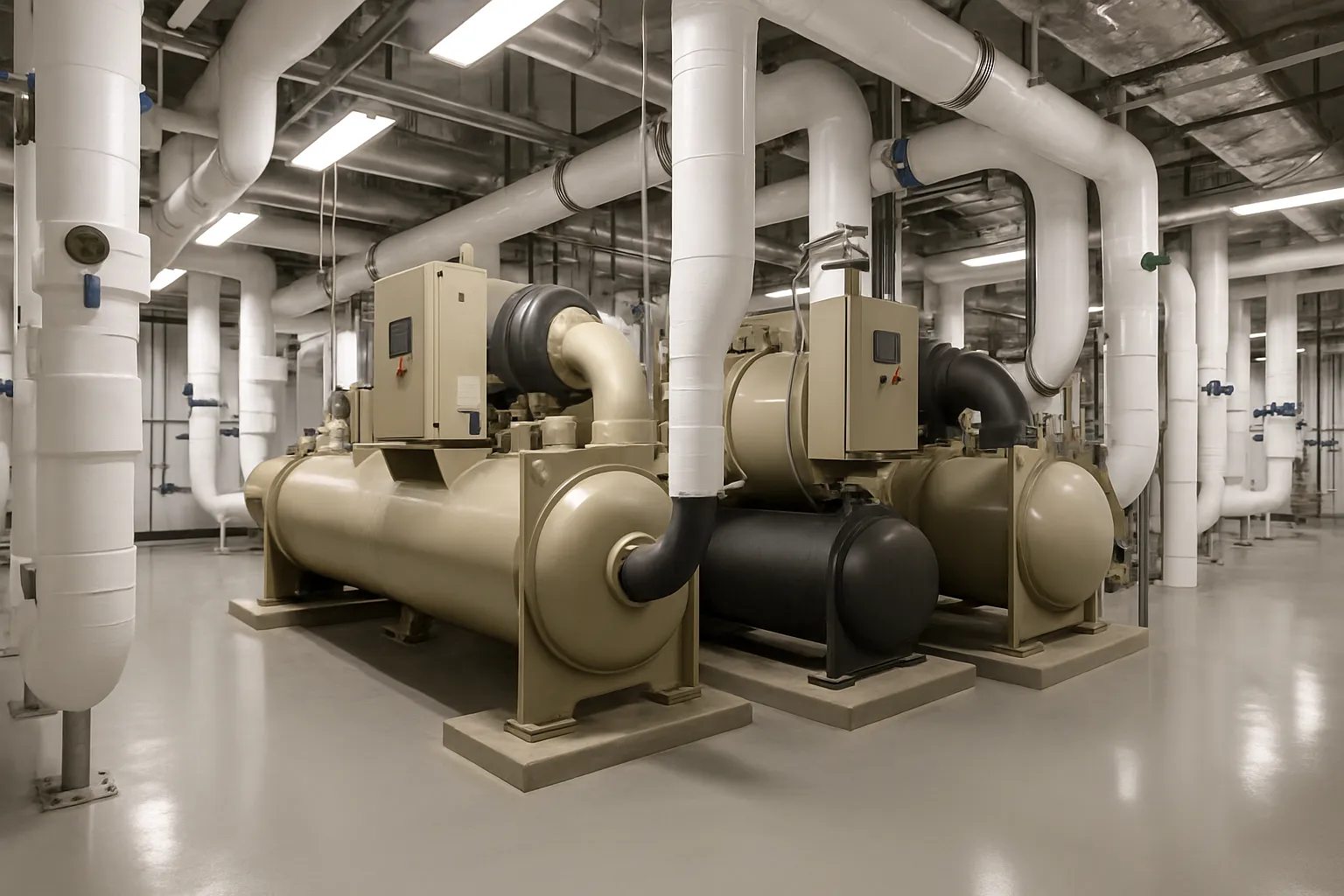
In chilled-water buildings, inspect air-handling units, outside-air handlers, coils, valves, variable-frequency drives, and building automation sequences. A chiller plant can deliver reliable cooling while occupied zones still experience poor IAQ if air handlers have inadequate outdoor air, failed sensors, dirty filters, or unbalanced airflow. Confirm that ventilation remains adequate during low-load and part-load operation.
VRF systems provide efficient zone heating and cooling but often require separate dedicated outdoor-air systems or energy-recovery ventilation. Do not assume a VRF installation provides sufficient ventilation simply because each zone has a conditioned indoor unit. Verify the dedicated ventilation unit, duct distribution, controls, filtration, condensate management, and interaction with exhaust systems.
Apply the requirements of the adopted code and the applicable edition of ASHRAE 62.1. A qualified HVAC professional should measure airflow where design documents, occupant density, or control sequences are uncertain. Increasing outdoor air without checking heating, cooling, dehumidification, fan capacity, and energy impact can create new problems.
Step 3: Improve Filtration Without Overloading HVAC Equipment
Filtration is one part of an IAQ plan. EPA guidance recommends using MERV 13 or the highest rating a system can accommodate when increasing filtration for airborne particles.[8] The correct choice depends on filter size, face velocity, fan capacity, coil cleanliness, gasket condition, and acceptable pressure drop.
- Record the installed filter dimensions, MERV rating, replacement date, and measured pressure drop.
- Inspect racks, access doors, and gaskets for bypass air.
- Confirm that the fan can maintain required airflow after the filter upgrade.
- Clean coils and fan sections before evaluating a persistent airflow problem.
- Use differential-pressure monitoring on critical air handlers and large rooftop units.
- Do not install higher-efficiency filters without reviewing manufacturer data and system capability.
For healthcare spaces, laboratories, retail stores, and high-occupancy offices, filtration requirements may vary by room function and applicable standards. Portable air cleaners or in-duct technologies may supplement the central system, but they should not substitute for source control, outdoor-air ventilation, or proper maintenance. Evaluate ultraviolet or other air-cleaning technologies based on verified performance, safety, maintenance requirements, and compatibility with the equipment.
Step 4: Use Controls and Monitoring to Protect Productivity
Building automation systems can make IAQ improvements operational rather than one-time. Trend outdoor-air damper position, supply-air temperature, return-air temperature, fan status, filter pressure, occupancy schedules, and zone conditions. Set alerts for failed sensors, simultaneous heating and cooling, excessive carbon dioxide trends, high humidity, and abnormal filter loading.
Demand-controlled ventilation can reduce unnecessary outdoor-air conditioning in variable-occupancy spaces while responding to occupancy indicators. However, sequences require commissioning. Incorrect sensor placement, disabled overrides, or poorly written minimum-airflow logic can undermine performance. Healthcare and other high-risk environments may require fixed ventilation rates or stricter controls.
Use monitoring as a decision-support tool. Establish an action matrix before alarms begin. For example, a trend may trigger a damper inspection; a persistent particulate increase may require source investigation; repeated humidity excursions may require coil, condensate, envelope, or control review. Assign responsibility, response time, and documentation requirements.
Step 5: Build a Practical IAQ Maintenance Program
Maintenance is often the lowest-cost IAQ intervention. A preventive plan should cover equipment from approximately 50-ton rooftop units through central plants exceeding 500 tons, with task frequency adjusted for run time, environment, occupancy, and manufacturer requirements.
- Replace filters based on condition and pressure drop rather than an unsupported calendar assumption.
- Inspect outdoor-air intakes and exhaust outlets for blockage, recirculation, and contamination sources.
- Clean coils, drain pans, condensate lines, fan sections, and accessible duct components.
- Test economizers, dampers, actuators, ventilation controls, and freeze protection.
- Check for standing water, leaks, corrosion, damaged insulation, and biological growth.
- Review airflow balance after tenant build-outs, space reconfiguration, or major equipment changes.
- Commission controls after software changes, sensor replacement, or major service work.
Keep records that connect work performed to measured outcomes. A facilities team can then distinguish a filter problem from a ventilation-design problem, a moisture problem, or an occupant-source problem.
Cost, ROI, and Procurement Considerations for Commercial IAQ Projects
IAQ project cost varies substantially by building size, equipment condition, access, labor market, controls integration, electrical capacity, and required testing. Avoid using a universal per-square-foot estimate without a site survey. Lower-cost actions may include sensor calibration, filter-rack sealing, control correction, drain-pan cleaning, and outdoor-air damper repair. Larger investments may include energy-recovery ventilation, dedicated outdoor-air systems, air-handler replacement, controls modernization, or central-plant upgrades.
Evaluate ROI across several categories: reduced complaint-related labor, fewer emergency service events, avoided moisture damage, improved tenant retention, lower risk from undocumented ventilation performance, and energy effects. Increasing outdoor air can raise heating, cooling, and dehumidification loads, while energy recovery, scheduling, and demand-controlled ventilation may offset part of that impact. Request an engineering-based estimate rather than promising a fixed payback.
When soliciting bids, require equipment schedules, filter specifications, airflow testing, controls sequences, commissioning scope, warranty terms, maintenance requirements, and a clear description of what is excluded. My HVAC Tech can help commercial decision-makers compare qualified HVAC providers for assessments, repairs, replacements, and planned maintenance.
Commercial Indoor Air Quality Action Checklist
- Identify the building’s highest-occupancy and highest-risk zones.
- Review complaints, work orders, schedules, and HVAC trend data.
- Test representative zones for ventilation indicators, temperature, humidity, and particles where appropriate.
- Inspect rooftop units, air handlers, chillers, VRF ventilation equipment, filters, coils, dampers, and drain pans.
- Compare ventilation operation with adopted code and applicable ASHRAE requirements.
- Correct source, maintenance, and control problems before adding complex technology.
- Verify filter compatibility and pressure drop before upgrading efficiency.
- Commission repairs and document baseline conditions and post-work results.
- Track complaints, alarms, maintenance costs, energy use, and tenant feedback for continuous improvement.
Frequently Asked Questions
What is the ROI of improving indoor air quality in a commercial building?
ROI depends on the building, baseline condition, occupancy, energy prices, and selected improvements. The strongest business case may combine fewer complaints, less reactive maintenance, improved comfort, reduced moisture risk, and better tenant experience rather than a single productivity calculation. Compare implementation cost with measured operating outcomes, and account for energy penalties from additional outdoor air or higher filter resistance. Request commissioning and measurement as part of the project scope.
How much does a commercial indoor air quality assessment cost?
There is no reliable universal price because assessment scope ranges from a visual HVAC review to detailed airflow testing, laboratory sampling, controls analysis, and commissioning. Building size, access, occupancy risk, equipment type, and geographic labor rates affect cost. Obtain a written scope that identifies measurements, instruments, zones, deliverables, corrective recommendations, and follow-up verification. Avoid vendors who promise a definitive diagnosis from one reading or one device.
What IAQ equipment should a 50- to 500-ton commercial building prioritize?
Priorities depend on the baseline, but most facilities should first verify outdoor-air delivery, filtration, airflow, moisture control, and equipment cleanliness. Rooftop units need damper, economizer, filter, and drain-pan review. Chilled-water systems need air-handler and controls verification. VRF buildings need dedicated outdoor-air-system evaluation. Add monitoring, energy recovery, or supplemental air cleaning only after foundational deficiencies are understood.
Can better ventilation increase commercial HVAC energy costs?
Yes. More outdoor air can increase heating, cooling, fan, and dehumidification loads, especially in extreme climates. The solution is not to reduce ventilation below applicable requirements; it is to optimize schedules, economizer operation, controls, fan speed, heat recovery, filtration, and equipment capacity. Have an HVAC professional model or estimate the operational effect before changing ventilation setpoints across a large property.
How should property managers choose an IAQ contractor?
Choose a contractor with commercial references, qualified testing personnel, controls experience, and familiarity with the building’s equipment. Require documented airflow measurements, filter-pressure readings, commissioning procedures, safety practices, and transparent recommendations. For healthcare or specialized facilities, verify experience with the applicable codes and room requirements. Favor providers that separate measured deficiencies from optional products and explain maintenance and lifecycle cost.
Related Reading on My HVAC Tech
- Building Automation Systems Energy Efficiency: A Commercial HVAC Guide
- Commercial HVAC Heat-Stress Mitigation: Carrier Supports Japan’s Tallest Building Project
Find a Qualified Commercial HVAC Contractor
Need help acting on this? Browse vetted commercial HVAC contractors in your area, or explore commercial HVAC services like preventive maintenance, retrofits, and emergency repair. Are you a contractor? List your business on My HVAC Tech to reach property and facility managers actively searching for help.


