

 My HVAC Tech
Building Automation Systems Energy Efficiency: A Commercial HVAC Guide
Quick Answers for Property & Facility Managers
How do building automation systems improve energy efficiency in commercial buildings?
Building automation systems improve efficiency by coordinating HVAC schedules, temperature setpoints, ventilation, equipment staging, and alarms. For commercial buildings, a properly commissioned BAS can reduce unnecessary runtime, prevent simultaneous heating and cooling, optimize rooftop units, chillers, and VRF systems, and give facility teams data to identify faults and verify results. Savings depend on equipment condition, controls quality, occupancy, climate, and operating practices.
What should property managers automate first in a commercial HVAC system?
Start with high-runtime equipment and measurable operating problems: rooftop-unit schedules, supply-air temperature reset, VAV minimum airflow, economizer operation, chilled-water setpoints, pump speed, and simultaneous heating and cooling. Confirm sensors and actuators before changing sequences. Prioritize measures that improve comfort and reduce runtime without compromising ventilation, humidity control, healthcare requirements, or warehouse process conditions.
Are building automation systems worth the cost for a commercial property?
A BAS can be financially worthwhile when it addresses excessive runtime, poor scheduling, comfort complaints, peak demand, or inefficient equipment staging. The business case should compare installed controls, integration, commissioning, training, service, and cybersecurity costs with documented energy, maintenance, and operational benefits. Use utility bills, interval data, trend logs, and a defined measurement-and-verification plan rather than relying on an assumed savings percentage.
Why Building Automation Systems Energy Efficiency Matters to Commercial Property Teams
For property managers, facility managers, and building owners, building automation systems energy efficiency means using controls and operating data to deliver required comfort, ventilation, humidity, and process conditions with less avoidable HVAC runtime. A BAS typically connects sensors, controllers, actuators, meters, and supervisory software so teams can monitor and coordinate HVAC equipment rather than operating each system in isolation.
The strongest business case is usually operational: correcting schedules, identifying failed sensors, preventing simultaneous heating and cooling, staging equipment correctly, and responding to abnormal energy use. The U.S. Department of Energy describes BAS technology as a way to monitor and regulate HVAC and other building systems through sensors, actuators, and programmed control logic. DOE research has also modeled substantial potential from coordinated control measures, but modeled results should not be treated as a guaranteed project outcome.
Energy efficiency must remain subordinate to building requirements. Offices may prioritize occupancy scheduling and comfort; retail facilities may need extended hours at entrances; healthcare buildings may require strict pressure, filtration, temperature, and humidity control; warehouses may have high-bay destratification, loading-door, refrigeration, or process constraints. Define those requirements before changing sequences.
Building Automation Systems Energy Efficiency Audit Checklist
Begin with an operational audit, not a software purchase. Assemble 12 to 24 months of electric and fuel bills, interval utility data when available, equipment schedules, floor plans, control drawings, service records, comfort complaints, and current sequence-of-operation documents.
- List every major HVAC asset, including rooftop units, air handlers, VAV boxes, exhaust systems, boilers, chillers, cooling towers, pumps, heat pumps, and VRF systems.
- Record equipment capacity, age, refrigerant or water configuration, operating hours, critical zones, and current control points.
- Verify whether temperature, humidity, carbon dioxide, pressure, flow, current, and energy meters are installed and calibrated.
- Compare BAS schedules with lease hours, tenant access, cleaning periods, loading operations, and actual occupancy.
- Identify simultaneous heating and cooling, excessive static pressure, low chilled-water delta-T, excessive outside air, nuisance alarms, and manual overrides.
- Check whether economizers, variable-frequency drives, dampers, valves, and safeties operate physically as commanded.
- Document cybersecurity, remote-access, backup, user-permission, and integration requirements before connecting systems.
Use a building energy score, utility trend, or engineering analysis to establish a baseline. ENERGY STAR recommends a management cycle that includes commitment, assessment, goals, action planning, implementation, evaluation, and recognition. That approach helps owners connect BAS work to measurable operating objectives.
How to Optimize Rooftop Units From 50 to 500+ Tons
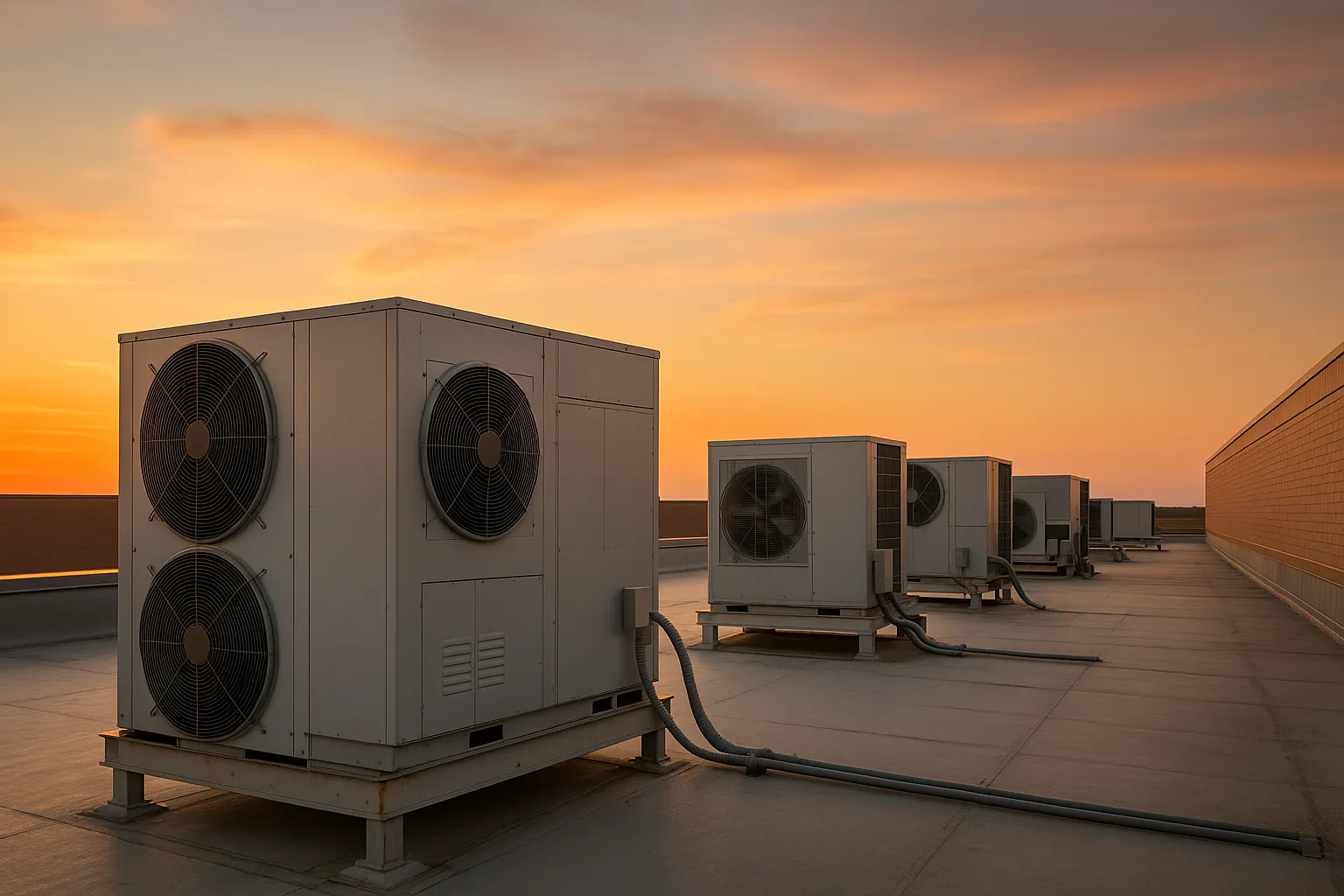
Rooftop units are common in offices, retail, warehouses, schools, and light industrial buildings. A BAS should control more than an occupied/unoccupied flag. For each RTU, confirm supply-air temperature, mixed-air or outdoor-air temperature, return-air temperature, discharge pressure where applicable, fan status, filter condition, compressor stages, heating stages, economizer position, and alarm status.
Set schedules from actual occupancy and use optimal start and stop only after confirming the building response time. Apply occupied and unoccupied temperature limits that protect equipment and meet tenant or process requirements. Where climate and indoor conditions permit, use outdoor-air economizer logic before mechanical cooling. Interlock economizer dampers with compressor operation and establish low-temperature, high-humidity, smoke, and freeze protections.
For VAV systems, reset supply-air temperature and duct static pressure based on zone demand rather than holding an unnecessarily aggressive fixed setpoint. Review terminal-box minimum airflow because excessive minimums can increase fan energy and cause simultaneous reheat. Demand-controlled ventilation may be appropriate in variable-occupancy spaces, but it must not defeat required outdoor-air rates or applicable codes.
For larger facilities with multiple RTUs totaling 50 to 500+ tons, coordinate unit staging and peak-demand response. Avoid starting all compressors simultaneously, but do not short-cycle equipment to chase a narrow setpoint. Trend discharge temperature, fan speed, compressor stages, economizer position, zone demand, and alarms for at least several representative operating periods.
Chiller Plant Controls for 50 to 500+ Ton Facilities
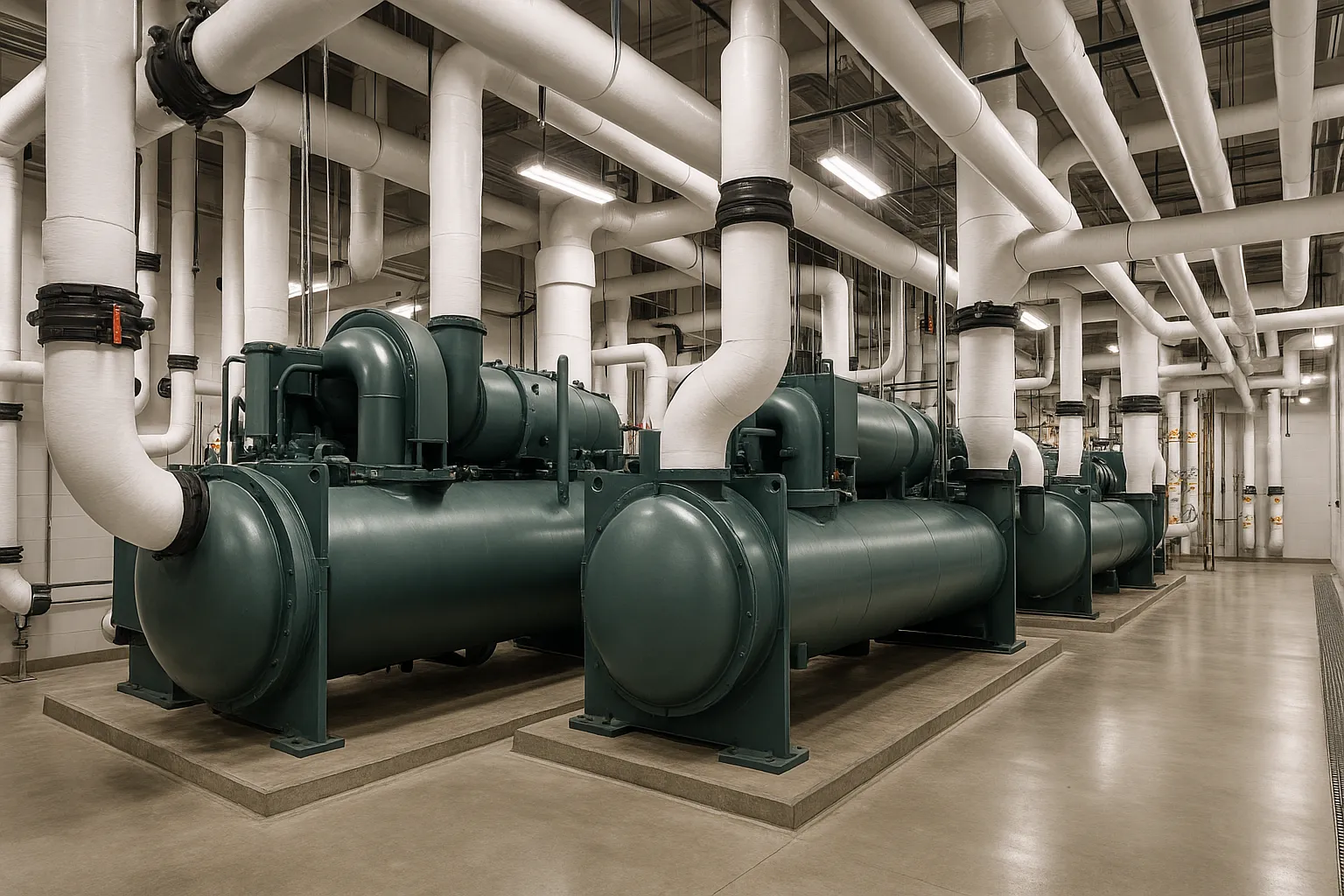
Chilled-water plants require system-level control. For a 50-ton office plant, the priority may be scheduling, chilled-water temperature reset, and pump control. A 500-ton or larger plant may require coordinated chiller staging, variable-primary or primary-secondary pumping, cooling-tower control, condenser-water reset, waterside economizer logic, and demand management. The correct sequence depends on design, climate, load profile, manufacturer limits, and water treatment conditions.
Trend chilled-water supply and return temperatures, flow, delta-T, pump speed, chiller loading, compressor lift, condenser-water temperature, tower fan speed, valve position, and plant power. Investigate low delta-T before simply lowering chilled-water temperature or starting another chiller. Poor coil control, excessive flow, bypassing, fouled coils, incorrect sensors, and low valve authority can all contribute.
Use lead-lag rotation and minimum run-time, minimum off-time, and capacity thresholds recommended by the equipment manufacturer. Reset chilled-water supply temperature only when zone demand, valve positions, humidity, and critical loads permit. Coordinate tower fans and condenser-water temperature with chiller efficiency while observing approach temperatures, freeze protection, Legionella management procedures, and local requirements.
ASHRAE Guideline 36 provides high-performance HVAC sequences intended to improve energy efficiency, control stability, and fault detection. Use it as an engineering reference, then adapt sequences to the actual plant and verify every point through functional testing.
VRF and Heat-Pump BAS Integration Without Losing Comfort
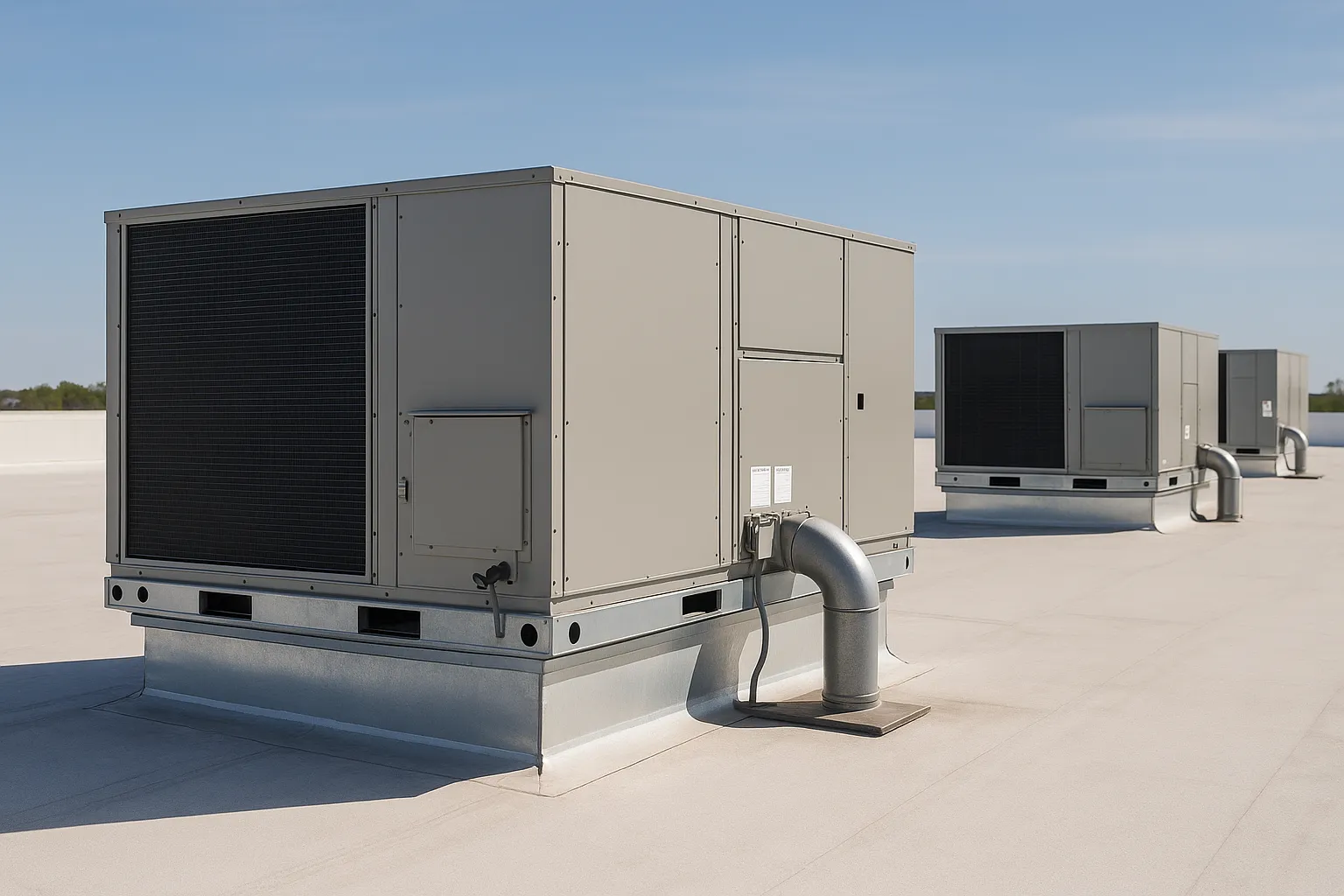
VRF systems can serve offices, hotels, retail spaces, and mixed-use properties with zoned control, but integration is often limited by manufacturer gateways and indoor-unit controls. Confirm exactly what the BAS can read and command: enable status, mode, space temperature, setpoint, fan speed, alarms, demand limits, refrigerant or branch-controller status, and outdoor-unit capacity.
Use centralized scheduling and setpoint limits to prevent tenant controllers from creating conflicting demands. Coordinate ventilation systems with VRF operation because VRF indoor units generally do not replace code-required outdoor-air ventilation. In heat-recovery systems, review simultaneous heating and cooling opportunities, branch-controller operation, defrost behavior, and refrigerant circuit alarms.
For warehouses and large open spaces, verify that temperature sensors represent occupied conditions. A poorly located sensor can cause unnecessary heating or cooling across a large zone. Trend space temperature, setpoint, mode, compressor capacity, outdoor conditions, and occupancy-related schedules before changing controls.
Commissioning, Fault Detection, and Measurement
Controls savings are lost when sensors drift, actuators fail, sequences are incomplete, or operators bypass automation. Commission the system in stages: point-to-point verification, sensor calibration, actuator stroke testing, alarm testing, sequence testing, trend review, and operator training.
- Approve a points list and sequence of operation for every controlled asset.
- Test each sensor against a calibrated reference and correct scaling or wiring errors.
- Command valves, dampers, fans, pumps, compressors, and stages, then verify physical response.
- Test occupied, unoccupied, warm-up, cool-down, alarm, failure, emergency, and manual-override modes.
- Trend representative zones and equipment under different weather and load conditions.
- Configure actionable alarms with priorities, delays, responsible personnel, and escalation rules.
- Train operators to interpret trends and restore automatic control after temporary overrides.
- Compare post-project energy and demand with a weather- and occupancy-adjusted baseline.
Fault detection and diagnostics can identify stuck dampers, failed sensors, excessive simultaneous heating and cooling, abnormal runtime, and poor plant performance. Do not flood operators with alarms. A short list of reliable, actionable alarms is more valuable than thousands of unreviewed notifications.
Cost, ROI, Procurement, and Implementation Strategy
BAS project cost varies widely with building size, existing controls, equipment diversity, wiring, integration requirements, commissioning, cybersecurity, and the need for new meters or sensors. A retrofit for one RTU is fundamentally different from a multi-building platform coordinating 500+ tons of chilled water, hundreds of VAV boxes, and tenant systems. Request itemized pricing for engineering, hardware, software, graphics, licensing, installation, integration, commissioning, training, service, and future expansion.
Build the ROI from verified opportunities rather than a generic savings claim. Quantify avoidable operating hours, peak demand, reheat, simultaneous heating and cooling, comfort-related tenant work orders, maintenance calls, and equipment runtime. Include utility incentives, avoided capital replacement, maintenance labor, and the value of better fault visibility where those benefits can be documented.
Require bidders to provide a points list, written sequences, network architecture, open-protocol details, data ownership terms, backup procedures, cybersecurity controls, warranty coverage, response times, and commissioning deliverables. Specify that the owner receives current graphics, as-built control drawings, programming backups, trend histories, alarm definitions, and operator training.
Implement in phases: first correct schedules, sensors, overrides, and obvious sequence problems; next optimize equipment and plant control; then add advanced analytics, submetering, demand response, or portfolio-wide integration. This lowers risk and lets property teams verify each stage before expanding.
Frequently Asked Questions
What is the typical ROI of a commercial building automation system?
There is no reliable universal payback period because BAS ROI depends on building size, climate, operating hours, equipment condition, utility rates, controls already installed, and commissioning quality. Calculate a project-specific business case using interval energy data, equipment runtime, demand charges, maintenance records, and documented comfort issues. Include incentives and avoided equipment replacement only when they can be verified.
Can a BAS reduce energy use without replacing commercial HVAC equipment?
Yes. Controls can improve schedules, setpoints, economizer operation, ventilation, fan pressure, pump speed, chiller staging, and fault response without replacing the RTU, chiller, or VRF equipment. However, a BAS cannot overcome severely undersized, oversized, mechanically damaged, or obsolete equipment. Inspect and repair sensors, dampers, valves, actuators, coils, filters, and safeties before attributing performance problems to programming.
What BAS standards and protocols should building owners require?
Specify documented sequences, functional testing, secure network practices, and interoperability appropriate to the project. BACnet is widely used for commercial building controls, but protocol support alone does not guarantee useful integration. Require complete points lists, writable-point restrictions, trend access, alarm handling, programming backups, cybersecurity responsibilities, and clear ownership of data and software. Reference current ASHRAE high-performance sequences where applicable.
How does a BAS support healthcare and other critical facilities?
A BAS can provide scheduling, monitoring, alarms, trend records, pressure relationships, humidity oversight, and equipment-status visibility, but it must not compromise clinical, laboratory, infection-control, life-safety, or process requirements. Define critical zones and fail-safe behavior with the facility’s design professionals and compliance team. Use redundant or independent safeguards where required, and validate sequences through documented functional testing.
What are the main risks of a commercial BAS retrofit?
Common risks include inaccurate sensors, incomplete points lists, failed actuators, poor legacy-system integration, excessive alarms, undocumented overrides, cybersecurity weaknesses, and savings that are never verified. Reduce risk through a site survey, written sequences, staged installation, point-to-point testing, commissioning, operator training, secure remote access, backups, and a measurement-and-verification plan tied to utility and operating data.
Should property managers outsource BAS monitoring and optimization?
Outsourcing can help when internal staff lack controls expertise or the portfolio spans multiple buildings and vendors. Select a provider that can interpret HVAC behavior, not merely acknowledge alarms. Define service-level agreements for alarm response, trend reviews, monthly reporting, cybersecurity, programming changes, and emergency support. Retain owner access to data, graphics, credentials, backups, and documentation to avoid vendor lock-in.
Related Reading on My HVAC Tech
- Commercial HVAC Heat-Stress Mitigation: Carrier Supports Japan’s Tallest Building Project
- Washington State HFC Rules: What R-410A Changes Mean for Commercial HVAC Compliance
Find a Qualified Commercial HVAC Contractor
Need help acting on this? Browse vetted commercial HVAC contractors in your area, or explore commercial HVAC services like preventive maintenance, retrofits, and emergency repair. Are you a contractor? List your business on My HVAC Tech to reach property and facility managers actively searching for help.


