

 My HVAC Tech
Canada Counter-Tariffs on U.S. HVACR Equipment: What Facility Managers Need to Know
Quick Answers for Property & Facility Managers
How will Canada’s new counter-tariffs on U.S. HVACR equipment affect my building’s HVAC costs?
Canada’s new counter-tariffs of 15% to 50% on U.S. HVACR imports could increase prices for air-cooled chillers, rooftop units, packaged systems and replacement components sourced from U.S. OEMs. Property and facility managers should expect higher equipment quotes, longer lead times and more scrutiny of lifecycle cost and sourcing options starting September 8.
Should property and facility managers delay or accelerate HVAC projects because of these Canada–U.S. counter-tariffs?
If your project depends on U.S.-sourced HVACR equipment and is not yet ordered, you may see higher prices once counter-tariffs take effect. Some managers may accelerate purchase orders, while others will rebid with Canadian or non-U.S. manufacturers and reassess total cost of ownership, financing options and project timing.
Will existing service contracts and warranties be affected by the new HVACR counter-tariffs?
Existing service contracts and OEM warranties generally remain valid, but tariff-driven cost increases can affect replacement equipment, parts pricing and lead times. Facility managers should review contract escalation clauses, parts allowances and risk sharing with their service providers to avoid unexpected budget exposure over the next 12–24 months.
Canada’s new HVACR counter-tariffs: what building owners must understand
Canada has announced new counter-tariffs ranging from 15% to 50% on a range of U.S. imports, explicitly including categories of HVACR equipment, with an effective date of September 8. These measures are a direct response to U.S. trade actions and are expected to influence cross-border supply chains and pricing for commercial HVAC systems sourced from U.S. manufacturers.
For property managers, facility managers and building owners, this is not an abstract policy story. If your capital plans, tenant commitments or decarbonization projects rely on U.S.-made rooftop units, chillers, VRF systems or key components, your cost baseline and risk profile are about to change.
This article explains what these counter-tariffs mean in practical terms, which equipment categories are most likely to be affected, and how to protect your budgets, timelines and tenant outcomes in the months ahead.
Which commercial HVACR systems are likely to be affected?
While tariff schedules are defined at the customs code level, the announcement makes clear that HVACR equipment categories are explicitly included. For commercial and institutional buildings, that typically translates into several major equipment groupings that often originate from U.S. factories or U.S.-headquartered OEMs.
Facility and property managers should pay close attention to these categories:
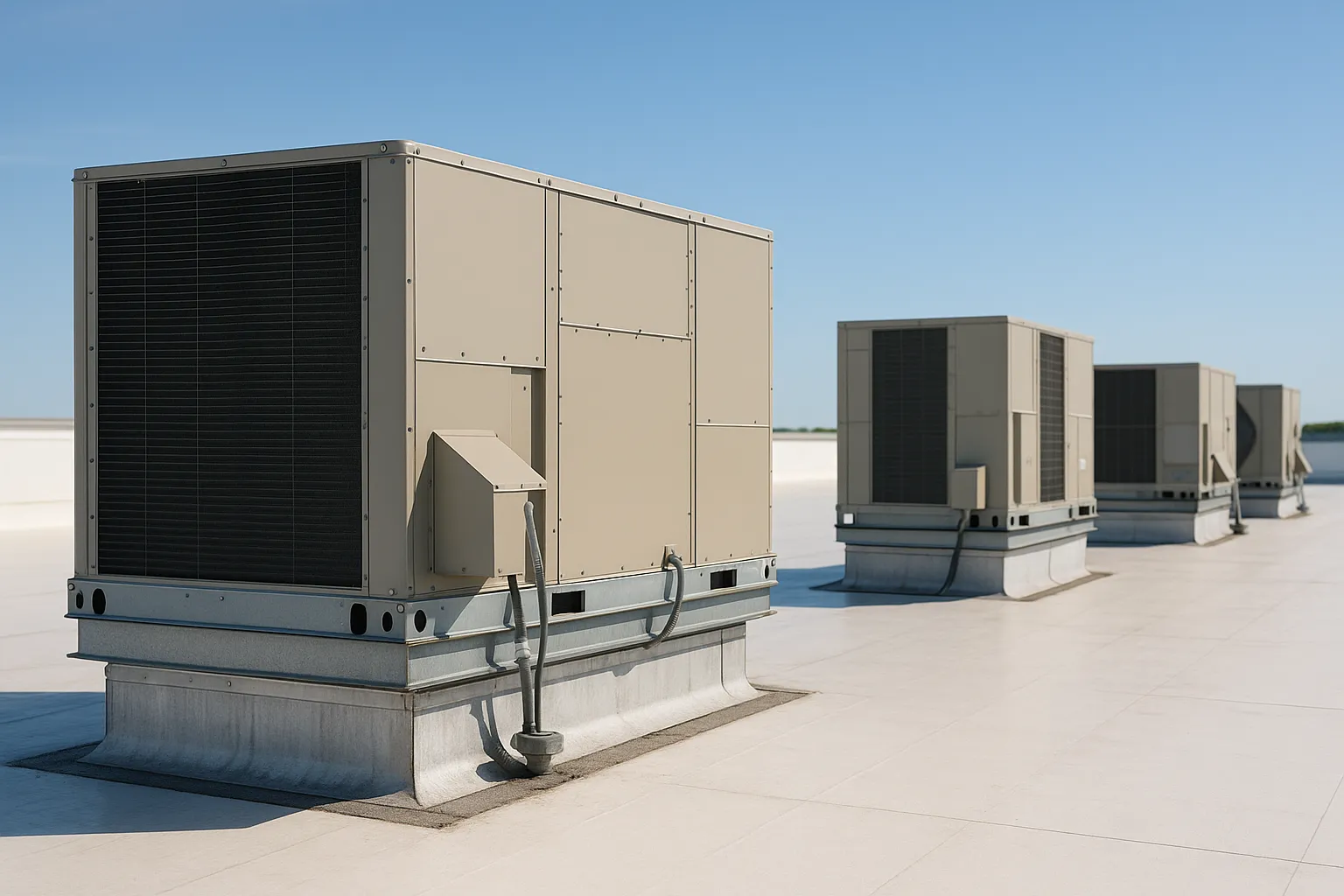
- Packaged rooftop units (RTUs): Commonly 5–50 ton units serving big-box retail, low- to mid-rise offices, schools and light industrial buildings. Many popular RTU platforms are designed and assembled in the U.S., even when final distribution is through Canadian subsidiaries.
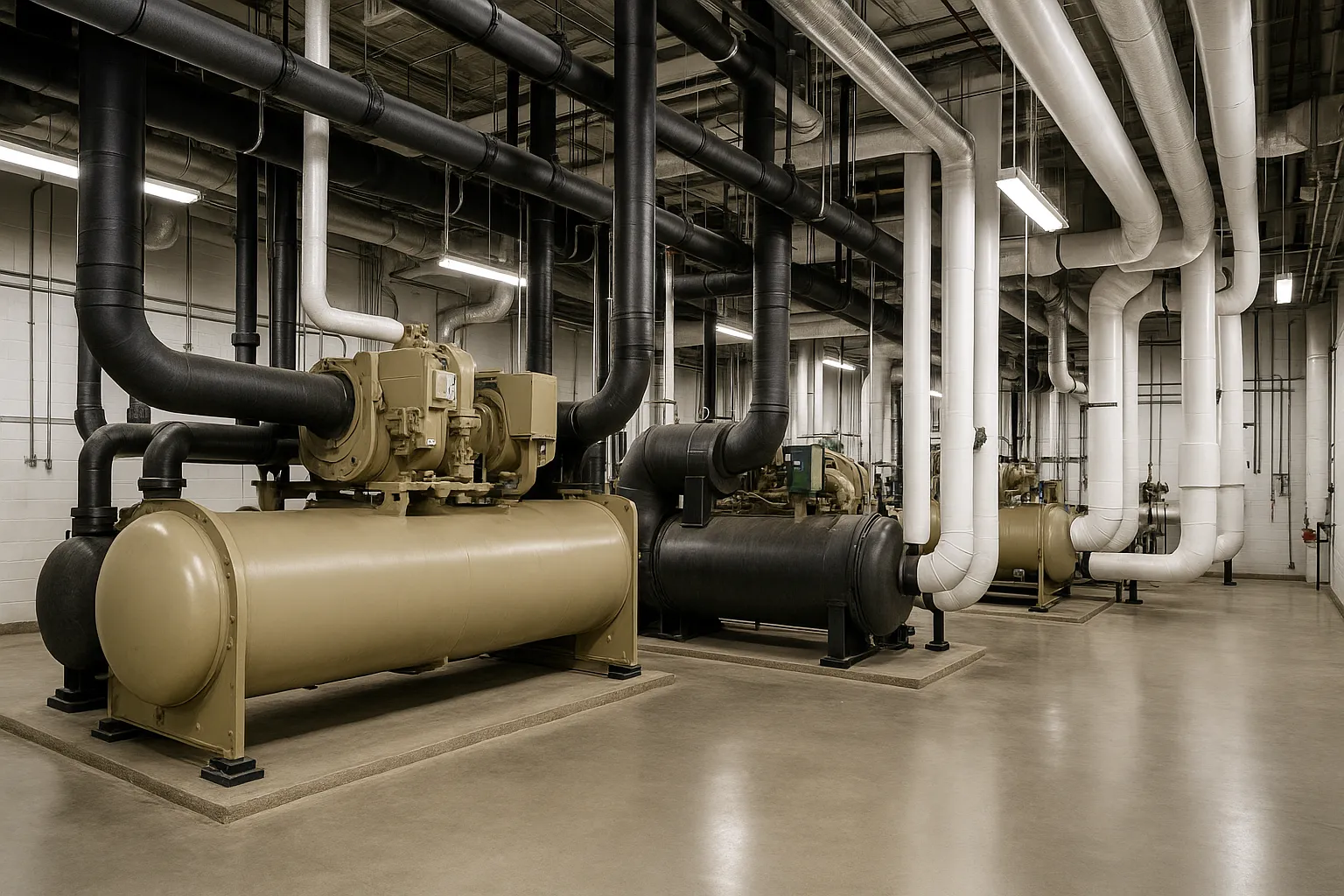
- Air-cooled and water-cooled chillers: Central plant equipment in the 100–1,000+ ton range for hospitals, campuses and high-rise offices. A significant share of high-capacity chiller production serving North America is U.S.-based.
- VRF and heat pump systems: While many VRF systems are manufactured in Asia, some integrated heat pump solutions, dedicated outdoor air systems (DOAS) and packaged systems for cold-climate applications rely on U.S. content and assembly.
- Refrigeration equipment: Supermarket racks, display cases and condensing units used in grocery, foodservice and cold storage can be U.S.-sourced and explicitly fall under HVACR.
- Replacement components: Compressors, coils, controls, economizer sections and factory-authorized OEM parts that cross the border for installed U.S.-brand equipment in Canadian buildings may also face tariffs.
Because tariffs are applied at the border, not by brand name, even Canadian or international brands that build specific platforms in U.S. plants could be affected. Facility managers overseeing multi-site portfolios across Canada should assume that any major project or replacement involving U.S. imports after September 8 could carry a 15%–50% cost uplift at the equipment level.
How counter-tariffs reshape HVAC capital and operating budgets
Counter-tariffs do not automatically translate into identical price increases, but they do change the economics of HVAC projects. Many building owners are currently planning or executing projects aligned with ASHRAE energy efficiency guidance, DOE and Natural Resources Canada decarbonization roadmaps, or local mandates targeting building emissions.
Here are key budget impacts to anticipate:
- Higher upfront equipment costs: A 15%–50% tariff on imported HVACR equipment immediately raises the landed cost of U.S.-origin units. How much is passed through depends on manufacturer, distributor and contractor margins, but it is prudent to model worst-case scenarios in your capital plans.
- Shift in vendor competitiveness: Canadian manufacturers, non-U.S. international OEMs and locally assembled systems may become more price-competitive relative to U.S. imports. This can alter bid results for projects already at the RFP stage.
- Budget risk for multi-year programs: If you are sequencing HVAC upgrades over several years—such as phase-by-phase RTU replacement or central plant modernization—tariffs can make later phases more expensive if designs assume U.S.-sourced platforms.
- Opex impacts through parts and repairs: Tariffs on replacement parts can increase service visit costs, especially when OEM-only parts are required to maintain warranties or compliance with AHRI performance listings.
ASHRAE and DOE consistently stress lifecycle cost analysis rather than lowest first cost when evaluating HVAC investments. In a higher-tariff environment, this becomes even more critical. A slightly more expensive, non-U.S. system with lower energy consumption or better compatibility with your building automation system may still deliver superior net present value compared to a tariff-burdened alternative.
Supply chain and project timing risks facility managers must manage
In addition to direct cost impacts, the new counter-tariffs introduce timing and supply chain risks that can ripple through your capital and tenant-improvement programs.
Key risks to manage include:
- Border and customs delays: Any new tariff regime requires changes in documentation, classification and customs procedures. Short-term confusion can trigger delays for shipments scheduled around the effective date.
- Order reconfigurations: Some manufacturers may reassign production to non-U.S. plants over time, but in the near term, your specified model and capacity may only be available from a U.S. factory, limiting immediate alternatives.
- Contractor scheduling compression: If many owners accelerate orders or replacements to beat tariff implementation, contractors may become overbooked, creating labor bottlenecks and installation delays.
- Lead time volatility: OEMs may adjust production plans and allocation as demand shifts between U.S. and international product lines, leading to longer or less predictable lead times for certain tonnages or product families.
For building owners with mission-critical facilities—data centres, hospitals, laboratories, cold storage—unplanned HVAC delays can pose operational and regulatory risks. Aligning with ASHRAE’s emphasis on risk-informed facility management, it is advisable to treat tariff-driven disruption as a scenario in your resilience planning.
Proactive communication with OEMs, distributors and mechanical contractors is essential. Request updated lead time and pricing assumptions for projects scheduled for Q4 and beyond, and build contingency windows into your project timelines.
Strategic sourcing and specification options in a tariff environment
The new counter-tariffs also create an opportunity—if not an obligation—for facility and property managers to revisit their HVAC sourcing strategies. Rather than treating tariffs as a temporary nuisance, many owners will use this as a catalyst to diversify suppliers and standardize on platforms that minimize geopolitical and trade risk.
Consider the following strategic actions:
- Rebid with alternative OEMs: Issue alternate bids that include Canadian-based manufacturers, non-U.S. global OEMs and regionally assembled platforms for key tonnage bands, such as 7.5–25 ton RTUs or 200–500 ton chillers.
- Evaluate design flexibility: Work with your consulting engineer to determine whether functional equivalents from non-U.S. factories can meet ASHRAE Standard 90.1 efficiency requirements and your local energy code while avoiding tariff exposure.
- Standardize at the portfolio level: For national portfolios, select 2–3 preferred platforms per equipment class that can be sourced from multiple regions. This reduces dependency on any single country’s trade environment.
- Review refrigerant strategy: Many owners are already transitioning to lower-GWP refrigerants in anticipation of evolving EPA, Environment and Climate Change Canada and provincial regulations. When respecifying equipment, combine refrigerant and tariff considerations so you do not have to re-standardize again in a few years.
- Engage energy and sustainability teams: Tariff-driven changes may affect your pathway to net-zero or ESG commitments. Align capital planning with energy modelling, utility incentive programs and operational improvements recommended by ASHRAE and DOE guidance.
Where possible, use competitive tension. Ask suppliers to identify which of their offerings are tariff-affected and which are not, and require transparent pricing that separates equipment cost, tariffs, freight and installation. This will help you benchmark true value across options.
Practical steps for property and facility managers before and after September 8
Actionable planning over the next 6–18 months can significantly reduce the impact of these counter-tariffs on your portfolio. The steps below are tailored to typical commercial and institutional building scenarios.
1. Audit current and upcoming HVAC projects
Start with a portfolio-level view:
- List all planned HVAC projects over the next 12–24 months, including RTU replacements, chiller upgrades, heat pump conversions and major tenant improvements.
- Flag projects using U.S.-sourced OEMs or models likely tied to U.S. manufacturing.
- Identify where equipment has not yet been released for fabrication or ordered.
For projects that cannot be easily re-specified, discuss with your mechanical engineer whether early ordering, alternative phasing or different equipment tonnage selections could mitigate tariff exposure while maintaining comfort and code compliance.
2. Coordinate with contractors and vendors
Engage your mechanical contractors, design-build partners and national account vendors:
- Request updated pricing assumptions that incorporate expected tariff impacts.
- Clarify who bears tariff risk under existing contracts—owner, contractor or shared—and whether change orders will be required.
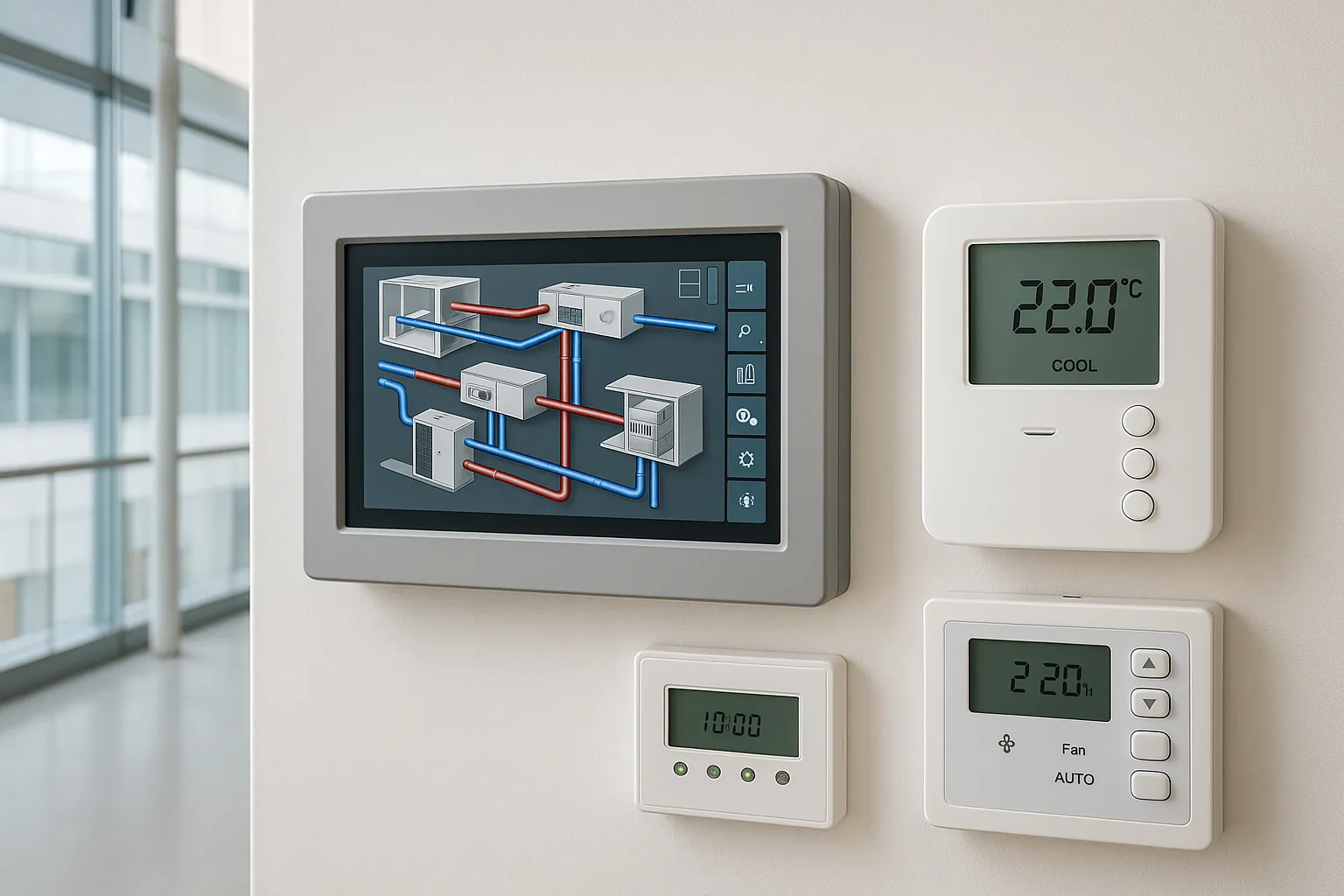
- Ask for non-U.S. alternatives and their performance characteristics, especially around part-load efficiency, IAQ capabilities and integration with existing BAS.
Transparent conversations now can prevent disputes later, particularly for design-build or GMP contracts where material cost assumptions were made pre-announcement.
3. Revisit capital budgets and escalation assumptions
Most capital plans already include some inflation and material escalation factors. In light of 15%–50% counter-tariffs on U.S. HVACR imports, owners may need to adjust:
- Contingency percentages for mechanical scopes in large projects.
- Reserve funds for unplanned major equipment failures involving U.S. OEMs.
- ROI calculations for energy efficiency retrofits and decarbonization projects, especially where eligibility for incentives or payback thresholds could be affected.
When re-running financial models, ensure your assumptions align with current ASHRAE guidance on energy performance and relevant DOE or provincial energy program baselines so that incentive eligibility is preserved even if you change equipment vendors.
4. Communicate with tenants and internal stakeholders
Corporate tenants, asset managers and finance teams will all be affected by major HVAC changes, particularly if they influence occupancy comfort, lease obligations or ESG reporting. Proactive communication should cover:
- Potential schedule changes for HVAC projects in tenant spaces.
- Implications for tenant improvement allowances if mechanical work becomes more expensive.
- How tariff-driven adjustments align with broader sustainability and resilience strategies.
Framing these changes in terms of risk management and long-term asset performance can help stakeholders understand why sourcing and design decisions may shift away from familiar U.S. brands.
Using this policy shift to build a more resilient HVAC strategy
While counter-tariffs introduce short-term complexity, they also underscore a larger trend: HVAC decisions for commercial buildings are increasingly shaped by policy, trade and regulation, not just engineering and first cost. ASHRAE, DOE, the EPA and Canadian authorities continue to push for higher efficiency, better indoor air quality and lower greenhouse gas emissions.
As a property or facility manager, this is an opportunity to build a more resilient and forward-looking HVAC strategy:
- Align procurement with long-term policy direction: Favor systems and suppliers that can adapt to evolving efficiency, refrigerant and emissions requirements so you are not forced into costly premature replacements.
- Strengthen data and asset management: Ensure your asset registry tracks OEM, country of origin, tonnage, refrigerant type and key lifecycle dates so you can quickly identify tariff-sensitive assets and prioritize replacements.
- Integrate risk into design standards: Update your corporate design standards to address supply chain risk alongside energy performance and IAQ, especially for mission-critical facilities.
- Leverage expert guidance: Engage consulting engineers familiar with ASHRAE standards and current DOE and EPA programs, and consider peer benchmarking with other portfolio owners facing similar cross-border exposure.
Canada’s new counter-tariffs on U.S. HVACR equipment will change how many building owners source and plan mechanical systems. By treating this as a strategic inflection point rather than a one-time shock, you can protect your budgets, maintain tenant satisfaction and position your portfolio for long-term regulatory and market changes.
Frequently Asked Questions
How much more will commercial HVAC projects cost because of Canada’s HVACR counter-tariffs?
The announced counter-tariffs range from 15% to 50% on U.S. HVACR imports, but not all of that increase will necessarily be passed through to owners. Actual project impact depends on the share of U.S.-sourced equipment, competition from non-U.S. OEMs, contract structures and your ability to respecify systems without compromising performance.
Can I avoid the counter-tariffs by switching to Canadian or non-U.S. HVAC manufacturers?
In many cases, yes. Tariffs are applied based on country of origin, so Canadian or non-U.S.-manufactured equipment is not subject to these specific counter-tariffs. However, you must ensure any alternative meets applicable codes, ASHRAE efficiency standards, design constraints and serviceability requirements for your portfolio.
Should I accelerate HVAC equipment purchases before the September 8 effective date?
Accelerating purchases can help avoid tariff exposure for projects already designed around U.S.-sourced equipment, but it may also strain budgets and contractor capacity. The decision should weigh project criticality, lead times, warehouse capacity, and the risk of locking into platforms that may not be optimal for long-term efficiency and compliance goals.
How do these counter-tariffs interact with energy efficiency incentives or decarbonization goals?
Tariffs do not directly change eligibility for utility incentives or government efficiency programs, but they can alter project economics. Some high-efficiency or heat pump options might become more expensive if U.S.-sourced, while non-U.S. alternatives remain competitive. Owners should re-run ROI analyses and coordinate with program administrators before finalizing equipment selections.
What contract and risk management steps should facility managers take now?
Review mechanical contracts for material escalation and tariff clauses, clarify who bears tariff risk, and ensure change-order mechanisms are clear. Update budgets and contingency allowances, request revised pricing from vendors, and build tariff scenarios into your capital plans. For large portfolios, consider centralized procurement strategies to negotiate better terms and diversify supplier risk.
Will these tariffs affect availability of OEM parts and long-term serviceability for existing equipment?
Tariffs can increase costs and complicate logistics for OEM parts imported from U.S. factories, especially for specialized components. Service contracts may remain in force, but parts pricing, lead times and stocking strategies may change. Facility managers should discuss critical spares, stocking policies and alternative parts strategies with their service providers to protect uptime and occupant comfort.
Related Reading on My HVAC Tech
- HFC Phase-Down Deadline: What US Retailers’ Pushback Means for Commercial HVAC
- Reduce Commercial HVAC Energy Consumption: Practical Tips for Commercial Buildings
Find a Qualified Commercial HVAC Contractor
Need help acting on this? Browse vetted commercial HVAC contractors in your area, or explore commercial HVAC services like preventive maintenance, retrofits, and emergency repair. Are you a contractor? List your business on My HVAC Tech to reach property and facility managers actively searching for help.


