

 My HVAC Tech
ASHRAE 90.1-2025: What the New Energy Efficiency Standard Means for Commercial Buildings
Quick Answers for Property & Facility Managers
What does ASHRAE 90.1-2025 mean for my commercial building’s HVAC upgrades and replacements?
ASHRAE 90.1-2025 raises minimum efficiency requirements for commercial HVAC equipment, building envelopes, and controls, so many new chillers, rooftop units, DOAS, and related systems must meet higher performance thresholds.[2][4] For owners and facility managers, this affects equipment selection, first cost, and long‑term operating expenses whenever systems are replaced or major renovations occur.
Will ASHRAE 90.1-2025 significantly increase my project costs, or can it lower my operating expenses?
ASHRAE 90.1-2025 typically increases upfront costs for HVAC and envelope systems but is designed to reduce long‑term energy use and utility bills.[1][2] When life‑cycle cost is considered—especially for large chillers, RTUs, and control systems—many compliant designs deliver lower total cost of ownership through reduced energy consumption and better load management.
Do existing commercial buildings need to comply with ASHRAE 90.1-2025 immediately?
Existing buildings are usually triggered into ASHRAE 90.1 requirements when they undergo significant alterations, additions, or equipment replacements under an adopting energy code.[5][8] Facility managers should expect that future chiller, rooftop unit, DOAS, envelope, and lighting projects may need to comply with 90.1-2025 once their jurisdiction updates its energy code reference standard.
Overview: ASHRAE 90.1-2025 raises the bar for commercial building efficiency
ASHRAE and the Illuminating Engineering Society (IES) have published ANSI/ASHRAE/IES Standard 90.1-2025, the latest edition of the primary U.S. energy efficiency standard for commercial buildings (excluding low-rise residential).[2][3] This standard sets minimum efficiency requirements for building envelopes, HVAC systems, service water heating, and lighting, and it is widely used by states, cities, and programs such as those overseen by the U.S. Department of Energy (DOE) as a model energy code.[1][2]
The 2025 edition incorporates 105 addenda that advance energy efficiency, expand compliance options, and align with related ASHRAE standards.[2][3] For property and facility managers, this means that the next energy code cycle in many jurisdictions will likely require higher-performing HVAC equipment, tighter envelopes, and more sophisticated control strategies than earlier versions of ASHRAE 90.1.
While ASHRAE 90.1-2025 itself is not law, jurisdictions often adopt it (or a modified version) into their energy conservation codes, as illustrated by the way cities like New York reference ASHRAE 90.1 in their local energy codes.[5] Once adopted, new construction and many renovation projects must demonstrate compliance.
Key changes in ASHRAE 90.1-2025 that affect HVAC and envelopes
ASHRAE has indicated that 90.1-2025 includes higher efficiency requirements for envelopes, HVAC, lighting, and systems, along with expanded performance-based pathways.[2][4] Although the full technical details are contained in the standard itself, several themes are clear:
- Higher minimum equipment efficiencies for many categories of commercial HVAC equipment, including chillers and unitary systems.[2][4]
- More stringent envelope performance through improved insulation, glazing performance, and air leakage control.[2][4]
- Expanded and refined controls requirements, particularly for lighting and building-level controls, emphasizing occupancy-based and schedule-based reductions.[3]
- Additional compliance options that support performance-based design, allowing trade-offs while still meeting overall energy targets.[2][8]
Previous editions, such as 90.1-2022, already represented a significant shift by tightening prescriptive requirements across every building system, adding mandatory energy monitoring for larger buildings, and introducing additional efficiency “credits” in Section 11.[1][9] The 2025 standard continues that trajectory with more robust efficiency expectations and control strategies.
From an ownership perspective, the practical takeaway is that projects designed to older baselines will increasingly fall short of minimum requirements once 90.1-2025 is adopted locally. Early alignment with its provisions can reduce redesign risk and change orders.
Impacts on chillers, rooftop units, DOAS, and other HVAC systems
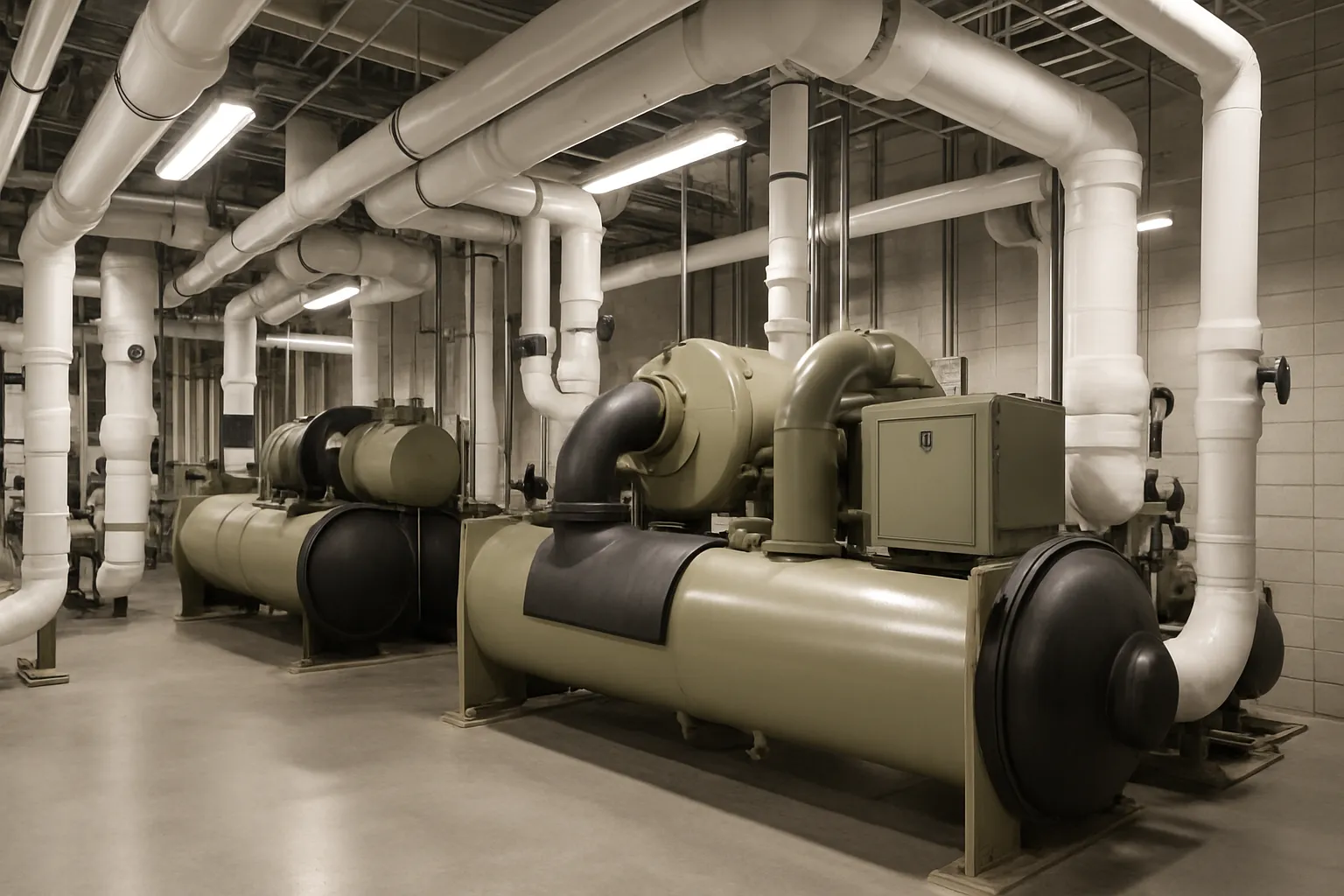
ASHRAE 90.1-2025 maintains its central role in defining minimum efficiency levels for commercial HVAC equipment such as chillers, packaged rooftop units (RTUs), and dedicated outdoor air systems (DOAS).[2][4] While specific efficiency tables are in the standard itself, the direction is clear: higher part-load and full-load performance is expected across common HVAC technologies.
For large commercial and institutional facilities that rely on central plants, higher chiller efficiency requirements can influence decisions around:
- Chiller selection and tonnage for buildings in the 200–2,000+ ton range, including hospitals, higher education, and large office towers.
- Heat recovery and heat pump integration to support electrification and high-efficiency water heating, aligning with broader decarbonization strategies.[2]
- Variable-speed drives and advanced controls to meet part-load efficiency targets that are increasingly emphasized in modern standards.
For mid-size commercial buildings that depend heavily on RTUs and DOAS (for example, 10–100 ton equipment serving multi-tenant offices, retail, or light industrial), the updated standard may drive:
- Adoption of higher SEER, IEER, and EER tiers that exceed legacy models' performance levels.
- Broader use of energy recovery ventilators (ERVs) on DOAS units to reduce ventilation-related loads, which is consistent with recent ASHRAE guidance on both efficiency and indoor air quality.[2]
- Integration with building automation systems to optimize ventilation, economizer operation, and demand control.
Because ASHRAE 90.1 is frequently referenced by DOE and state energy offices when setting minimum performance requirements and incentive thresholds, these changes may also affect which equipment qualifies for utility rebates or federal/state incentive programs.[1][2] Facility managers planning multi-year capital upgrades should review where their existing fleet sits relative to the new baseline to avoid stranded, non-compliant investments.
Electrification, controls, and load management provisions
While ASHRAE 90.1-2025 is primarily an energy standard, it increasingly intersects with electrification and demand management strategies that are central to many corporate decarbonization plans and utility grid constraints.[2][3] Following the 2022 edition’s introduction of new load management and additional efficiency credits, the 2025 edition continues to expand options and requirements in this area.[1][2]
Key themes relevant to building owners and facility managers include:
- Stronger control requirements for lighting, including occupancy-based reductions and time-out functions in various spaces, which reduce both lighting and cooling loads.[3]
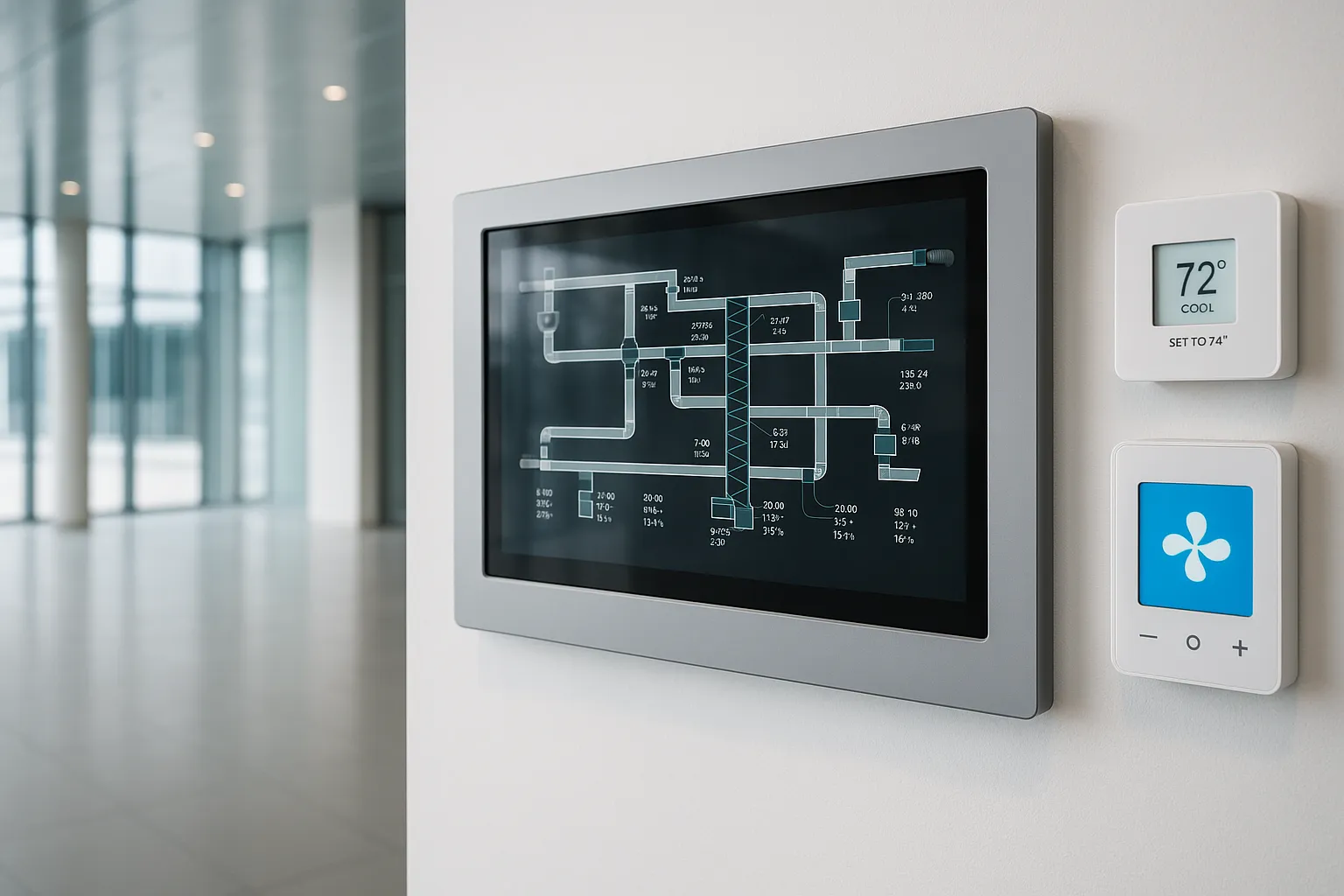
- Support for advanced HVAC controls such as energy management and control systems, building automation, and performance monitoring—features that were already emphasized for buildings above 25,000 square feet in 90.1‑2022.[1]
- Expanded load management measures that encourage shifting or shaving peak loads, which can lower demand charges and improve resilience.[1][2]
For electrification, 90.1-2025’s higher efficiency baselines make electric heat pumps and heat-recovery technologies more attractive in many climates, particularly when paired with effective controls and envelopes. Owners pursuing all-electric or low-carbon designs should work with engineers who understand both ASHRAE 90.1 and related decarbonization frameworks promoted by DOE and EPA programs.
How ASHRAE 90.1-2025 will show up in codes, projects, and portfolios
ASHRAE 90.1 becomes impactful when it is incorporated into state and local energy codes. DOE evaluates each new edition and publishes determinations on its energy savings compared to previous versions; for example, DOE has estimated substantial energy cost reductions for 90.1-2022 versus earlier editions.[1] States and cities then decide whether and how to adopt the new edition or an equivalent standard.
Some jurisdictions publish their own energy conservation codes that reference ASHRAE 90.1 as a compliance pathway or technical backbone.[5] When these codes update to reference the 2025 edition, owners and facility managers will see the effects in:
- New construction projects, which must typically be designed to meet or exceed the new standard.
- Major renovations and change-of-use projects, which often trigger envelope, lighting, and HVAC compliance requirements.
- System replacements (e.g., end-of-life chillers, RTUs, boilers/heat pumps) where local code officials require new equipment to meet the current referenced standard.
Portfolio-level owners—such as REITs, healthcare systems, higher education, and corporate campuses—should expect a patchwork adoption timeline as different jurisdictions move to 90.1‑2025 at different paces. A portfolio-wide strategy that assumes the 2025 efficiency baseline can simplify design standards, procurement, and internal approvals, reducing the risk of having to redesign projects when a jurisdiction updates mid-cycle.
Action plan for property and facility managers
Given the scope of change in ASHRAE 90.1-2025, property and facility managers should take a proactive, portfolio-wide approach rather than reacting project by project. Practical steps include:
- 1. Map your jurisdictions and likely adoption timelines. Work with your code consultants or engineering partners to understand when key states and cities where you operate are likely to reference 90.1‑2025, based on past adoption patterns and current code cycles.[1][5]
- 2. Benchmark your existing equipment and envelope. Inventory chillers, RTUs, DOAS, boilers/heat pumps, and major air handlers by age, efficiency rating, and tonnage. Compare typical performance levels against recent ASHRAE 90.1 baselines with your engineer to identify systems most at risk of falling short of future requirements.
- 3. Update design and procurement standards. Align internal design guides and preferred equipment specifications with the 90.1‑2025 efficiency levels and control requirements where practical. This can include specifying higher IEER/SEER RTUs, more efficient chillers, ERV-equipped DOAS, and advanced building automation capabilities.
- 4. Build life-cycle cost and energy modeling into business cases. Because the standard targets energy cost reductions, early-stage energy modeling and life-cycle cost analysis can demonstrate ROI and support CapEx requests. In many cases, energy savings and potential incentives offset higher first cost over the equipment life.[1][2]
- 5. Coordinate with ESG, sustainability, and finance teams. Many owners have emissions or energy intensity targets that align with the efficiency and electrification direction of ASHRAE 90.1-2025. Integrating the new standard into ESG roadmaps and budget planning can help avoid conflicting requirements and unlock internal funding.
- 6. Engage qualified engineers and commissioning agents. Because compliance pathways and control requirements are becoming more sophisticated, owners benefit from working with design teams and commissioning providers who are fluent in ASHRAE 90.1, DOE compliance tools, and performance-based approaches.[8][9]
By treating ASHRAE 90.1-2025 as the coming baseline for commercial building performance, property and facility managers can de-risk future projects, improve energy performance, and position their portfolios for evolving codes, investor expectations, and utility pricing structures.
Frequently Asked Questions
How will ASHRAE 90.1-2025 affect the ROI of chiller and rooftop unit replacements in commercial buildings?
ASHRAE 90.1-2025 generally requires more efficient chillers and rooftop units, increasing first cost but lowering energy use over the equipment life.[1][2][4] When projects are evaluated using life-cycle cost analysis—factoring in energy savings, potential incentives, and avoided non-compliance risk—many owners see stronger long-term ROI than with minimally compliant legacy equipment.
What are the compliance options under ASHRAE 90.1-2025 for complex commercial projects?
ASHRAE 90.1 offers prescriptive, performance-based, and additional efficiency credit pathways, refined in recent editions and expanded again in 2025.[1][2][8][9] Complex projects can often benefit from performance modeling and Section 11-like credit approaches, which allow design flexibility while still meeting or exceeding the overall energy performance targets required by adopting codes.
Does ASHRAE 90.1-2025 favor electrification and heat pumps over traditional fossil-fuel systems?
The standard is fuel-neutral in intent but sets higher efficiency baselines and encourages load management and high-performance envelopes.[1][2] In many markets, this makes modern electric heat pumps and heat-recovery solutions competitive or advantageous, particularly for owners pursuing decarbonization or aligning with DOE and EPA-supported efficiency and emissions reduction programs.
What risks do building owners face if they ignore ASHRAE 90.1-2025 in upcoming projects?
Owners who design to outdated standards risk permit delays, redesign costs, and stranded assets once jurisdictions adopt 90.1‑2025 or equivalent codes.[1][5] There is also the risk of higher future operating expenses, missed incentives, and misalignment with investor ESG expectations if new equipment falls short of the evolving efficiency baseline.
How should facility managers prioritize upgrades to prepare for ASHRAE 90.1-2025 adoption?
Facility managers should prioritize large, energy-intensive systems—chillers, RTUs, DOAS, and major air handlers—and poor-performing envelopes first.[1][2] Combining targeted energy modeling with end-of-life planning can identify projects where stepping up to 90.1‑2025 levels now yields the best mix of avoided compliance risk, lower operating costs, and alignment with long-term energy and carbon goals.
Related Reading on My HVAC Tech
- Commercial Plumbing Maintenance Guide for Reliable Building Operations
- DOE Proposed Rule: What New Commercial Unitary AC and Heat Pump Standards Mean for Your Buildings
Find a Qualified Commercial HVAC Contractor
Need help acting on this? Browse vetted commercial HVAC contractors in your area, or explore commercial HVAC services like preventive maintenance, retrofits, and emergency repair. Are you a contractor? List your business on My HVAC Tech to reach property and facility managers actively searching for help.


