

 My HVAC Tech
EPA HFC Refrigerant Allocation Update: What Building Owners Need to Know for 2027–2029
Quick Answers for Property & Facility Managers
What does EPA’s HFC allocation update mean for commercial building owners?
EPA’s updated HFC allocation means less supply of high-GWP refrigerants over the next few years, which can affect service costs, retrofit planning, and equipment choices. For owners and facility managers, the key issue is not just compliance—it is avoiding delays in maintenance, replacement, and refrigerant procurement for systems that still rely on R-410A and similar blends.
Should facility managers replace R-410A systems now?
Not automatically. Existing systems can generally keep operating if they remain serviceable, but EPA and industry guidance point to a shrinking long-term refrigerant supply and a market shift toward lower-GWP options. Facility managers should evaluate age, leak history, criticality, and total lifecycle cost before deciding whether to repair, retrofit, or replace.
What EPA’s HFC allocation update means for commercial facilities
The EPA’s latest HFC production and consumption allowances for 2027–2029 point to a tighter market for high-GWP refrigerants such as R-410A, which is already under pressure from federal phasedown policy. For building owners and facility managers, that means refrigerant availability, service pricing, and replacement timelines are likely to become more important in capital planning than they were a few years ago. The core issue is supply: as EPA lowers allocations under the AIM Act, the industry moves further away from legacy refrigerants and toward lower-GWP alternatives.
EPA’s Section 608 framework still governs refrigerant handling, recovery, and recordkeeping for stationary HVAC and refrigeration equipment, so compliance obligations do not disappear as the market changes. Instead, the practical challenge becomes managing older equipment with a refrigerant mix that may be more expensive or harder to source over time.
Why high-GWP refrigerants like R-410A are becoming a planning risk
R-410A has been the standard refrigerant in many commercial comfort-cooling systems, but EPA’s Technology Transitions rules and the broader AIM Act phasedown are pushing the market away from high-GWP HFCs. EPA and industry guidance have already established GWP-based restrictions for certain new HVAC applications, and the transition is now affecting what owners can buy, service, and install in the years ahead.
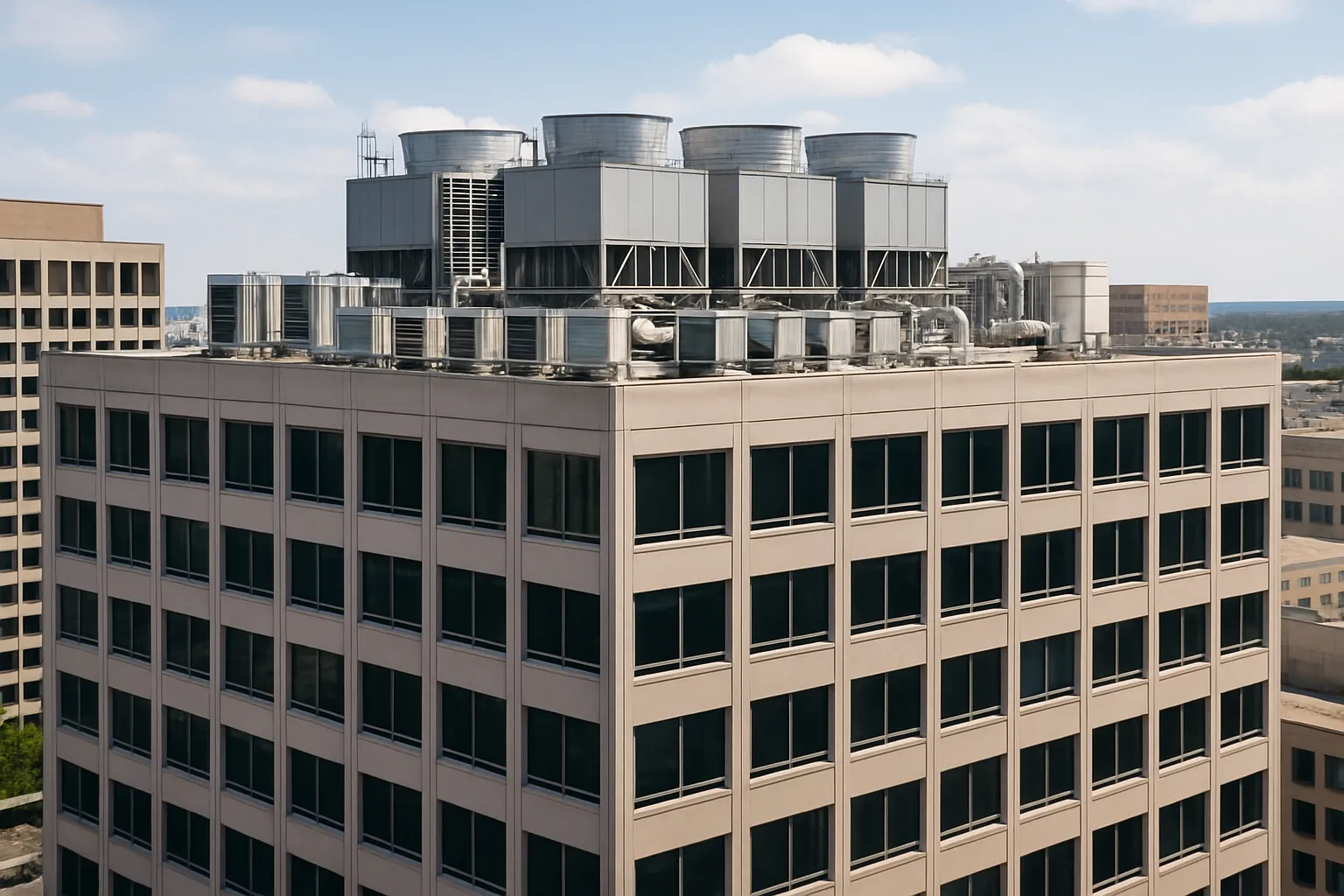
For property managers, this matters most in rooftops, split systems, heat pumps, VRF systems, chillers, and packaged equipment serving offices, retail centers, schools, healthcare buildings, and multifamily common areas. If your asset still depends on refrigerants that are being phased down, your risk profile includes more than regulatory compliance: it includes longer lead times, higher service costs, and potential disruption if a major leak occurs.
- Older packaged rooftop units may become harder to service economically as refrigerant supply tightens.
- Medium-size and large commercial systems often need earlier capital planning because refrigerant loss can trigger expensive repairs or replacement decisions.
- Buildings with mission-critical cooling should treat refrigerant strategy as an operations issue, not just an engineering issue.
What building owners should do now to reduce compliance and cost exposure
The smartest response is to build a refrigerant roadmap rather than wait for an emergency. Start by identifying every system that uses a phasedown refrigerant, then group equipment by age, leak history, remaining useful life, and business criticality. This is especially important for buildings with multiple air-cooled chillers, large rooftop units, or distributed systems across a portfolio.
Owners should also coordinate with their HVAC contractor and energy manager to determine whether replacement equipment should be specified with lower-GWP refrigerants and whether the building’s electrical, ventilation, and controls infrastructure can support those systems. The EPA and DOE transition environment means that “like-for-like” replacement may not be the best long-term strategy if it simply preserves a refrigerant that is becoming more constrained.
- Inventory all equipment using HFC refrigerants, especially R-410A and similar blends.
- Document age, tonnage, refrigerant charge, and leak history for each asset.
- Prioritize critical systems first, such as healthcare cooling, data rooms, and essential common-area equipment.
- Align replacement projects with capital budgets before supply constraints force a rushed decision.
How this affects HVAC replacement, retrofits, and tenant operations
For commercial HVAC, refrigerant policy affects project timing as much as equipment selection. If a building is approaching a planned roof replacement, envelope project, or major tenant improvement, it may be more cost-effective to synchronize HVAC replacement with that work than to wait for a failure. That is especially true for systems in the roughly 5-ton to 50-ton range common in office suites, retail spaces, small medical offices, and mixed-use common areas, where downtime can directly affect tenant service.
Facility managers should also understand the distinction between existing equipment and new equipment. EPA guidance and trade interpretations have consistently emphasized that phasedown rules target new equipment and new systems, while existing systems can continue to operate if they remain compliant and serviceable. That means the operational goal is to keep legacy systems reliable while preparing the portfolio for the lower-GWP transition already underway.
Practical questions to ask your contractor
- Can the system be repaired economically if refrigerant becomes scarce?
- Is there a lower-GWP replacement option that fits the building’s load profile?
- Will the replacement require changes to controls, ventilation, or electrical service?
- What lead time should be assumed for equipment and refrigerant procurement?

Where EPA, DOE, and ASHRAE fit into the decision
For building owners, EPA is the compliance anchor, but it is not the only standards body that matters. EPA sets refrigerant management and phasedown requirements under the AIM Act and Section 608; DOE influences equipment efficiency requirements and test procedures; and ASHRAE standards guide safe application, refrigerant classification, and ventilation-related design considerations. In other words, refrigerant change is part of a broader building-system transition, not a standalone rule change.
That is important because lower-GWP refrigerants often come with different performance characteristics, safety classifications, or system design requirements. Owners do not need to engineer those changes themselves, but they do need to insist that bidders account for them in scope, controls integration, commissioning, and maintenance training.
- Use EPA rules to define compliance requirements.
- Use DOE efficiency updates to evaluate lifecycle operating cost.
- Use ASHRAE-informed design and safety practices when comparing refrigerant options.
A facility manager’s action plan for the next 12 months
The most useful response to EPA’s 2027–2029 allocation update is a practical portfolio review. Start with equipment that is old, leak-prone, or business-critical, then rank assets by replacement urgency. If a system is nearing end of life, do not wait for a refrigerant shortage to force a decision. If a system is still performing well, improve documentation, preventive maintenance, and contingency planning so the building can ride out tighter market conditions.
For owners of multi-site portfolios, standardize the reporting template so every property tracks refrigerant type, tonnage, service history, and planned replacement year the same way. That makes budgeting easier and gives leadership a clearer picture of exposure across offices, retail, industrial, healthcare, and institutional assets. In the current regulatory environment, the best protection is early visibility into where phasedown refrigerants are still embedded in the portfolio.
- Build a refrigerant inventory across the portfolio.
- Flag systems with repeated leaks or high repair costs.
- Request replacement scenarios for critical assets before budget season.
- Train internal teams to escalate refrigerant issues earlier, not after a major failure.
What this means for budget planning and procurement
EPA’s allocation update is a procurement signal as much as a regulatory one. Tightening supply can affect refrigerant pricing, contractor availability, and the timing of major HVAC projects. For property owners, that makes 2027–2029 a window to be proactive rather than reactive: secure engineering assessments, reserve capital for aging equipment, and avoid assuming that replacement options will remain equally available or affordable later.
For buildings with large refrigeration or comfort-cooling loads, the most defensible strategy is to treat refrigerant transition as a capital planning item tied to asset condition, not as an emergency response item tied to a leak event. That approach protects uptime, helps preserve tenant comfort, and reduces the risk of making a rushed purchase under unfavorable market conditions.
Frequently Asked Questions
Will EPA’s refrigerant phasedown force me to replace working equipment?
No. Existing equipment can generally remain in service if it is maintained and compliant. The bigger issue is economics and risk: as HFC allocations tighten, refrigerant may become harder or more expensive to source, which can make repair decisions less attractive for older, leak-prone systems. Owners should compare repair costs against remaining useful life.
Which commercial buildings are most exposed to the HFC supply shift?
Buildings with older comfort-cooling and refrigeration systems are most exposed, especially offices, retail centers, schools, healthcare facilities, supermarkets, and mixed-use properties with rooftop units, chillers, or refrigeration racks that still rely on high-GWP HFCs. High-criticality sites should plan earlier because downtime and refrigerant shortages can affect operations quickly.
How should property managers prioritize HVAC replacements under the EPA update?
Prioritize by business risk, not just equipment age. Start with systems that are leak-prone, expensive to service, difficult to replace, or critical to operations. Then evaluate whether a lower-GWP replacement can be installed without major building modifications. Portfolio-wide tracking helps owners avoid reacting to a refrigerant shortage during peak cooling season.
What should I ask my HVAC contractor before budgeting for replacement?
Ask which refrigerants the proposed equipment uses, whether the system is designed for future serviceability, what lead time is expected, and how the project affects controls, electrical capacity, and maintenance. Also ask for a lifecycle cost view, not just installed price, because refrigerant availability and service costs can change the total cost of ownership.
Does this update change Section 608 refrigerant compliance requirements?
Section 608 remains the core federal framework for refrigerant handling, recovery, recordkeeping, and leak-related obligations for stationary HVAC and refrigeration equipment. The allocation update affects supply and market conditions, while Section 608 governs how refrigerants must be managed in the field. Owners need to track both the compliance rules and the equipment transition timeline.
Related Reading on My HVAC Tech
- Commercial HVAC Maintenance Checklist: A Practical Guide for Large Buildings
- Daikin Amana Commercial Window AC Recall: What Property Managers Must Do Now
Find a Qualified Commercial HVAC Contractor
Need help acting on this? Browse vetted commercial HVAC contractors in your area, or explore commercial HVAC services like preventive maintenance, retrofits, and emergency repair. Are you a contractor? List your business on My HVAC Tech to reach property and facility managers actively searching for help.


