

 My HVAC Tech
DOE Final Rule: New Commercial HVAC & Water Heating Efficiency Standards Explained
Quick Answers for Property & Facility Managers
What do the DOE’s new commercial HVAC and water heating efficiency standards mean for my building?
The DOE’s final rule raises minimum efficiency levels and tightens test procedures for commercial rooftop units, packaged systems, and water heating equipment, with compliance dates beginning in the next few years.[1][3] For most property and facility managers, this means future replacements will need higher-efficiency equipment and earlier capital and compliance planning.
When do I need to start complying with the new DOE commercial HVAC standards?
The final rule applies to newly manufactured commercial equipment, not the systems you already have installed.[1][3] For large commercial rooftop units and air-cooled unitary systems ≥65,000 Btu/h, compliance with the new minimum efficiencies and test metrics is required on or after January 1, 2029.[1][3] You should align your 3–5 year capital plan with this date.
Will the new DOE commercial HVAC standards increase my project costs?
Upfront equipment costs for compliant high-efficiency rooftop units and packaged systems will likely be higher as manufacturers add advanced controls and components to meet the new thresholds.[1][3] However, DOE projects substantial long-term utility bill savings and lower energy waste, offsetting many of those initial costs over the equipment life.[3]
DOE’s final commercial HVAC rule: what changed and why it matters
The U.S. Department of Energy (DOE) has issued a final rule that raises minimum efficiency standards and tightens test procedures for key categories of commercial HVAC and water heating equipment, including rooftop units and packaged systems.[1][3] The rule aims to cut building energy use and greenhouse gas emissions while reducing long‑term operating costs for businesses.[3]
The updated standards focus on air‑cooled commercial unitary air conditioners and heat pumps with cooling capacities at or above 65,000 Btu/h, which includes many common commercial rooftop units serving offices, retail centers, schools, and other medium to large buildings.[1][3] New metrics and test procedures are being adopted to better reflect real‑world operation and ventilation loads.[1]
For property managers, facility managers, and building owners, the key takeaway is that future replacement and new-construction equipment must meet significantly higher efficiency levels starting near the end of this decade, and capital plans need to be updated now to account for that shift.[1][3]
Which commercial HVAC and water heating systems are affected?
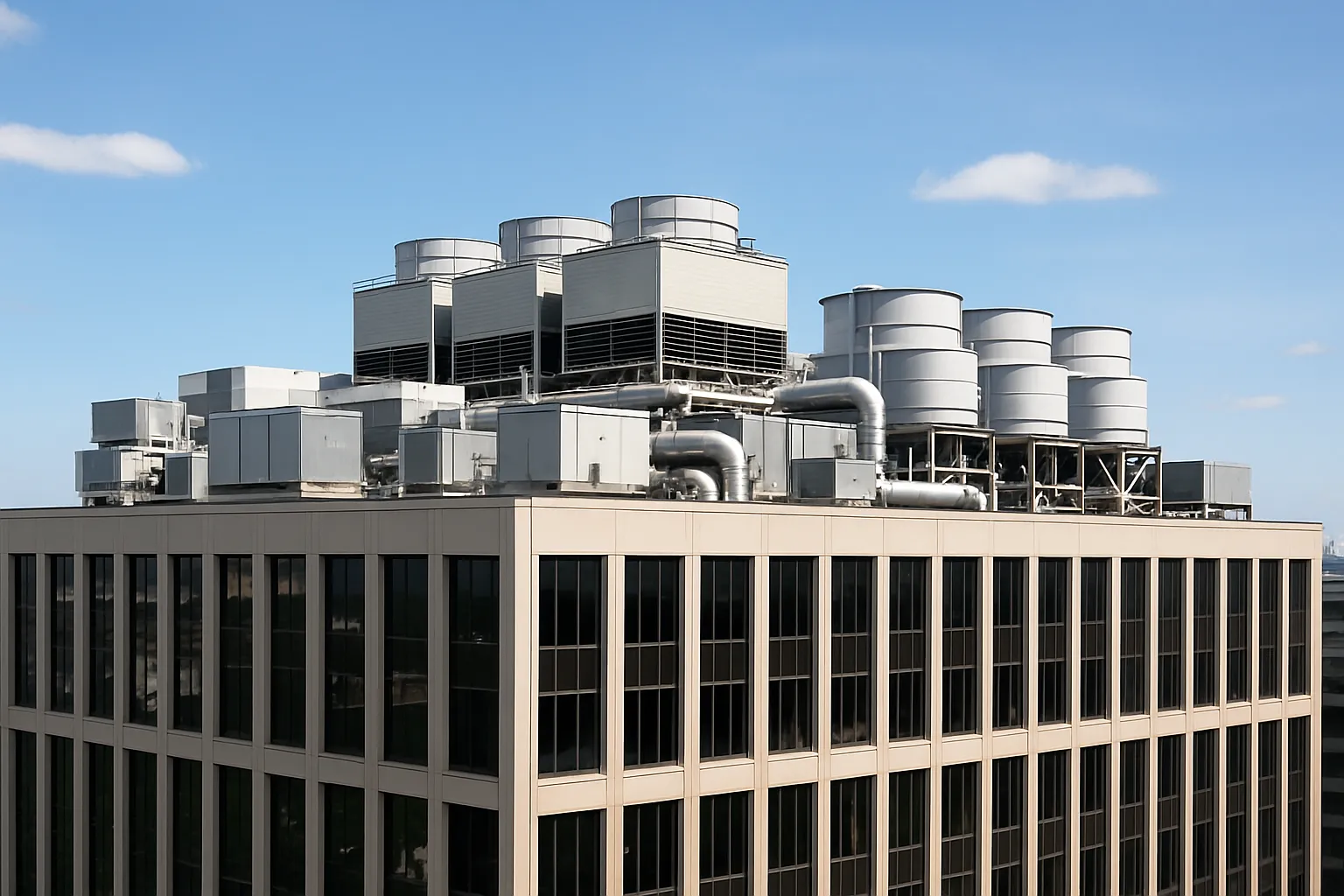
The final rule directly targets categories of commercial HVAC equipment that are widespread in multi‑tenant and institutional buildings. According to DOE and industry analyses:[1][3][7]
- Air‑cooled commercial unitary air conditioners and heat pumps with cooling capacity ≥65,000 Btu/h are covered, which includes many 5–25 ton rooftop units used on low- and mid‑rise commercial buildings.[1][3]
- These products are often installed as packaged rooftop units (RTUs) and packaged systems serving zones such as open office floors, retail bays, classrooms, and light industrial spaces.[1][3]
- The rule is coordinated with broader DOE efficiency efforts that also address commercial refrigeration equipment and other end uses, reinforcing a whole‑building energy strategy.[3][5][7]
While the rule highlighted here focuses on HVAC, DOE has similarly tightened standards for commercial water heating and related equipment in separate proceedings, with the same policy intent: reduce energy waste, lower utility costs, and drive down emissions over the life of the equipment fleet.[3][5]
ASHRAE Standard 90.1, which is widely referenced in energy codes for commercial buildings, continues to serve as a technical benchmark and is expected to align with these federal levels over time, influencing code compliance at the state and local level.[6][8]
New performance metrics and test procedures: IVEC and IVHE
A major change in the final rule is the move away from traditional efficiency metrics used for many commercial unitary products. DOE is adopting new integrated performance metrics that better capture how rooftop units operate in actual buildings:[1]
- IVEC (Integrated Ventilation, Economizing and Cooling) will replace previous part‑load and seasonal metrics such as IEER for cooling in the affected equipment categories.[1]
- IVHE (Integrated Ventilation and Heating Efficiency) will replace previous heating performance indicators like COP for these commercial systems.[1]
- The associated test procedures are being updated concurrently so that manufacturers must rate products using IVEC and IVHE starting on the same date that the new standards take effect.[1]
These new metrics explicitly account for ventilation and economizer operation—critical factors for many commercial buildings where outside air and energy recovery are major drivers of HVAC system performance. For facility managers, this means future submittals and specification sheets will look different, and you will need to get comfortable comparing IVEC and IVHE values rather than relying solely on IEER or COP.
Equipment selection tools and design standards from manufacturers, as well as guidance from organizations like ASHRAE, will increasingly reference these new metrics, making it important to update internal design guidelines and procurement templates.
Implementation timeline and compliance milestones for owners
DOE follows a standard pattern: finalizing a rule, then allowing several years before compliance is mandatory for manufacturers. For this commercial HVAC rule, the key date for building stakeholders is:
- January 1, 2029: Newly manufactured covered air‑cooled commercial unitary air conditioners and heat pumps must meet the amended minimum efficiency standards and be rated under IVEC and IVHE.[1][3]
Existing installed equipment is not retroactively required to meet the new standards. The rule applies to products manufactured on or after the compliance date.[1][3]
However, because commercial HVAC systems often have service lives of 15–20 years, many of the rooftop units being specified and installed over the next several years will still be in place long after the 2029 compliance date. Facility teams should therefore treat this as a planning horizon, not a trigger to wait.
Other recent DOE rules—for example, those addressing commercial refrigeration equipment and certain pumps—use similar three‑ to four‑year compliance lead times.[3][5][7] For multi‑site portfolios, aligning all of these timelines into a cohesive capital plan can reduce disruption and leverage volume purchasing.
Energy, emissions, and cost impacts for commercial portfolios
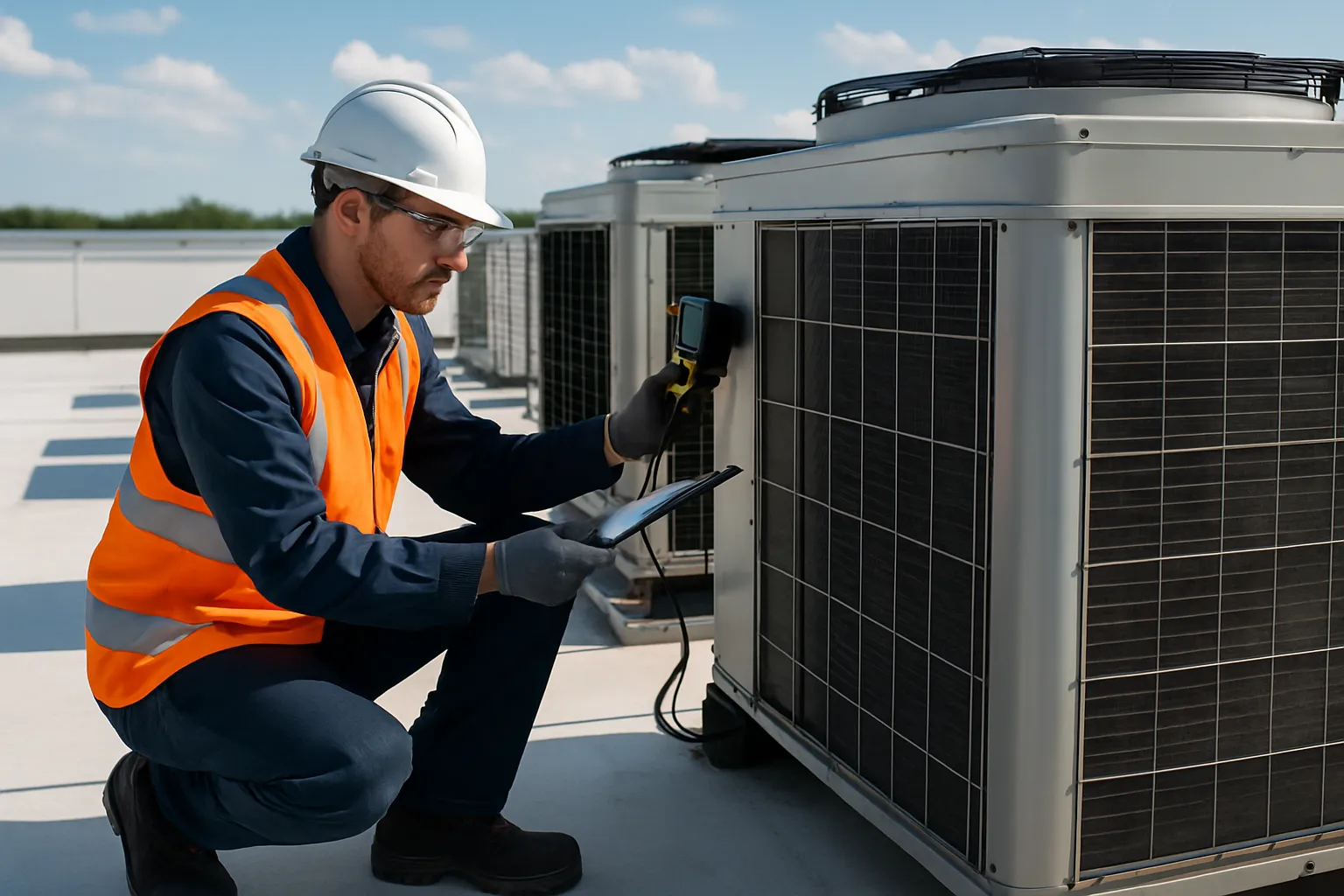
DOE estimates that the updated standards for commercial unitary HVAC equipment will deliver significant long‑term energy and emissions benefits across the national building stock.[3] Over 30 years of equipment shipments, DOE projects:
- Substantial reductions in energy consumption compared with today’s market‑average products.[3]
- Meaningful cuts in carbon dioxide emissions, on par with emissions from millions of homes, when all affected equipment categories are taken together.[3]
- Billions of dollars in aggregate utility bill savings for businesses due to improved system efficiency.[3]
These are national‑level figures, but for an individual building the value proposition is similar: higher‑efficiency packaged units and water heating systems typically carry a cost premium, but the incremental energy savings over a 10–15 year life often produces a positive net present value, especially in regions with higher electricity or gas prices.
Organizations such as the EPA’s ENERGY STAR program and ASHRAE have long highlighted high‑efficiency commercial HVAC and water heating as cost‑effective measures for reducing energy intensity in offices, K‑12 schools, healthcare, and hospitality. The DOE final rule effectively raises the baseline, which means voluntary programs and stretch codes will push performance even higher over time.
Action plan for property and facility managers
For property managers, facility managers, and building owners, the most important step is to translate this federal rule into concrete portfolio decisions. Consider the following actions over the next 12–36 months:
- Inventory your commercial HVAC and water heating assets. Develop or update an asset registry with equipment type, tonnage or Btu/h rating, age, and efficiency for rooftop units, packaged systems, and commercial water heaters across your buildings.
- Identify high‑priority end‑of‑life units. Flag rooftop units and packaged systems in the 5–20 ton range that are near or past their expected service life, especially those serving critical loads like data rooms, healthcare spaces, or high‑occupancy areas.
- Update design and procurement standards. Work with your engineering consultants to revise your internal specifications to reference the upcoming DOE minimums, the IVEC and IVHE metrics, and current ASHRAE 90.1 requirements. Require vendors to provide future-ready, compliant performance data.
- Run life‑cycle cost analyses for major replacements. Instead of only comparing first cost, evaluate at least two tiers of efficiency (baseline DOE‑compliant and higher) over a 15‑year period, including maintenance and energy costs, to support investment decisions.
- Coordinate with energy and sustainability teams. Align HVAC and water heating upgrades with corporate ESG targets and any local benchmarking or performance standards that require emissions reductions.
- Engage manufacturers and service partners early. Ask OEMs and service providers how their product lines will change by the 2029 deadline, and where they see supply chain or lead‑time risks as efficiency requirements ramp up.[1][7]
A proactive plan will help avoid being forced into last‑minute like‑for‑like replacements just before or after the compliance date, when legacy equipment options may be limited or unavailable.
Implications for capital planning, leases, and risk management
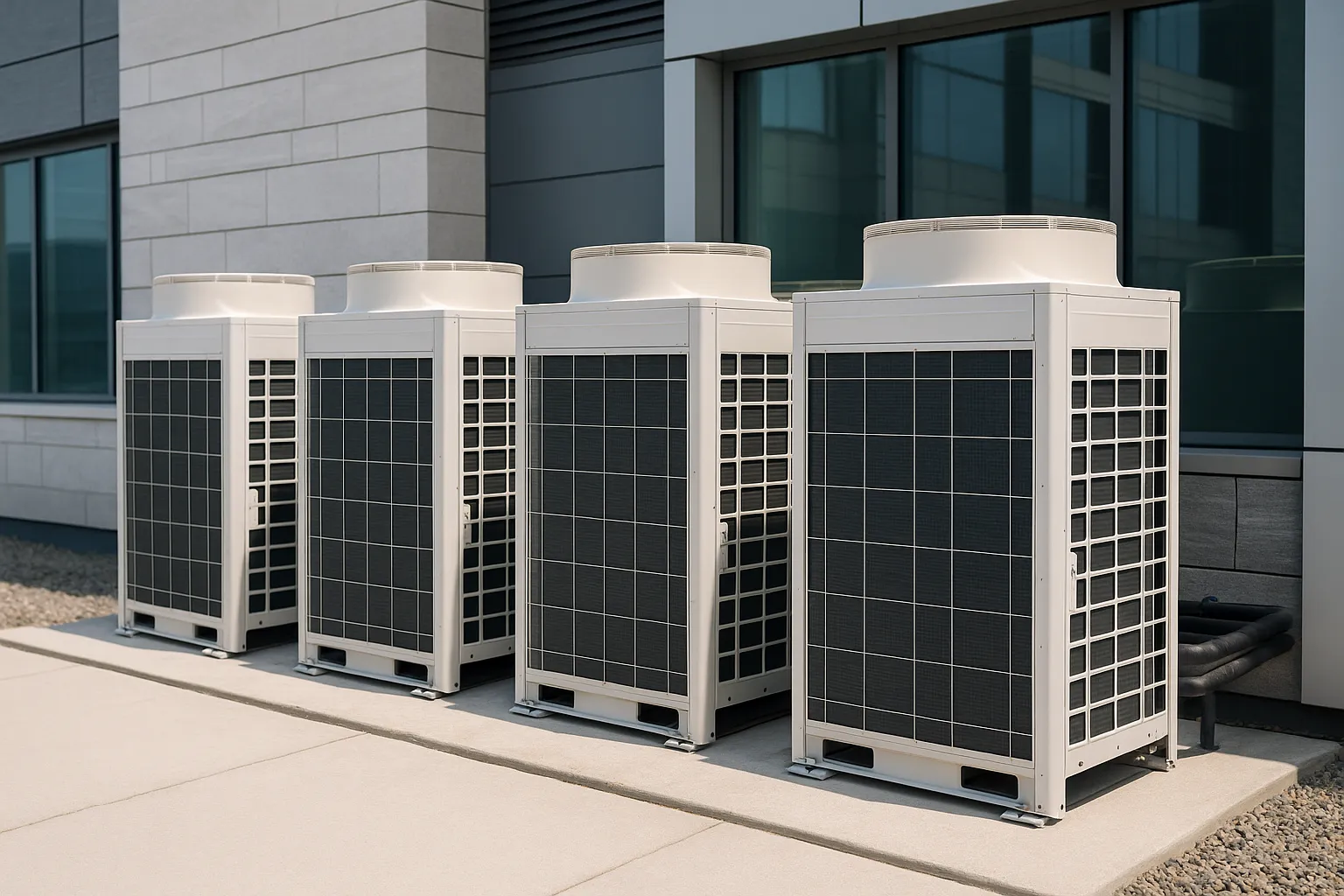
The DOE final rule has direct implications for how you plan capital, structure leases, and manage operational risk in your portfolio:
- Capex forecasting. Anticipate that high‑efficiency commercial HVAC and water heating equipment may carry higher capital costs as advanced components and controls become standard.[1][3] Incorporate those premiums into five‑ and ten‑year capital plans.
- Operating cost projections. Balance those capital premiums against lower projected energy spend. Many owners are using internal hurdle rates or required returns to evaluate whether to accelerate replacements before, at, or after the compliance deadline.
- Triple‑net leases and recoveries. In NNN or modified gross leases, clarify how energy savings and capital costs are shared between owners and tenants. As baseline efficiency rises, tenant expectations for comfort and sustainability may increase as well.
- Code and inspection risk. Federal efficiency standards preempt state and local codes, but building departments and commissioning agents often look to ASHRAE 90.1 and federal rules when assessing compliance.[2][6][7] Specifying non‑compliant equipment after the enforcement date could introduce delays or re‑design costs.
- Reputation and ESG reporting. As investors and stakeholders scrutinize building energy intensity, alignment with DOE standards—and ideally exceeding them—can support ESG narratives and reduce transition risk as policies tighten.
Working closely with your mechanical engineer, energy consultant, and HVAC partners will help you integrate these considerations into a coherent strategy rather than a series of ad‑hoc decisions.
How to prepare your team for the next generation of commercial HVAC standards
Finally, this rule underscores the need for internal capacity building. Facility and property teams should:
- Train staff on new metrics and labels. Ensure engineers, facility managers, and procurement staff understand IVEC, IVHE, and the new test procedures so they can read and compare submittals accurately.[1]
- Standardize design guidelines across the portfolio. For multi‑site owners, align rooftop unit and packaged system standards so each new project or major renovation moves you toward a more efficient baseline.
- Monitor updates from DOE, ASHRAE, and EPA. Subscribe to DOE rulemaking updates and ASHRAE standards news so you can anticipate additional changes, including potential future adjustments to water heating and ventilation requirements.[3][6][7]
- Leverage utility and incentive programs where available. Many utilities, often in coordination with state energy offices and EPA programs, offer incentives for high‑efficiency commercial HVAC and water heating upgrades that exceed baseline standards. These can materially improve project economics.
- Engage early in upcoming projects. For any planned roof replacement, major tenant improvement, or base‑building HVAC upgrade between now and the late 2020s, incorporate this rule into the project’s basis of design to avoid premature obsolescence.
By approaching the DOE final rule as a multi‑year roadmap rather than a single compliance deadline, property managers and building owners can systematically reduce energy use, lower operating costs, and improve asset value while staying ahead of regulatory change.
Frequently Asked Questions
How will the DOE’s final commercial HVAC rule affect my long-term operating costs and ROI?
DOE’s analysis indicates that higher-efficiency commercial unitary HVAC equipment will reduce energy consumption compared with current baseline products, leading to lower utility bills over the equipment life.[3] While upfront costs may rise, many projects will see a positive life‑cycle ROI when evaluated over 10–15 years, particularly in higher energy‑cost markets.[1][3]
Do I need to replace existing rooftop units now to comply with the new DOE standards?
No. The rule applies to equipment manufactured on or after the compliance date; existing rooftop units and packaged systems can continue to operate as installed.[1][3] However, you should factor the new standards into any upcoming replacements or major renovations so you avoid locking in lower efficiency just before the new requirements take effect.
How do the new DOE standards interact with ASHRAE 90.1 and local energy codes?
Federal appliance standards set a minimum floor that state and local codes cannot undercut, while ASHRAE 90.1 often informs those codes.[2][6][7] As DOE raises minimum efficiencies, future versions of ASHRAE 90.1 and local energy codes typically adjust to align or push beyond them, so the practical effect is an upward ratchet on required performance in commercial projects.
Will manufacturers still offer lower-cost, standard-efficiency commercial rooftop units?
Once the compliance date arrives, manufacturers cannot produce covered equipment below the new federal minimums, so today’s standard-efficiency tiers may be phased out or redefined.[1][7][8] Expect more equipment to include advanced components—such as variable-speed drives and enhanced controls—to meet the higher baseline, with a narrower gap between “standard” and “high” efficiency options.
What should I ask my HVAC vendors and engineers about the new DOE rule?
Ask when their commercial product lines will transition to IVEC/IVHE ratings, how their minimum efficiencies compare to the 2029 requirements, and what pricing impacts they anticipate.[1] Also ask your engineers to update master specifications, basis-of-design documents, and life‑cycle cost models so upcoming projects are aligned with the new federal standards.
Related Reading on My HVAC Tech
- Commercial Roof Replacement Planning Guide for Property & Facility Managers
- Strong Commercial HVAC Sales: What Facility Managers Should Do Now
Find a Qualified Commercial HVAC Contractor
Need help acting on this? Browse vetted commercial HVAC contractors in your area, or explore commercial HVAC services like preventive maintenance, retrofits, and emergency repair. Are you a contractor? List your business on My HVAC Tech to reach property and facility managers actively searching for help.


