

 My HVAC Tech
DOE Proposed Rule: What New Commercial Unitary AC and Heat Pump Standards Mean for Your Buildings
Quick Answers for Property & Facility Managers
What does DOE’s proposed rule for commercial unitary air conditioners and heat pumps mean for my buildings?
The DOE’s proposed rule would raise minimum efficiency levels for commercial unitary air conditioners and heat pumps, primarily rooftop and packaged units. Once finalized, older or lower-efficiency models may no longer be available, affecting equipment selection, capital planning, and long-term operating costs for your properties.
Will I be forced to replace my existing rooftop units if DOE raises minimum efficiency standards?
Federal efficiency standards generally apply to new equipment manufactured after the effective date, not equipment already installed in your building.[3][7] You typically are not required to remove in-service units, but over time replacements will need to meet the updated DOE minimums, which can affect lifecycle and budget planning.
How soon should property and facility managers start planning for potential DOE commercial HVAC changes?
Planning should begin during the proposal stage, not after the final rule. DOE commercial HVAC standards have historically required double-digit efficiency gains over multi‑year cycles, affecting 65,000–760,000 Btu/h unit classes.[7] Early assessment of your rooftop unit inventory, replacement horizon, and capital plan reduces compliance risk and surprise costs.
Overview of DOE’s Proposed Standards for Commercial Unitary HVAC
The U.S. Department of Energy (DOE) has released a pre-publication Notice of Proposed Rulemaking (NOPR) to update federal energy conservation standards for commercial unitary air conditioners and heat pumps, including many rooftop units (RTUs) and packaged systems commonly installed on office, retail, education, and light industrial buildings. This proposal, once finalized, would set higher minimum efficiency levels that manufacturers must meet for new equipment.
For property managers, facility managers, and building owners, this is not an abstract policy discussion. Federal appliance standards are preemptive, meaning they override conflicting state or local code requirements and directly shape the types of commercial HVAC equipment you will be able to purchase in the future.[3] Previous DOE rulemakings have driven significant efficiency increases for commercial equipment in the 65,000 to 760,000 Btu/h range, leading to roughly a 30% improvement over a six‑year period.[7] You should expect this new NOPR to be another step along that same trajectory.
While the exact efficiency levels and compliance dates are specified in the DOE’s NOPR text, the headline for building decision‑makers is clear: new commercial unitary equipment will become more efficient and likely more sophisticated, and you will need to align your capital and maintenance plans accordingly.
Which Commercial HVAC Systems Are Affected?
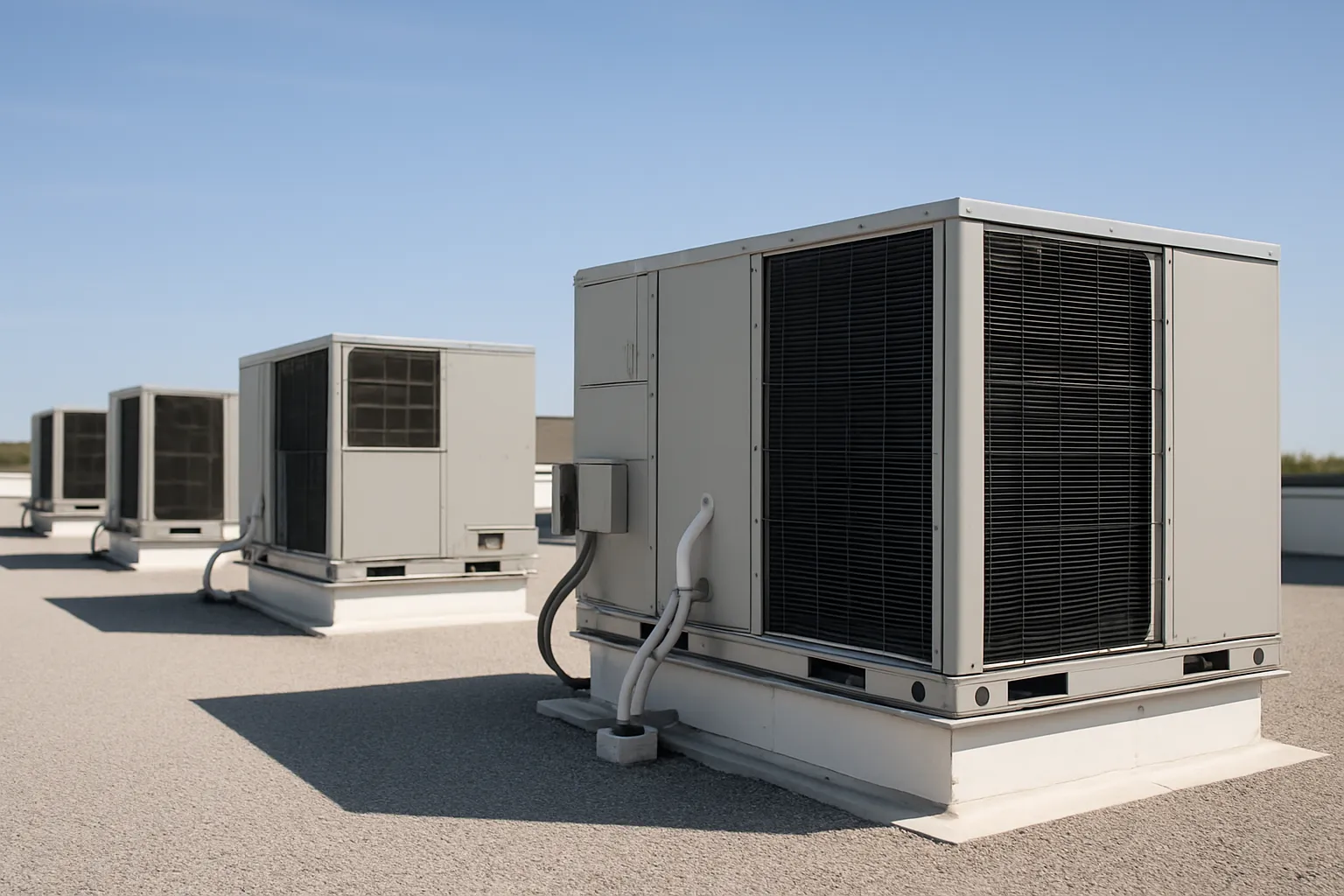
The proposed rule targets commercial unitary air conditioners and heat pumps—a category that generally includes packaged rooftop units and similar equipment serving larger commercial spaces. These systems are typically three‑phase and fall into cooling capacities such as:
- 65,000 Btu/h to 135,000 Btu/h (≈5–11 tons)
- 135,000 Btu/h to 240,000 Btu/h (≈11–20 tons)
- 240,000 Btu/h to 760,000 Btu/h (≈20–63 tons), a range that DOE has explicitly regulated in recent cycles.[7]
Rooftop units in these tonnage bands are ubiquitous on low‑ and mid‑rise commercial buildings—strip malls, big‑box retail, schools, medical office buildings, and many multi‑tenant offices. The new NOPR continues DOE’s long‑running focus on this segment because of its large installed base and significant impact on national energy use.
Past DOE rules have included both electric cooling units and gas/electric packaged units, and have addressed gas efficiency ratings (for example, requiring 81% thermal efficiency for certain gas‑fired commercial air conditioners in earlier updates).[7] While specific thresholds in the current NOPR will be defined by DOE’s analysis, it is reasonable to expect that gas/electric RTUs and heat pump RTUs will again be central to the standard.
These standards are separate from the residential SEER2/EER2 requirements but form part of the broader federal effort to increase efficiency across both residential and commercial sectors.[3][7]
Context: Recent DOE Commercial HVAC Efficiency Trends
DOE does not set commercial HVAC standards in a vacuum. In 2023, DOE implemented new minimum efficiency requirements for commercial air conditioning and heat pump equipment, requiring about a 15% efficiency increase from previous ratings for units between 65,000 and 760,000 Btu/h.[7] Combined with an earlier 2018 step, that produced approximately a 30% improvement over six years for many commercial packaged systems.[7]
At the same time, DOE’s broader buildings program aims to substantially reduce the installed cost and energy use of HVAC and water heating equipment over the coming decade.[9] Related initiatives, such as the Commercial Heat Pump Accelerator and the Commercial Building HVAC Technology Challenge, encourage manufacturers to develop new rooftop heat pump technologies that deliver higher efficiency and improved cold‑climate performance.[1][2][6][8]
Manufacturers like Lennox and Carrier have already tested advanced 15–25 ton rooftop units through DOE’s technology challenges, demonstrating high‑capacity heat pump operation suitable for cold climates.[6][8] These initiatives signal the direction of travel: more heat pump‑ready, high‑efficiency rooftop units entering the commercial market, often ahead of or alongside new DOE minimums.
For building owners and facility managers, the NOPR is best viewed as the regulatory “follow‑through” on trends that the market is already starting to reflect—greater emphasis on energy performance, electrification options, and lifecycle cost.
Operational and Financial Impacts for Property and Facility Managers
The most direct impact of higher DOE minimum efficiencies is on equipment selection and capital budgets. Once the rule is finalized and its compliance date arrives, manufacturers must stop producing non‑compliant models for the U.S. market.[3][7] Over time, distributors sell through remaining inventory, and your replacement choices become concentrated among higher‑efficiency products.
For operators of multi‑site portfolios or large campuses, this can create several implications:
- Upfront cost shifts: Higher‑efficiency RTUs and heat pumps often entail additional components (e.g., larger coils, variable‑speed compressors, advanced controls), which can increase first cost. DOE’s standards process weighs these cost impacts against projected energy savings, but you should plan for potential price differentials when budgeting for future replacements.
- Energy and demand savings: More efficient equipment reduces electricity consumption for cooling and, in the case of heat pumps, can reduce delivered energy for heating in appropriate climates. Over the 10–20 year life of a rooftop unit, this can materially lower operating expenses and mitigate exposure to rising utility rates, particularly in regions with time‑of‑use or demand charges.
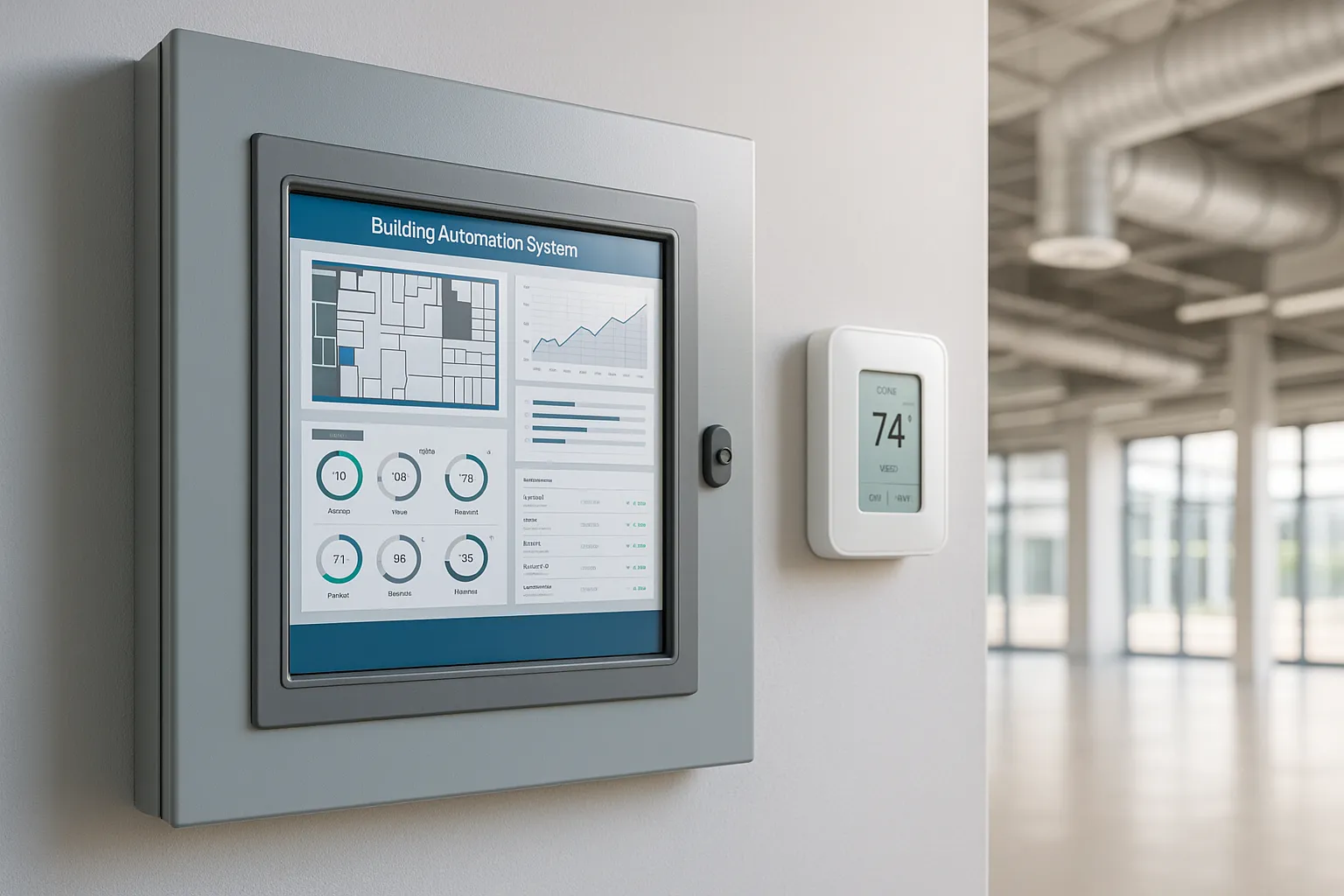
- Equipment compatibility and controls: As OEMs optimize designs around higher efficiency, you are more likely to see greater adoption of variable‑speed technologies and smarter onboard controls. Integration with your building automation system (BAS) and alignment with your control sequences (e.g., reset schedules, ventilation strategies) becomes more important to realize the efficiency promised on the nameplate.
- Capex vs. Opex trade‑offs: The new standards may slightly compress the spread between basic‑efficiency and premium‑efficiency offerings. That can make lifecycle cost analyses more favorable to higher‑tier units, especially when evaluated against internal hurdle rates or ESG targets.
None of these impacts are automatic; they depend on how you sequence replacements, specify equipment, and operate your buildings. But the underlying dynamic is clear: DOE standards effectively “ratchet up” the baseline, and portfolios that plan early can turn a compliance obligation into an opportunity to modernize their HVAC assets.
Compliance Planning: Inventory, Codes, and Procurement Strategy
Because DOE standards preempt state and local efficiency requirements, compliance is ultimately enforced through equipment manufacturing and labeling rather than building inspections.[3] However, the standards interact with building and energy codes that reference minimum equipment performance, often aligned with ASHRAE 90.1 or successor standards.
From a facility and asset‑management standpoint, there are several practical steps to prepare:
1. Build a rooftop unit and packaged equipment inventory
Start by creating (or updating) a master inventory of your RTUs and packaged units in the 5–60 ton range. Capture at least:
- Manufacturer, model, and serial number
- Cooling capacity (Btu/h or tons) and fuel type (electric, gas/electric, heat pump)
- Installation year and estimated remaining useful life
- Location and criticality (e.g., serves data room vs. tenant suite)
This allows you to identify which units are likely to be replaced during the timeframe when the new standards will take effect.
2. Coordinate with code, ASHRAE, and energy program requirements
Federal equipment standards, model energy codes, and ASHRAE standards are interconnected. ASHRAE 90.1, for example, often serves as a reference for code minimums on equipment efficiency and building performance. As DOE updates its minimums, future editions of ASHRAE 90.1 and state codes may reflect similar or more stringent requirements.
Engage your design engineers or commissioning agents to ensure your project specifications remain aligned with both DOE equipment standards and applicable codes. Where you pursue utility incentives or green building certifications, check how higher‑efficiency RTUs or heat pumps could improve your economics.
3. Adjust procurement and replacement strategies
Consider the following adjustments:
- Avoid locking in obsolete equipment: For projects that will be bid or installed near the anticipated DOE compliance date, specify equipment that will remain compliant to reduce the risk of redesigns or last‑minute substitutions.
- Bundle replacements strategically: If multiple end‑of‑life units at a site fall in the same tonnage class, bundling their replacement with compliant high‑efficiency models can improve pricing and streamline crane and labor mobilization.
- Standardize around a future‑ready spec: Establish internal standards (e.g., minimum efficiency tiers, heat pump readiness, controls integration) that go beyond the bare federal minimums so that individual projects and bids don’t default to lowest‑first‑cost options that undercut portfolio goals.
Risk Management, ESG, and Long-Term Asset Value
Beyond simple compliance, DOE’s proposed rule has implications for risk management, ESG commitments, and asset valuation. Investors, tenants, and corporate occupiers are increasingly scrutinizing building energy performance and emissions. HVAC is a major component of both.
By anticipating higher DOE standards and planning for more efficient commercial unitary systems, owners can:
- Reduce regulatory and stranded asset risk: Avoid investing in equipment that may look obsolete or uncompetitive long before the end of its mechanical life due to evolving standards and tenant expectations.
- Support decarbonization and electrification strategies: Advanced heat pump RTUs, many of which are being accelerated by DOE initiatives, can reduce onsite fossil fuel consumption and align with corporate carbon targets.[1][6][8][9]
- Enhance tenant experience and retention: Newer high‑efficiency units often provide better comfort control, quieter operation, and improved ventilation options, all of which can support tenant satisfaction and indoor environmental quality.
- Strengthen ESG reporting: Capital plans that explicitly reference DOE and ASHRAE benchmarks can be easier to communicate to stakeholders and may support green bond frameworks or sustainability‑linked financing.
In practical terms, this means viewing the NOPR not just as a compliance requirement, but as a signal to align your HVAC roadmap with long‑term value creation.
Action Checklist for Property and Facility Managers
While DOE’s commercial unitary NOPR is still in the proposal stage, building owners and managers can take informed steps now:
- Monitor DOE updates: Track the progress of the rule from pre‑publication NOPR through final rule and effective date. Notice periods often span several years, giving time to plan.
- Engage advisors: Ask your consulting engineers, commissioning providers, or energy services partners to brief you on the likely efficiency thresholds for key tonnage ranges and how they interact with your portfolios.
- Prioritize high‑impact sites: Focus first on facilities with many 5–25 ton RTUs, high operating hours, or near‑term replacement needs, as they will see the most immediate impact from new standards.[7]
- Re‑run lifecycle cost analyses: Revisit payback and ROI assumptions using efficiency levels closer to what DOE is proposing and incorporate expected utility rate scenarios.
- Align with corporate goals: Where your organization has carbon, energy, or resilience targets, use the upcoming DOE standard changes as a catalyst to codify higher internal minimums for all new RTUs and packaged units.
Proactive planning around DOE’s proposed commercial unitary standards can help you manage risk, control operating costs, and position your buildings competitively in a market that increasingly values efficient, low‑carbon HVAC solutions.
Frequently Asked Questions
How will DOE’s proposed commercial unitary HVAC standards affect total cost of ownership for my buildings?
Higher DOE minimum efficiencies typically increase upfront equipment cost but lower long‑term energy use. Over a 10–20 year life, many commercial rooftop units can recover the incremental capital through reduced utility bills, especially in high‑run‑time buildings. A portfolio‑level lifecycle cost analysis is the best way to quantify expected ROI for your specific sites.
Are existing commercial rooftop units grandfathered when DOE raises minimum efficiencies?
Yes, DOE standards apply to new equipment manufactured after the effective date, not systems already installed.[3][7] Existing rooftop and packaged units are normally allowed to run to end of life, subject to local safety and code requirements. However, any replacement units purchased after the effective date must meet the updated minimum efficiency levels.
Should I accelerate replacement of marginal RTUs before new DOE standards take effect?
It depends on your portfolio’s capital constraints, energy costs, and ESG goals. In some cases, pre‑buying current‑generation equipment can reduce near‑term capex, but it may also lock in lower efficiency for 15–20 years. Many owners now favor aligning replacements with the newer, more efficient tiers to improve long‑term operating performance and asset competitiveness.
How do DOE commercial unitary standards relate to ASHRAE and local energy codes?
DOE equipment standards set the national minimum efficiency that manufacturers must meet.[3] ASHRAE 90.1 and state or local energy codes may reference these minimums or adopt more stringent performance requirements. For new construction or major renovations, your design team must ensure both DOE equipment compliance and code compliance at the building level.
What criteria should I use when specifying replacement commercial unitary heat pumps under new DOE rules?
Focus on more than nameplate efficiency. In addition to meeting DOE minimums, evaluate part‑load performance, heating capacity at your design winter conditions, compatibility with your BAS, ventilation and economizer capabilities, refrigerant considerations, and total installed cost. For cold‑climate sites, look for units validated or designed for low‑temperature heat pump operation through DOE or utility programs.[1][6][8]
Related Reading on My HVAC Tech
- Commercial Chiller Maintenance Guide for 50–500+ Ton Systems
- Trane Technologies Acquires LiquidStack to Advance Data Center Liquid Cooling
Find a Qualified Commercial HVAC Contractor
Need help acting on this? Browse vetted commercial HVAC contractors in your area, or explore commercial HVAC services like preventive maintenance, retrofits, and emergency repair. Are you a contractor? List your business on My HVAC Tech to reach property and facility managers actively searching for help.
Sources
Originally sourced from U.S. Department of Energy


