

 My HVAC Tech
Trenchless Sewer Repair Guide for Commercial Buildings
Quick Answers for Property & Facility Managers
What is trenchless sewer repair for commercial buildings and when should property managers use it?
Trenchless sewer repair is a no‑dig method that restores damaged underground sewer lines from the inside using techniques like pipe lining and pipe bursting, accessed through small entry points.[4][5][9] Property managers should use it when video inspection confirms structural damage, but full excavation would be too disruptive or costly.[4][5]
How does trenchless sewer repair minimize disruption to tenants, operations, and critical HVAC equipment?
Trenchless sewer repair uses existing cleanouts or small access pits rather than long open trenches, preserving slabs, walls, and building infrastructure.[2][4][5] This reduces downtime near rooftop units, chillers, and VRF systems, limits noise and dust, and typically shortens project schedules compared with conventional excavation.[2][5][9]
Is trenchless sewer repair cost‑effective for large commercial properties?
While trenchless sewer repair can have higher per‑foot repair costs than dig‑and‑replace, it often lowers total project cost by avoiding slab demolition, structural repairs, landscaping replacement, and extended downtime.[4][5][6] For multi‑story and high‑rise facilities, the ability to work within existing pipe runs can deliver strong long‑term ROI.[5][7]
What trenchless sewer repair means for commercial property managers
For commercial buildings, trenchless sewer repair describes a group of no‑dig methods that restore structurally damaged sewer and drain lines without full‑length excavation.[4][5][9] Technicians access the pipe through controlled entry points, then repair or replace it internally to correct cracking, corrosion, root intrusion, and offsets while preserving the surrounding structure.[4][5]
For property managers, facility managers, and building owners, the value is straightforward: you can rehabilitate critical sewer infrastructure while keeping slabs, parking lots, landscaping, and tenant build‑outs largely intact. This is especially important in buildings with large rooftop HVAC units, central plants, or VRF systems where trenching near structural supports and utilities increases risk and cost.
Common trenchless methods used in commercial properties include:
- Cured‑in‑Place Pipe (CIPP) lining: installing an epoxy‑saturated liner that cures into a new pipe within the old pipe.[2][5]
- Pipe bursting: breaking the failed pipe while simultaneously pulling in a new replacement pipe along the same alignment.[5]
- Slip lining: pulling a smaller carrier pipe through the existing pipe to create a new watertight conduit.[1][5]
These approaches are frequently applied in office campuses, healthcare facilities, retail centers, warehouses, and high‑rise buildings to address leaks, cracks, and age‑related deterioration.[5][6][7]
How trenchless sewer repair works step‑by‑step in commercial facilities
Successful trenchless sewer repair projects follow a structured process tailored to commercial building operations.[4][5][8][9] As a property or facility manager, understanding this workflow helps you plan downtime, coordinate with tenants, and protect major HVAC assets.
1. Initial property assessment
Specialists begin with a property assessment covering sewer history, recurring symptoms, and site conditions.[4][5] Typical red flags include frequent backups, sewage odors, wet areas near building perimeters, slab moisture, or localized settlement along the sewer path.[4]
- Map observed issues to building zones, critical HVAC equipment, and tenant spaces.
- Note proximity to rooftop units, chilled‑water piping, VRF refrigerant lines, and electrical feeders so repair work avoids key infrastructure.
2. Video camera diagnostics and condition verification
A sewer camera inspection is essential before committing to trenchless sewer repair.[4][5] Technicians feed a camera through existing cleanouts or manholes to document:
- Cracks, corrosion, and holes
- Root intrusion and debris buildup
- Joint offsets or separations
- Partial collapse or severe deformation
Trenchless methods are appropriate when the pipe has structural damage but retains a passable alignment for lining or bursting.[4][5] If the pipe is fully collapsed for long segments or obstructed by other utilities, conventional excavation may be required.
3. Method selection and planning
Based on inspection data, the contractor determines whether lining, bursting, or slip lining best fits the sewer’s condition, geometry, and access.[4][5] Detailed planning includes:
- Confirming access points and any small pits required near the building or in pavement.[5]
- Coordinating temporary bypass pumping to keep restrooms and critical areas partially functional.[5]
- Scheduling work to avoid peak occupancy and major HVAC service operations.
For high‑rise and multi‑story buildings, trenchless pipe lining is often preferred because it can be installed using existing vertical stacks and horizontal runs with minimal disturbance to walls, floors, and ceilings.[7]
4. Execution of trenchless repair
Implementation is performed by trained crews using specialized equipment.[4][5][9] For CIPP lining, they insert a flexible liner saturated with epoxy resin through access points, position it along the damaged section, and cure it using hot water, steam, or UV light.[2][5] Once cured, it becomes a seamless, jointless "pipe within a pipe" that restores structural integrity and flow.[2]
Pipe bursting uses a bursting head pulled through the old pipe to fracture it outward while towing in a new HDPE or similar pipe behind it.[5] Slip lining involves pulling or pushing a smaller‑diameter carrier pipe into the existing line and sealing the ends.[1][5]
5. Final verification and documentation
After installation, contractors perform a final camera inspection to confirm structural integrity, smooth flow, and proper connections at each tie‑in.[4][5] You should request:
- Before‑and‑after video footage of each repaired segment
- As‑built drawings showing pipe materials, diameters, and locations
- Warranty documentation and maintenance recommendations
This documentation is important for long‑term asset management and coordination with future HVAC or civil projects.
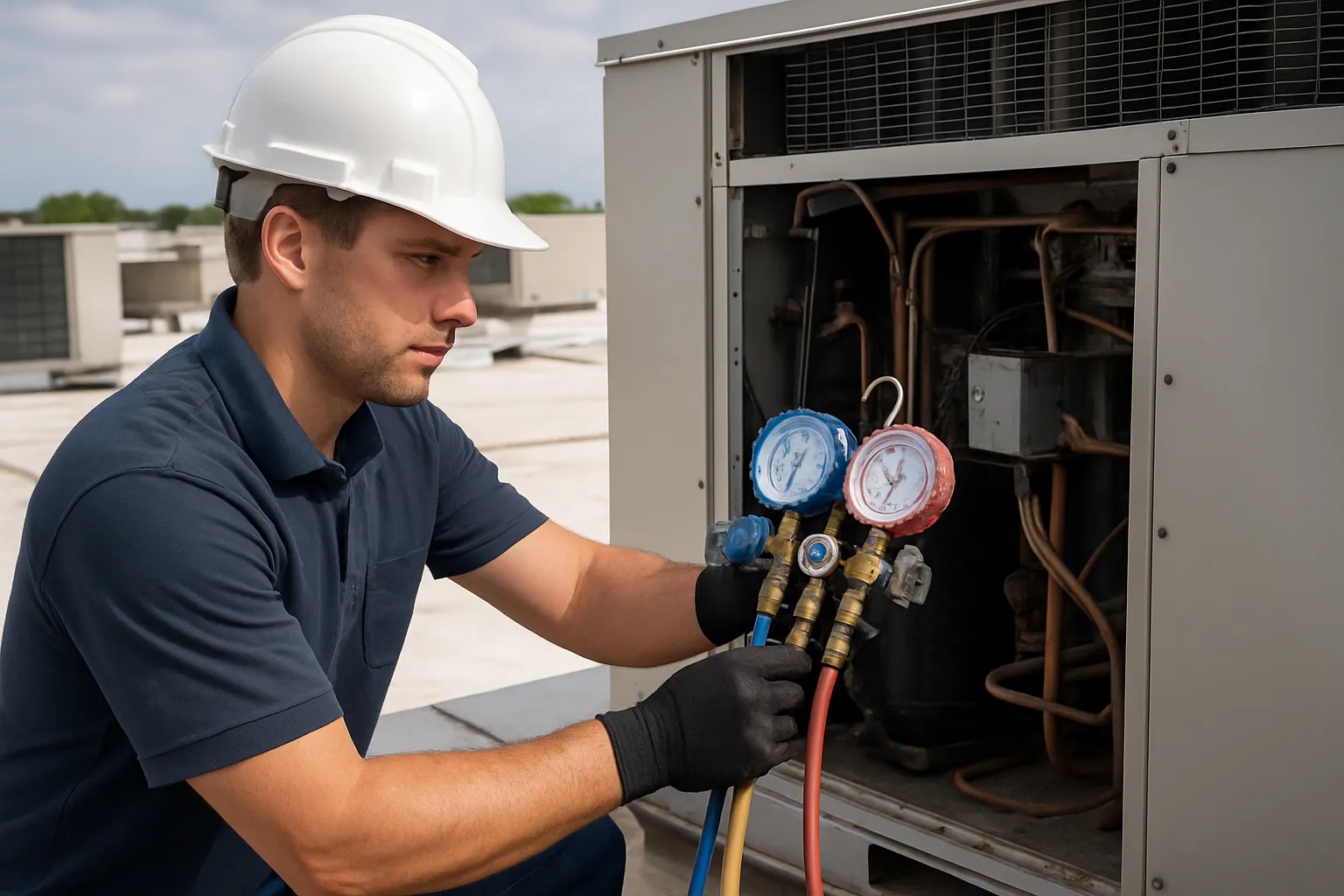
Coordinating trenchless sewer repair with commercial HVAC assets
Major commercial buildings often combine sewer infrastructure with substantial HVAC investments: rooftop units in the 50–100+ ton range, central chillers from 150–500+ tons, and multi‑zone VRF systems.[5][6][7] While trenchless sewer repair focuses on underground piping, the work can still affect mechanical operations and access.
Key coordination points for property and facility managers include:
- Roof access and crane staging: ensure repair crews do not block crane paths or equipment access needed for chiller or rooftop unit service.
- Mechanical room and shaft access: camera inspections and lining may pass through mechanical spaces that also house chilled‑water pumps, VFDs, or VRF refrigerant manifolds.
- Condensate and drain tie‑ins: verify that lined or replaced sewer mains maintain proper connections for large air‑handler and rooftop unit condensate drains to avoid overflows.
By integrating sewer repair planning into your HVAC maintenance calendar, you can avoid simultaneous outages and reduce overall operational risk.
Cost and ROI context for trenchless sewer repair in commercial buildings
Publicly available sources emphasize that trenchless sewer repair is designed to improve efficiency and reduce total project costs by avoiding extensive excavation and surface restoration.[4][5][6][9] Exact pricing is project‑specific and depends on length, diameter, depth, method, and site constraints, so reputable providers typically perform an inspection before providing an estimate.[5][6][8]
From a management perspective, ROI comes from several areas:[5][6]
- Reduced surface restoration: limiting slab removal, pavement replacement, landscaping repair, and interior build‑out reconstruction.
- Shorter project timelines: quicker completion because crews work from limited access points rather than open trenches.[5]
- Lower business interruption: maintaining more normal operations, especially in retail, healthcare, and office environments.[5][6]
- Extended asset life: restoring structural integrity of sewer lines to reduce future leaks, backups, and emergency calls.[5][6]
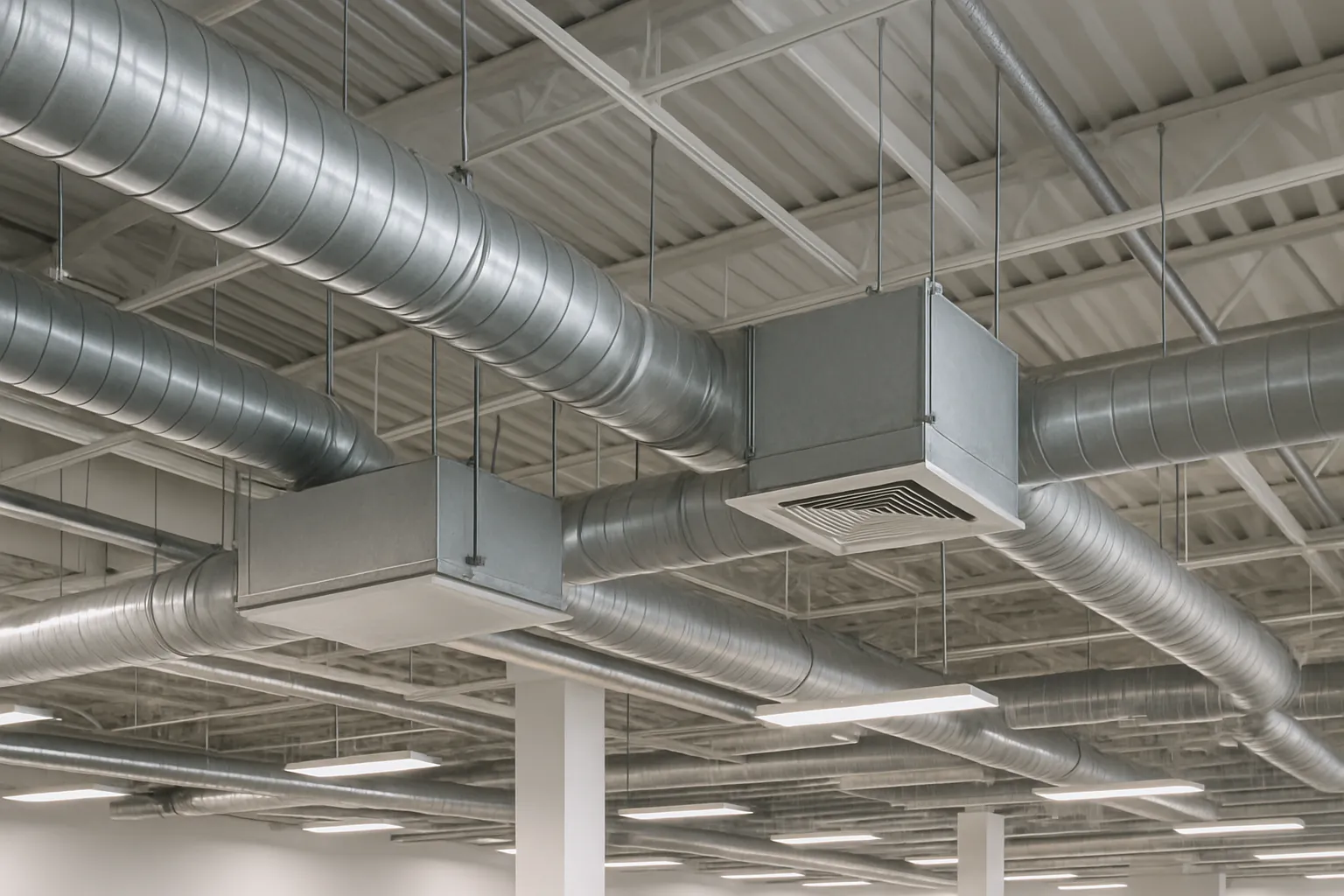
Compared with traditional dig‑and‑replace, trenchless methods can be particularly cost‑effective where lines run under buildings, parking decks, heavily landscaped courtyards, or critical mechanical yards. For multi‑story and high‑rise properties, the ability to work within existing stacks and horizontals without demolition further improves long‑term value.[7]
Practical checklists for property and facility managers
Pre‑project due diligence checklist
- Confirm recurring sewer symptoms and map them to specific building zones.[4]
- Schedule a sewer camera inspection to verify structural damage and pipe condition.[4][5]
- Request a written plan outlining trenchless methods, access points, bypass arrangements, and tenant impact.[5]
- Review contractor experience with commercial and high‑rise buildings, not just residential.[6][7][8]
- Verify licensing, insurance, safety protocols, and regulatory compliance, including permits and environmental safeguards.[5]
On‑site coordination checklist
- Align repair schedule with HVAC maintenance windows to avoid overlapping outages.
- Identify and protect areas near rooftop units, chillers, VRF condensers, and main electrical gear.
- Communicate restroom and drain availability to tenants and internal stakeholders.
- Plan temporary wayfinding if access routes or parking areas are partially blocked.
Post‑project asset management checklist
- Collect and store as‑builts, inspection videos, and warranty information.[4][5]
- Update building infrastructure maps to reflect repaired or replaced sewer segments.
- Integrate sewer line condition into capital planning alongside HVAC, roofing, and electrical assets.
- Schedule periodic camera inspections for critical mains to catch future issues early.[5][6]
Selecting the right trenchless sewer repair partner
Commercial trenchless projects require specialized expertise. Leading providers highlight their ability to work in occupied buildings, maintain operations, and comply with local regulations and safety requirements.[5][6][8][9] When evaluating partners, commercial property stakeholders should prioritize:
- Commercial and high‑rise experience: comfort working around tenants, complex mechanical systems, and vertical stacks.[6][7][8]
- Full diagnostic capabilities: video inspection, cleaning, and condition assessment before recommending solutions.[4][5][9]
- Multiple trenchless methods: ability to offer CIPP lining, pipe bursting, and slip lining so they can match the method to your pipe conditions.[1][5][9]
- Regulatory and safety compliance: familiarity with local codes, permitting, confined space rules, and environmental safeguards.[5]
For property managers, the goal is not just to fix a single backup, but to make a strategic investment in sewer infrastructure that protects building operations, major HVAC assets, and tenant satisfaction over the long term.
Frequently Asked Questions
How much does trenchless sewer repair cost for commercial buildings, and what drives ROI?
Commercial trenchless sewer repair is typically priced per foot, with costs driven by pipe diameter, depth, condition, and site access.[5][6] While unit rates can be higher than dig‑and‑replace, ROI often improves because you avoid slab demolition, landscaping restoration, and extended downtime, especially under occupied buildings and critical mechanical yards.[4][5][6]
Is trenchless sewer repair compliant with local codes and suitable for healthcare and high‑rise facilities?
Reputable trenchless providers design projects to meet local plumbing codes, permitting requirements, and safety regulations, including confined space and environmental rules.[5][6][9] Methods like CIPP lining and pipe bursting are widely used in healthcare, high‑rise, and institutional facilities because they reduce disruption while maintaining compliant sewer capacity and performance.[5][6][7]
What risks should property managers watch for with trenchless sewer repair?
Key risks include using trenchless methods where pipes are fully collapsed, misaligning liners at tie‑ins, or underestimating bypass needs during repair.[4][5] These are mitigated by thorough camera inspection, proper cleaning, experienced installation crews, and final video verification before completion, all of which should be documented for your asset records.[4][5][9]
How does trenchless sewer repair impact ongoing maintenance and future capital projects?
A properly installed liner or replacement pipe creates a smooth, structurally sound sewer that typically reduces blockages and emergency calls.[2][5][6] For capital planning, documented trenchless repairs clarify which segments are renewed, allowing managers to focus budgets on remaining original piping, HVAC upgrades, and structural projects with greater certainty about underground risk.
Can trenchless sewer repair be phased across large campuses or portfolios?
Yes. Because trenchless methods work from limited access points and can target specific segments, they are well suited to phased implementation across office campuses, retail centers, and multi‑building portfolios.[5][6][8] Managers can prioritize high‑risk mains first, then expand to secondary lines as budgets allow, reducing overall disruption while steadily improving infrastructure condition.
Related Reading on My HVAC Tech
- ASHRAE 90.1-2025: What the New Energy Efficiency Standard Means for Commercial Buildings
- Commercial Plumbing Maintenance Guide for Reliable Building Operations
Find a Qualified Commercial HVAC Contractor
Need help acting on this? Browse vetted commercial HVAC contractors in your area, or explore commercial HVAC services like preventive maintenance, retrofits, and emergency repair. Are you a contractor? List your business on My HVAC Tech to reach property and facility managers actively searching for help.


