

 My HVAC Tech
Commercial Roof Maintenance: A Practical Guide for Facility and Property Managers
Quick Answers for Property & Facility Managers
How often should commercial roof maintenance be performed on an office, retail, or industrial building?
Most industry authorities recommend commercial roof maintenance at least twice per year—typically spring and fall—and after major weather events such as high winds, hail, or heavy rainfall[1][2][5]. For roofs with heavy rooftop HVAC equipment or roofs over 15 years old, quarterly inspections are often advisable[5].
What is included in a commercial roof maintenance program for buildings with rooftop HVAC equipment?
A robust commercial roof maintenance program includes semi‑annual inspections, debris and drain clearing, checking flashings and penetrations around HVAC curbs, resealing joints, repairing minor membrane damage, and documenting conditions for lifecycle planning[7][8][9]. It should also coordinate access paths and protection around rooftop units, exhaust fans, and VRF/RTU equipment[7][9].
Why does proactive commercial roof maintenance matter for facility and property managers?
Proactive commercial roof maintenance reduces leaks, interior damage, business interruption, and emergency repair costs while extending roof service life[6][7][9]. Documented inspections and repairs support budgeting, warranty compliance, and stronger ROI on both the roof system and rooftop HVAC assets[5][6].
Why Commercial Roof Maintenance Is a Core Asset Strategy
For property managers, facility managers, and building owners, commercial roof maintenance is not just a facilities checklist item—it is a core asset protection strategy. Roof failures drive expensive interior repairs, tenant disruption, and unplanned capital spending, and they often impact critical mechanical systems located on the roof.
Industry guidance from groups such as the NRCA and major commercial roofing contractors consistently recommends at least two professional inspections per year, typically in spring and fall[1][2][5]. Additional checks are advised after major storm events, especially high winds, hail, heavy ice loading, or unusually heavy rainfall[1][2][8]. Adopting this cadence allows you to catch leaks, ponding water, and membrane damage before they escalate[3][5].
For facilities with significant rooftop HVAC equipment—large packaged rooftop units, chillers, VRF systems, and exhaust fans—roofs see more foot traffic, penetrations, and vibration. These roofs, and roofs older than 15 years, are often better served by quarterly inspections[5].
Building an Inspection Schedule and Documentation Process
A disciplined inspection and documentation process is the backbone of effective commercial roof maintenance. For multi-building portfolios, consistency is key.
Set your inspection frequency
- Schedule professional roof inspections at least twice per year, ideally spring (post‑winter) and fall (pre‑winter)[1][2][5][6].
- Perform inspections after major storms or significant rooftop work (HVAC replacement, solar installation, antenna work)[1][2][8][9].
- Consider quarterly inspections for roofs with heavy rooftop equipment, high foot traffic, or membranes older than 15 years[5].
Standardize documentation across your portfolio
- Require a written report after each visit with photos, a repair log, and prioritized deferred items[5].
- Maintain a per‑building maintenance file and condition history, especially for campuses or multi‑site portfolios[5].
- Track incidental costs from leaks (interior repairs, tenant claims, operational downtime) to justify preventive programs and life‑cycle costing[6].
Working with your roofing contractor on life‑cycle costing helps you maximize roof service life and optimize budgets over time[6]. This is especially valuable when planning HVAC capital projects that interact with roof penetrations and load paths.
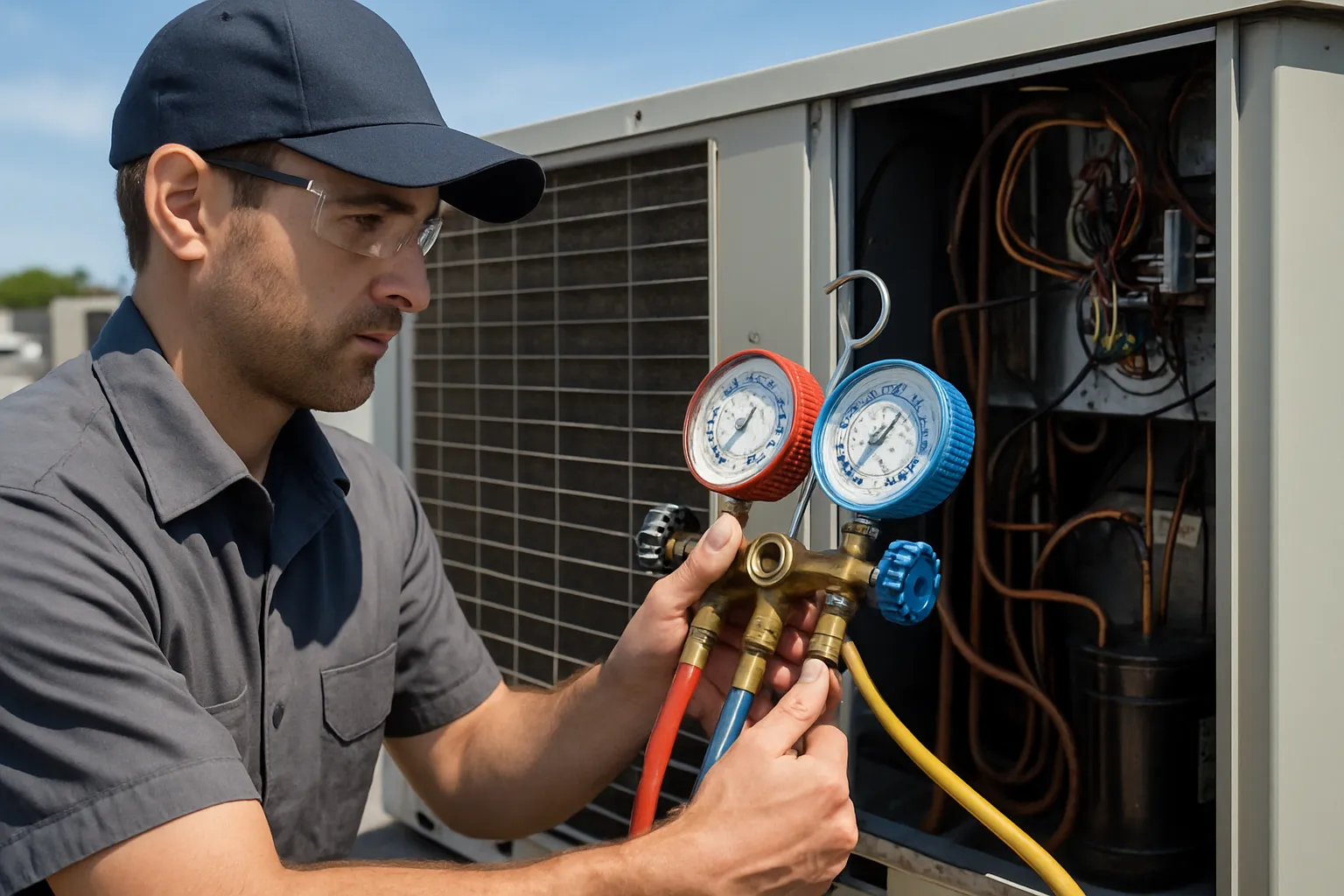
Step-by-Step Commercial Roof Maintenance Checklist
While each roofing system (TPO, EPDM, PVC, modified bitumen, built‑up, metal) has unique requirements, leading roofing and risk‑management sources consistently highlight core steps for every commercial roof maintenance program[3][7][8][9].
1. Prepare and operate safely
- Follow facility safety protocols and stay within designated roof safety zones[7].
- Limit rooftop access to trained, authorized personnel to reduce accidental damage[8].
- Install or verify guardrails, fall protection, and clear walk paths where required.
2. Clear debris and verify drainage
- Remove leaves, dirt, trash, vegetation, and loose materials that can clog drains and create ponding[2][7][8][9].
- Inspect gutters, downspouts, scuppers, and internal drains for blockages, standing water, or damaged components[2][7][8][9].
- Check low points for ponding water; consider new drains, crickets, or localized reinforcement if water persists[7][8].
3. Inspect flashings, seams, and penetrations
- Focus on seams, including coping seams and single‑ply seams, and for metal roofs, vertical/horizontal seams and ridge caps[7].
- Inspect flashings at HVAC curbs, pipes, skylights, scuppers, and other penetrations for cracks, pull‑away, or degraded sealant[7][9].
- Ensure metal flashing has not pulled more than about 1.5 inches from walls and check for rust, peeling, or cracked caulking[9].
4. Check membrane, insulation, and interior indicators
- Look for cracks, punctures, blisters, or UV damage on the roof surface; repair minor defects promptly to prevent water infiltration[2][8].
- Watch for soft or warped insulation, which can indicate trapped moisture or leaks[4][7].
- Inside the building, inspect ceilings and walls for water stains, cracks, or warped doors and windows—all potential signs of roof damage[9].
5. Address leaks and perform temporary repairs
- Locate leak sources: membrane, walls, curbs, skylights, ductwork, or plumbing connections[4].
- Use lap sealant or construction‑grade caulk for temporary repairs when needed, but avoid roof cement on EPDM membranes because petroleum products can degrade the rubber[4].
- If the roof is under warranty, contact the membrane manufacturer or approved contractor before permanent repairs[4].
Always refer to manufacturer guidelines for your specific roofing materials, as they may require particular products or methods for maintenance and repair[3].
Coordinating Roof Maintenance with Rooftop HVAC, Chillers, and VRF Systems
Most modern commercial buildings use the roof as an equipment platform. Rooftop units (RTUs), air‑cooled chillers, and VRF outdoor modules often range from roughly 50 to over 500 tons of installed cooling capacity across large sites. This concentration of mechanical equipment makes coordination between roofing and HVAC maintenance essential.
Protect the membrane around rooftop equipment
- Verify all mechanical equipment is secured and service doors are shut to prevent wind damage and water intrusion[7].
- Inspect condensation lines to ensure they are firmly connected and draining away from vulnerable roof areas[7].
- Check portable hangers, conduits, and piping supports to confirm they are in place and not gouging the membrane[7].
For facilities with large RTUs (20–60+ tons each), packaged systems serving big-box retail, or air‑cooled chillers in the 100–500+ ton range, maintenance personnel will frequently access specific service points. Installing walk pads around these frequently accessed units helps protect roof membranes from dropped tools and regular wear[7].
Manage grease, exhaust, and rooftop contaminants
- On restaurant or food‑service roofs, keep grease traps and exhaust hoods clean. Overfilled traps can allow grease to accumulate on the membrane and accelerate deterioration[7].
- Inspect exhaust fans, VRF modules, and air handlers for oil or refrigerant leaks that may stain or soften roofing materials.
- Make sure rooftop solar arrays, antennas, and satellite dishes are mounted correctly and not causing unsealed penetrations or uneven loading[9].
Coordinating roof maintenance windows with HVAC inspections allows facility teams to reduce repeated access trips and ensures that any penetrations created during mechanical work are immediately checked and sealed.
Best Practices for Contractor Selection, Warranty Compliance, and ROI
Choosing the right commercial roofing partner and aligning maintenance with warranty requirements are central to cost control and risk management for property and facility managers.
Select qualified, insured commercial roofing contractors
- Work with contractors qualified and experienced in commercial systems and preventive programs[3][6].
- Verify licensing and insurance, and review references or peer recommendations from other business owners[9].
- Prioritize quality of work and safety practices over lowest price to reduce long‑term risk[3].
Align with manufacturer and warranty requirements
- Always follow maintenance and repair guidelines from your roof system manufacturer[3].
- Report leaks and significant issues promptly if the roof is still under warranty, and document all inspections and repairs[4][5][9].
- Ensure any contractor work (including HVAC penetrations) preserves warranty conditions.
Focus on lifecycle ROI and cost avoidance
Preventive commercial roof maintenance is a classic lifecycle investment. Industry guidance emphasizes that tracking consequential damage and incidental leak costs helps build a clear case for funding preventive programs[6]. Semi‑annual or quarterly inspections, paired with timely minor repairs, typically cost far less than emergency leak responses, mold remediation, ceiling and flooring replacements, or tenant business interruption.
For facilities with high‑value HVAC infrastructure—such as central plants with chillers in the 200–500+ ton range or extensive VRF networks—roof leaks can also jeopardize mechanical rooms, electrical gear, and controls. Protecting the roof envelope therefore directly protects HVAC performance and uptime.
Seasonal Strategies for Different Roof Types and Building Uses
Seasonal planning helps property and facility managers integrate commercial roof maintenance with broader operational calendars across offices, retail centers, warehouses, and healthcare facilities.
Flat roof considerations
- Before winter, perform full drain checks, sealant reviews, and close inspections of penetrations on flat roofs[10].
- In spring, look for lifted seams, torn flashing, and stress splits from freeze‑thaw cycles[10].
- Pay special attention to footpaths and areas around rooftop HVAC units, where foot traffic and equipment vibration concentrate wear[10].
Pitched or metal roof considerations
- After heavy winds, inspect edges, valleys, and direction‑change areas for missing shingles or loosened fasteners[10].
- Check vertical and horizontal seams and ridge caps on metal roofs, as these are common leak points[7].
- Assess soffits, fascia, vents, skylights, and dormers, removing moss or lichen that can trap moisture[9][10].
Across building types, the goal is the same: maintain reliable drainage, intact membranes and flashings, and safe, predictable access for mechanical service teams. When you integrate disciplined commercial roof maintenance into your facilities program, you extend roof life, protect occupants and equipment, and stabilize long‑term capital planning.
Frequently Asked Questions
What does a typical commercial roof maintenance program cost, and what is the ROI?
Costs vary by roof size, system type, and local labor rates, but semi‑annual preventive maintenance is widely recognized as less expensive than emergency leak repairs and interior damage remediation[6][7][9]. By extending roof life, preserving warranties, and reducing business interruption, a structured program usually delivers positive ROI over the roof’s lifecycle[5][6].
How does commercial roof maintenance interact with rooftop HVAC equipment and large tonnage systems?
Maintenance must address flashings, curbs, and penetrations around rooftop units, chillers, and VRF modules, especially on roofs with heavy equipment and foot traffic[5][7][9]. Coordinated inspections protect membranes, improve drainage, and support reliable operation of 50–500+ ton cooling assets by reducing leak‑related damage and access risks[7][10].
What are the compliance and risk implications of poor commercial roof maintenance?
Neglected roofs can lead to leaks, warped insulation, structural deterioration, and safety hazards for anyone walking on the roof[4][7][9]. For managers, this increases liability exposure, potential code issues, and insurance claims. Documented, routine maintenance supports risk control programs and strengthens your position with insurers and regulators[6][9].
How should property and facility managers select a commercial roof maintenance contractor?
Managers should prioritize contractors experienced with commercial systems, carrying proper licensing and insurance[3][9]. Evaluate safety practices, responsiveness, and reporting quality, and secure written service levels and contracts[5][6][9]. References from peer facilities and alignment with roof manufacturer requirements help ensure warranty‑compliant, high‑quality work[3][4].
How often should roofs with older membranes or heavy rooftop equipment be inspected?
While twice‑yearly inspections are the industry minimum[1][2][5], roofs with extensive rooftop HVAC equipment or membranes over 15 years old benefit from quarterly inspections[5]. Increased foot traffic, penetrations, and age‑related wear make more frequent commercial roof maintenance critical to preventing leaks and protecting interior operations[5][7].
Related Reading on My HVAC Tech
- DOE Final Rule: New Commercial HVAC & Water Heating Efficiency Standards Explained
- Commercial Roof Replacement Planning Guide for Property & Facility Managers
Find a Qualified Commercial HVAC Contractor
Need help acting on this? Browse vetted commercial HVAC contractors in your area, or explore commercial HVAC services like preventive maintenance, retrofits, and emergency repair. Are you a contractor? List your business on My HVAC Tech to reach property and facility managers actively searching for help.


