

 My HVAC Tech
Carrier’s $600 Million Texas Manufacturing Investment: What Building Owners Need to Know
Quick Answers for Property & Facility Managers
What does Carrier’s $600 million Texas investment mean for commercial building owners?
Carrier’s planned Texas manufacturing investment is expected to expand U.S. production of advanced thermal management systems, including air-cooled and water-cooled commercial chillers. For building owners and facility managers, increased capacity could support future equipment availability, project scheduling, and supply-chain resilience, particularly for data centers, healthcare, education, and industrial facilities.
Which commercial HVAC equipment will Carrier manufacture at the new Texas facility?
The planned AllianceTexas engineering and manufacturing center will expand Carrier’s capacity for advanced thermal management systems, including air-cooled and water-cooled commercial chillers. These systems are commonly used in large buildings with significant cooling loads, such as data centers, hospitals, schools, manufacturing facilities, and other commercial properties.
Should facility managers change HVAC procurement plans because of Carrier’s investment?
Facility managers should not assume immediate changes in equipment lead times or pricing. Instead, they should continue early design coordination, verify current manufacturer schedules, compare qualified equipment options, and align chiller selections with building loads, redundancy, energy targets, service requirements, and applicable codes. The investment is a long-term capacity expansion rather than an immediate procurement guarantee.
Carrier Plans a Major Texas Manufacturing Expansion
Carrier plans to invest more than $600 million at AllianceTexas in north Fort Worth, Texas, to establish a new engineering and commercial manufacturing center. The project is expected to create approximately 1,500 jobs and expand Carrier’s advanced manufacturing capacity.[1][2]
For property managers, facility managers, and building owners, the announcement matters because commercial HVAC equipment availability, engineering support, and supply-chain resilience directly affect capital planning. Carrier says the center will support advanced thermal management systems, including air-cooled and water-cooled commercial chillers, equipment used in demanding commercial applications.[1]
The facility is expected to serve markets that include data centers, healthcare, education, and industrial properties. Those building types often require substantial cooling capacity, operational redundancy, precise temperature control, and dependable equipment support.[1]
Why Expanded Commercial Chiller Capacity Matters to Building Owners
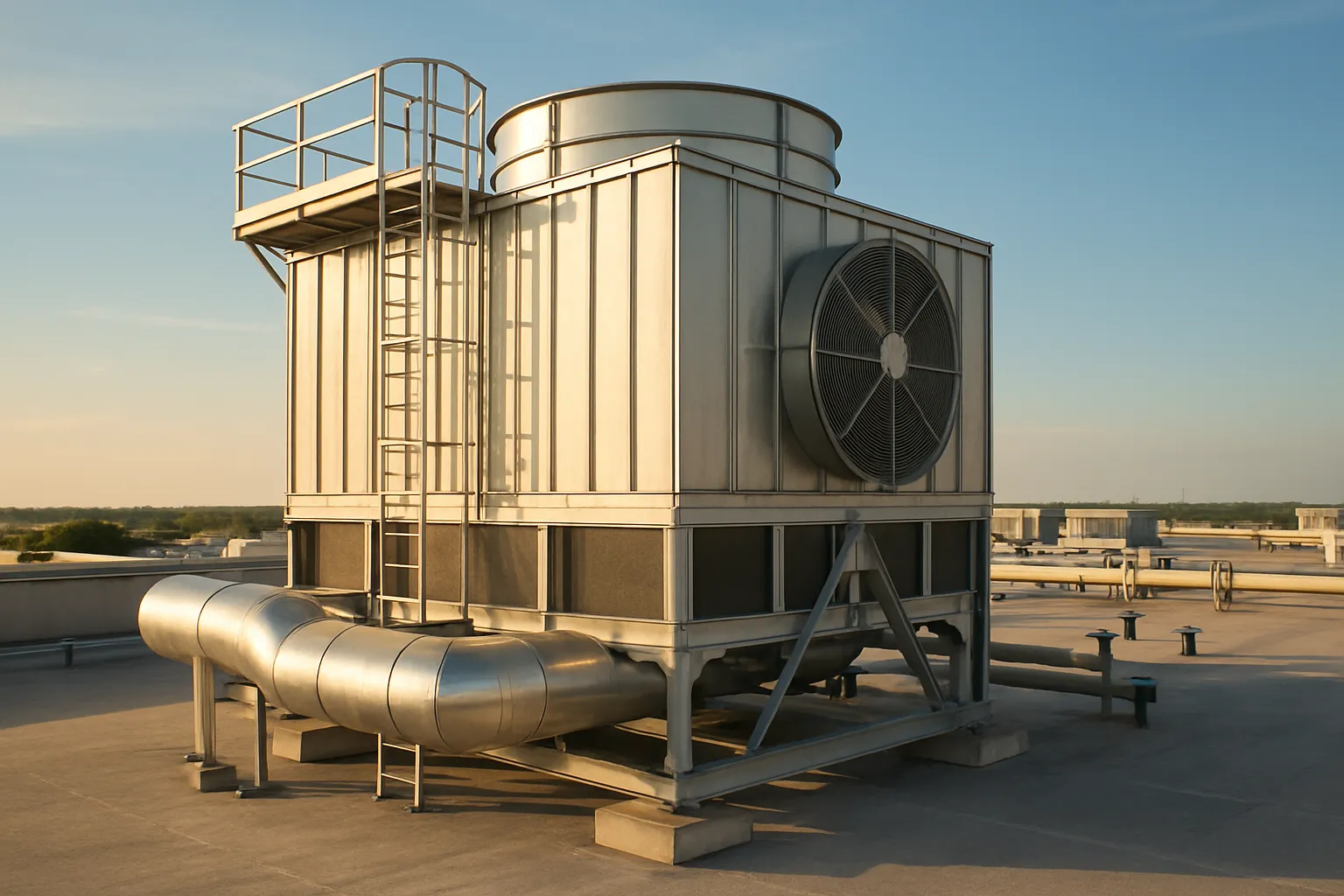
Commercial chillers are central components in many large hydronic HVAC systems. They produce chilled water that circulates through air-handling units, fan-coil units, process equipment, or other terminal systems. Air-cooled chillers reject heat through outdoor condenser coils, while water-cooled chillers typically use cooling towers and condenser-water systems.
Carrier’s planned expansion does not guarantee lower prices, shorter lead times, or immediate equipment availability. However, additional domestic manufacturing and engineering capacity may improve a manufacturer’s ability to respond to demand over time. That consideration is especially relevant for owners planning large central-plant replacements, building expansions, or new construction.
Owners should evaluate the announcement as one factor in a broader procurement strategy. Equipment selection should remain based on lifecycle cost, capacity, efficiency, redundancy, controls compatibility, maintenance access, refrigerant requirements, acoustics, available electrical service, and the building’s operating profile.
Building Types Most Likely to Monitor the Carrier Investment
Data centers have highly continuous cooling requirements and may use multiple chillers in N+1, N+2, or other redundancy arrangements. A new manufacturing and engineering center serving this market could be relevant to owners managing phased expansions or high-density computing environments.
Healthcare facilities must balance cooling reliability with infection-control requirements, operating-room conditions, humidity management, and emergency-power strategies. Hospitals and outpatient campuses should coordinate chiller planning with central-plant resilience, domestic-water systems, and critical-load assessments.
Education buildings, office campuses, laboratories, distribution centers, and industrial properties may also benefit from more flexible commercial HVAC sourcing. Their requirements vary widely, from seasonal comfort cooling to process cooling and extended operating hours.
The appropriate equipment size depends on a documented load calculation rather than building square footage alone. Commercial chiller projects may involve capacities ranging from smaller packaged systems serving individual buildings to large central plants with multiple chillers and substantial pumping and heat-rejection equipment.
How Facility Managers Should Respond to the Manufacturing News
- Review planned chiller replacements, expansions, and major renovations for the next three to five years.
- Identify buildings that depend on aging chillers, obsolete controls, unavailable refrigerants, or single points of failure.
- Request current equipment availability and projected production schedules from qualified manufacturers and suppliers.
- Compare air-cooled and water-cooled plant options based on climate, water availability, maintenance staffing, acoustics, efficiency, and lifecycle cost.
- Confirm that proposed equipment will integrate with the building automation system and existing pumps, coils, cooling towers, electrical infrastructure, and emergency-power systems.
- Build temporary cooling, rental equipment, or phased replacement plans for facilities that cannot tolerate extended downtime.
Early planning remains essential. A facility manager who waits until a chiller fails may have fewer equipment, financing, and installation options than an owner who develops a documented replacement plan before the end of the asset’s useful life.
Energy Efficiency, Codes, and Compliance Considerations
Equipment availability should not override energy and compliance requirements. Owners should involve qualified design professionals to confirm applicable state and local mechanical, electrical, building, fire, and environmental requirements.
ASHRAE guidance can help teams evaluate thermal comfort, ventilation, energy performance, and HVAC system design. ASHRAE Standard 90.1 is widely used as an energy-efficiency reference for commercial buildings, while Standard 62.1 addresses ventilation and acceptable indoor air quality in many nonresidential applications. Project teams should verify the editions adopted by the applicable authority having jurisdiction.
The U.S. Department of Energy provides commercial building and equipment-efficiency resources that can support energy modeling and lifecycle evaluations. The U.S. Environmental Protection Agency also regulates refrigerants and refrigerant management under federal environmental requirements. Owners should verify refrigerant availability, regulatory status, technician requirements, leak-management obligations, and future service implications before approving equipment.
For chilled-water plants, efficiency should be evaluated across expected operating conditions rather than at full load alone. Controls, condenser-water temperatures, chilled-water reset strategies, variable-speed drives, pumping design, tower performance, and low-load operation can materially affect annual energy use.
Procurement and Total Cost of Ownership Implications
Carrier’s announcement may encourage building owners to revisit procurement assumptions, but a manufacturer’s capacity expansion is not a substitute for competitive evaluation. Owners should request comparable submittals that clearly identify rated capacity, efficiency metrics, sound levels, electrical characteristics, controls interfaces, warranty terms, factory testing, and service support.
Capital cost is only one part of the decision. A lower initial bid may produce higher operating costs or greater maintenance exposure if the equipment is poorly matched to the load. Lifecycle analysis should consider installation, commissioning, energy, water treatment, refrigerant management, parts, labor, maintenance contracts, downtime risk, and eventual replacement.
Owners should also distinguish between equipment manufacturing capacity and local execution capacity. A project still depends on qualified engineers, controls contractors, riggers, electricians, pipefitters, commissioning providers, and service organizations. Contract documents should define responsibilities for startup, functional performance testing, controls integration, owner training, and warranty response.
What the AllianceTexas Project Means for Long-Term Planning
The planned center is expected to expand Carrier’s engineering and advanced manufacturing presence in the United States. The reported investment is more than $600 million, with approximately 1,500 jobs expected, and the facility is associated with growing demand from commercial markets such as data centers, healthcare, education, and industrial facilities.[1][2]
For building owners, the most practical takeaway is to plan equipment decisions around verified project requirements rather than news headlines. Monitor manufacturer updates, maintain alternate-equipment strategies, and engage engineering and service partners early for major central-plant work.
Owners preparing for a chiller project should begin with a current load assessment, equipment-condition review, utility-capacity check, controls evaluation, and business-continuity plan. That process helps determine whether a like-for-like replacement, modular plant, heat-recovery configuration, electrification strategy, or broader HVAC modernization is appropriate.
Carrier’s Texas investment signals continued demand for large-scale commercial cooling infrastructure. Property and facility managers who connect that market trend to disciplined asset planning can make more informed decisions about reliability, energy performance, capital timing, and long-term building value.
Frequently Asked Questions
Will Carrier’s Texas manufacturing investment reduce commercial chiller prices?
There is no confirmed basis to predict lower commercial chiller prices from the planned investment. Additional manufacturing capacity could influence supply availability over time, but pricing also depends on materials, labor, freight, project demand, financing, and equipment specifications. Owners should compare total lifecycle cost and obtain current quotations rather than delaying a project in anticipation of price reductions.
What should owners consider when replacing a commercial chiller?
Owners should evaluate actual cooling loads, redundancy, operating hours, entering and leaving-water temperatures, electrical capacity, heat rejection, controls integration, space constraints, acoustics, refrigerant requirements, maintenance access, and future expansion. A lifecycle-cost analysis should include energy, water treatment, service, parts, commissioning, downtime exposure, and replacement timing. Qualified engineers should verify code and project requirements.
Are air-cooled or water-cooled chillers better for commercial buildings?
Neither configuration is universally better. Air-cooled chillers can simplify plant design and avoid cooling-tower water use, while water-cooled systems may provide strong efficiency for larger or continuously operating plants when water, tower space, treatment, and maintenance are available. The appropriate choice depends on climate, building load, utility rates, water conditions, resilience goals, site constraints, and lifecycle cost.
How can facility managers reduce risk during a large chiller replacement?
Facility managers can reduce risk by starting design early, documenting existing conditions, verifying temporary cooling requirements, sequencing work around occupancy, and defining commissioning responsibilities. The project should include a shutdown plan, equipment delivery milestones, controls integration, startup testing, owner training, and contingency measures. Critical facilities may also need rental cooling, redundant capacity, or phased plant replacement.
Which standards and agencies should commercial HVAC buyers reference?
Project teams commonly reference applicable ASHRAE standards for energy performance, ventilation, indoor air quality, and system design; Department of Energy resources for commercial-building efficiency; and Environmental Protection Agency requirements governing refrigerants and environmental compliance. The authority having jurisdiction determines which codes and standards are enforceable. Owners should confirm current adopted requirements with their design professionals and local officials.
Related Reading on My HVAC Tech
- Indoor Air Quality Workplace Productivity: A Commercial HVAC Guide
- Building Automation Systems Energy Efficiency: A Commercial HVAC Guide
Find a Qualified Commercial HVAC Contractor
Need help acting on this? Browse vetted commercial HVAC contractors in your area, or explore commercial HVAC services like preventive maintenance, retrofits, and emergency repair. Are you a contractor? List your business on My HVAC Tech to reach property and facility managers actively searching for help.
Sources
Originally sourced from ACHR NEWS


